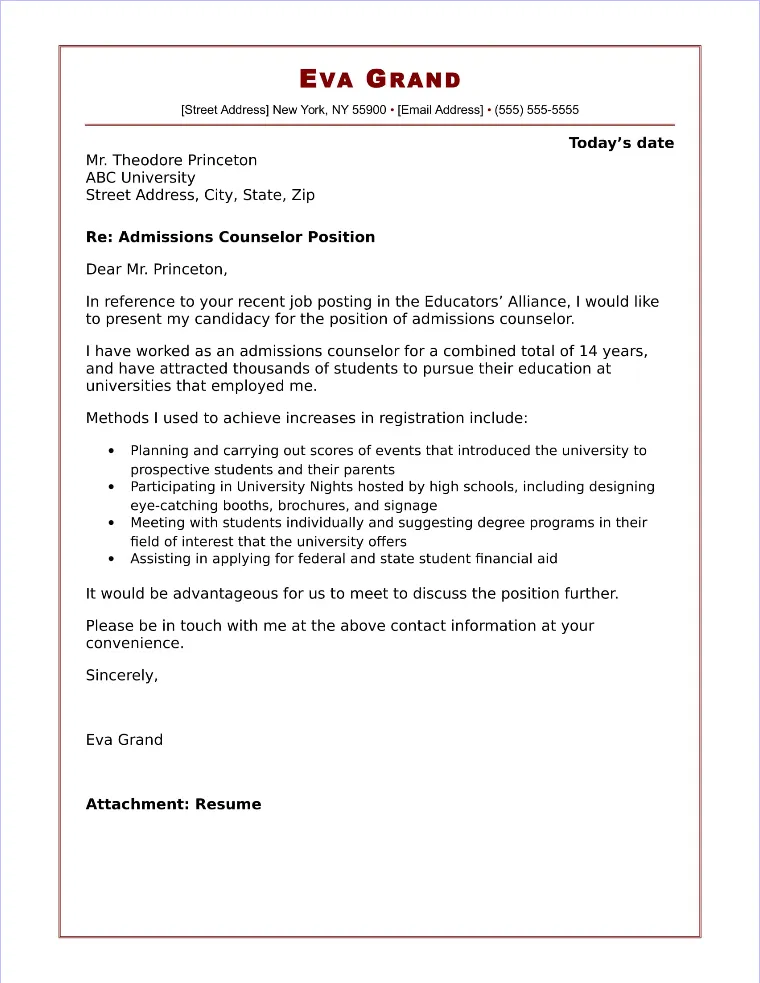
What Is a College Admission Cover Letter (And Why You Need One)
A college admission cover letter is a crucial document that accompanies your application. It serves as your voice, allowing you to introduce yourself to the admissions committee beyond the constraints of grades and test scores. This letter is your opportunity to showcase your personality, experiences, and aspirations in a way that a transcript cannot. Think of it as your personal brand statement, designed to persuade the admissions team that you are a great fit for their institution. In a competitive landscape, a well-crafted cover letter can be the deciding factor, setting you apart from other applicants with similar qualifications. It demonstrates your writing skills, attention to detail, and genuine interest in attending their college or university. Therefore, crafting a compelling cover letter is a non-negotiable step in the college application process.
The Purpose of the Cover Letter
The primary purpose of a college admission cover letter is to provide context to your application. While your transcript and test scores reveal your academic performance, the cover letter helps the admissions committee understand the ‘who’ behind the numbers. It allows you to explain any discrepancies in your academic record, such as a challenging semester or a specific learning disability. Moreover, it provides space to highlight your unique qualities, skills, and experiences that make you a well-rounded individual. A cover letter is where you can articulate your reasons for choosing the particular college, demonstrating your genuine interest and research. It shows how your goals align with the college’s mission and values. In essence, the cover letter bridges the gap between your application and the admissions committee’s understanding of you, creating a personal connection that increases your chances of acceptance.
Key Components of a Cover Letter

A strong cover letter contains several key components that work together to present a compelling case for your admission. Each part serves a specific purpose in conveying your message effectively. The organization and content of your cover letter can significantly impact how the admissions committee perceives your candidacy. Ensuring you include these key components is essential for making a lasting impression. The following sections will discuss these components in detail, providing you with the tools needed to construct a persuasive and memorable cover letter that highlights your strengths and aspirations. These elements help ensure that you present your application in the best possible light, maximizing your chances of standing out from the competition and securing a place at your dream college or university.
Header & Contact Information
The header of your cover letter should include your full name, address, phone number, and email address. This information should be clearly formatted and easy to read. It’s important to use a professional-looking email address. Ensure that the contact information is accurate and up-to-date. This allows the admissions committee to easily reach you if they have any questions or need to send you important updates. Proper formatting and attention to detail in your header demonstrate your professionalism and organizational skills, reflecting positively on your application. This also prepares the admissions committee to effectively communicate with you about the admission process. The header should also include the date and the recipient’s information, such as the admissions office’s name and address.
The Salutation & Introduction
The salutation should be formal and personalized. If possible, address the letter to a specific person, such as the admissions officer or the head of the department. If you cannot find a specific name, use a general greeting such as “Dear Admissions Committee.” Your introduction should immediately capture the reader’s attention. Briefly introduce yourself and state your purpose for writing. Mention the specific program or college you are applying to. Include a brief overview of your key qualifications or experiences that make you a strong candidate. This opening paragraph sets the tone for the rest of your letter and encourages the reader to continue. It should be concise, enthusiastic, and clearly state your intent, making a strong first impression on the admissions committee.
Highlighting Your Academic Achievements

In this section, elaborate on your academic accomplishments. Mention your GPA, class rank, and any honors or awards you have received. Highlight any challenging courses you have taken and succeeded in. Provide specific examples of your academic achievements, such as projects, research papers, or presentations. Quantify your achievements whenever possible; for instance, mention the percentage of your grade increase or the number of awards you have won. This section should demonstrate your academic abilities and your dedication to learning. Emphasize any skills or knowledge you have acquired through your studies that align with the college’s programs or values. The goal is to convince the admissions committee of your intellectual capabilities and your commitment to academic excellence.
Showcasing Extracurricular Activities & Skills
Extracurricular activities reveal your interests, passions, and skills. Detail your involvement in clubs, sports, volunteer work, or other activities. Describe your roles and responsibilities in each activity. Highlight any leadership positions or significant contributions you have made. Showcase the skills you have gained through your involvement, such as teamwork, communication, or problem-solving. Quantify your achievements where possible; for instance, the number of hours you volunteered. Connect your activities to your desired field of study or the college’s values. These activities help to illustrate your well-roundedness, your commitment to community engagement, and your ability to balance multiple commitments. This section should give the admissions committee insights into your personal growth and your ability to thrive outside the classroom.
Demonstrating Your Passion & Fit
Demonstrate your passion for your intended field of study and the college. Explain why you are interested in the specific program or department. Highlight any specific professors, courses, or research opportunities that appeal to you. Show how your values and goals align with the college’s mission and culture. Demonstrate that you have researched the college thoroughly and understand its values. Discuss what makes the college unique and why it is the best fit for you. Convey your genuine enthusiasm for the college. This section shows the admissions committee that you are not just applying randomly, but that you have a clear vision and a specific desire to be a part of their community, increasing your chances of getting admitted.
Sharing Your Goals & Aspirations

Share your long-term goals and aspirations. Explain how attending the college will help you achieve these goals. Describe your career ambitions and how the college’s programs and resources will support your journey. Showcase your future plans, including how you plan to contribute to society. Show your future commitment to the educational institutions. Demonstrate your vision for your future and illustrate how the college will play a crucial role in helping you realize your dreams. This helps the admissions committee understand your potential and how you intend to leverage your education to make a difference.
The Closing & Call to Action
In your closing paragraph, reiterate your interest in the college and your qualifications. Thank the admissions committee for their time and consideration. End with a clear call to action, expressing your anticipation of their response. You might state your enthusiasm for an interview. Include your contact information once more. Maintain a professional and polite tone. Show confidence in your application, and end on a positive note. This final impression leaves a lasting positive mark on the admissions committee, reinforcing your interest and suitability for the college, potentially boosting your chances of acceptance.
Cover Letter Examples
Reviewing examples of college admission cover letters can provide valuable insights into crafting your own. Examining successful cover letters can help you understand how to structure your letter, highlight your strengths, and effectively communicate your aspirations. Analyze how other students have presented their qualifications, described their experiences, and demonstrated their fit for the college. Note the language used, the tone, and the emphasis placed on different aspects of their profile. These examples serve as a guide, illustrating best practices and demonstrating how to connect with the admissions committee. Carefully study these example letters to get inspiration, help structure your own letter and create a strong impression.
Example 1 Letter for Strong Academics

This example focuses on a student with a strong academic record. It highlights academic achievements, such as a high GPA, honors courses, and awards. It emphasizes the student’s commitment to learning and intellectual curiosity. This example includes specific details about the student’s coursework and academic projects. It also shows their research skills and demonstrates their ability to analyze and think critically. The letter showcases any challenges overcome by the student in order to get a good academic record. It should be approximately a page long, and should have good formatting. The aim is to prove the student’s capacity to excel academically.
Example 2 Letter for Unique Experiences
This example is tailored for a student with unique experiences such as travel, internships, or specialized training. The letter focuses on how these experiences have shaped the student and provided them with valuable skills and perspectives. The cover letter should discuss their experience in more detail, explaining how these experiences influenced their learning and contributed to their personal growth. It should describe the skills and knowledge gained. This can give insight into how the student became a well-rounded individual. The letter should discuss the student’s unique qualities and show their ability to learn and adapt in various environments, making them an attractive candidate for any college.
Example 3 Letter for Overcoming Challenges
This example is designed for a student who has overcome significant challenges. It acknowledges and addresses those challenges, such as financial difficulties, personal hardships, or disabilities. The letter demonstrates the student’s resilience, determination, and ability to persevere. It should focus on the lessons learned and the personal growth resulting from these challenges. The cover letter may also highlight the support systems the student used. It should also show the student’s ability to maintain strong academic performance. This type of letter can be very powerful, illustrating the student’s strength of character and their readiness to succeed in college despite obstacles.
Tips for Writing a Compelling Cover Letter

Several techniques can elevate your cover letter, making it stand out. These writing strategies are crucial for effectively communicating your qualifications and ambitions. The use of strong language and clear communication can make a lasting impression, emphasizing your strengths. These can provide greater insight into what a college admissions committee is looking for when evaluating applications. These tips focus on clarity, relevance, and a genuine expression of your personal qualities, all of which will help to ensure your cover letter effectively communicates who you are and what you hope to achieve.
Tailoring Your Letter to Each College
Customizing your cover letter for each college demonstrates your genuine interest and attention to detail. Research the college’s specific programs, values, and culture. Tailor your letter to align with their mission. Mention specific faculty members, courses, or research opportunities. This shows that you have invested time in learning about the college and are not submitting a generic application. Refer to specific aspects of the college that appeal to you, which helps demonstrate that you are genuinely interested in that specific institution. This level of personalization shows the admissions committee that you are a good match, thus increasing your chances of acceptance.
Proofreading & Editing Your Letter
Proofread and edit your cover letter meticulously before submission. Check for grammatical errors, spelling mistakes, and punctuation errors. Ensure that your letter is clear, concise, and well-organized. Have someone else review your letter to catch any errors you might have missed. A polished cover letter shows attention to detail and professionalism. Errors can detract from your application and create a negative impression. Ensure your writing is fluent and easy to understand. These simple steps can dramatically enhance your chances of success and demonstrate your commitment to detail. Your letter should be free of errors and easy to read.
Common Mistakes to Avoid

Certain mistakes can diminish the impact of your cover letter, so it’s crucial to avoid them. These pitfalls can undermine your efforts and negatively affect your application. Awareness of these common errors will help you produce a cover letter that makes a strong positive impression. Addressing these common errors is crucial for producing a document that effectively communicates your strengths and aspirations to the admissions committee.
Not Addressing the Letter to a Specific Person
Failing to address your cover letter to a specific person can make it seem impersonal. If possible, find the name of the admissions officer or a specific person in the department. Using a general salutation, like “To Whom It May Concern,” can make your letter seem generic. Research the college’s website or contact the admissions office to find the correct person’s name. Personalized addresses show your attention to detail and genuine interest. It demonstrates your level of commitment and increases the impact of your letter.
Generic or Vague Language
Using generic or vague language in your cover letter can make it unmemorable. Avoid clichés and overly used phrases. Instead, provide specific examples and details to support your claims. Generic language often fails to convey your unique qualities and experiences. Your cover letter should distinguish you from other applicants. Specific examples highlight your skills and accomplishments. These details help you to create a more convincing case for your admission and make your letter stand out from other applications.
Focusing Too Much on Yourself

While your cover letter should showcase your strengths, avoid focusing solely on yourself. Balance your description of your qualifications with a discussion of how you will contribute to the college community. Show how your goals align with the college’s mission and how you will benefit from attending their institution. Demonstrate that you have researched the college and understand its values. This balanced approach shows you are a good fit and will benefit the college. This demonstrates that you are thinking beyond your individual goals and considering how you can contribute to the college’s success. This approach will make your application more appealing.
Submitting a Letter with Errors
Submitting a cover letter with errors is one of the most significant mistakes you can make. Errors in grammar, spelling, and punctuation can undermine your credibility and attention to detail. Always proofread your letter carefully before submitting it. Ask someone else to review your letter to catch any errors you may have missed. An error-free cover letter shows your professionalism and commitment. Avoid mistakes that can cause the admissions committee to doubt your abilities and commitment. Taking time to edit and proofread your cover letter ensures that your message is communicated effectively and favorably.
Best Practices for Formatting
Proper formatting is essential for creating a professional and readable cover letter. Attention to detail in formatting can significantly enhance the overall presentation of your letter, making it more appealing to the admissions committee. Using these practices can help demonstrate your writing skills and your ability to follow instructions, and these formatting tips ensure that your cover letter looks professional and easy to read, making a positive impact on your application.
Font and Size
Choose a professional and easy-to-read font, such as Times New Roman, Arial, or Calibri. The standard font size is 11 or 12 points. Avoid using overly decorative or unusual fonts. The goal is to ensure readability. Consistency in your font choice enhances the overall appearance of your cover letter. Using a clear and readable font and size allows the admissions committee to focus on the content, rather than getting distracted by the formatting, helping to demonstrate your professionalism and commitment.
Margins and Spacing
Use standard one-inch margins on all sides of your document. Use single-spacing within paragraphs and double-spacing between paragraphs. Proper margins and spacing enhance readability. A well-formatted cover letter looks neat and professional. This ensures your cover letter is visually appealing. A well-formatted document is easier to read and more likely to make a positive impression. The reader can easily follow the flow of information, making it more likely to be engaged and understood.
Conclusion Final Thoughts
Crafting an effective college admission cover letter requires careful planning, writing, and editing. By understanding the purpose of a cover letter, incorporating the key components, and avoiding common mistakes, you can create a compelling document that showcases your strengths and aspirations. Remember to tailor your letter to each college, proofread meticulously, and follow the best practices for formatting. The cover letter is an important part of your application and is a key factor in whether or not you get accepted into college. A well-written cover letter can significantly increase your chances of admission by making a strong first impression and highlighting your unique qualifications. Embrace the opportunity to create a personal connection with the admissions committee and demonstrate why you are the perfect fit for their institution. Good luck with your application!