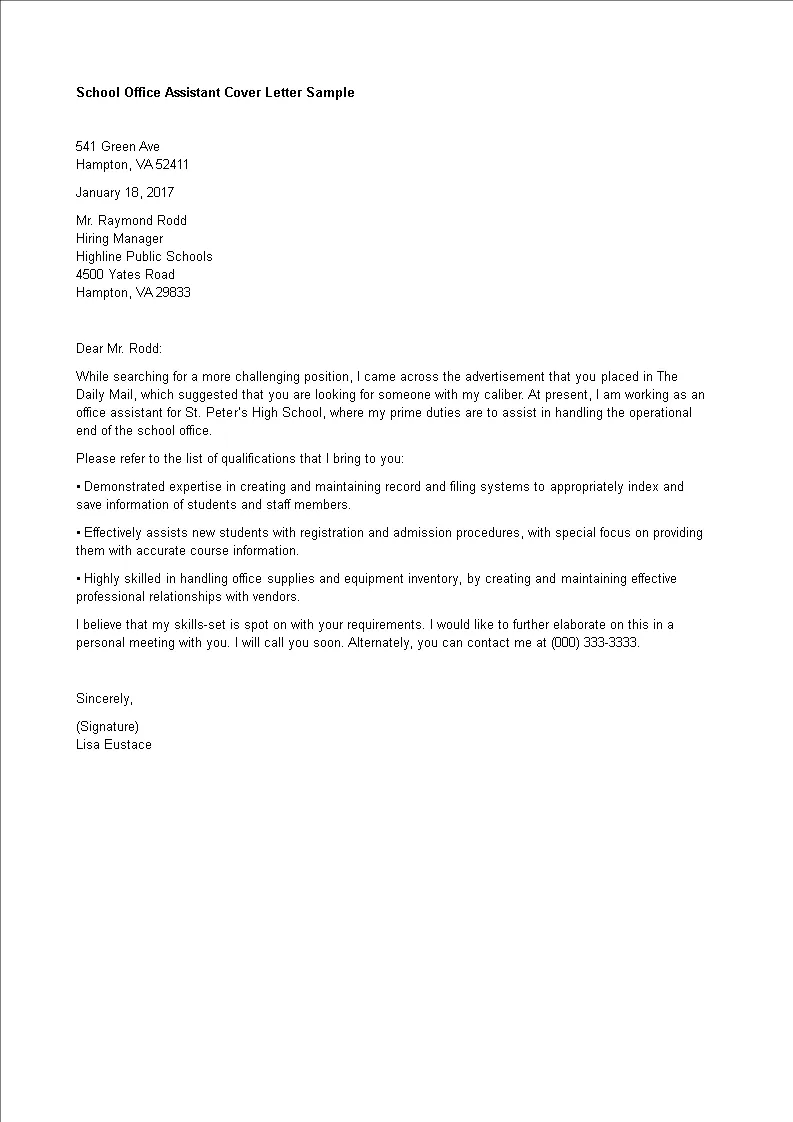
Why Cover Letters Are Crucial for Office Jobs
In the competitive landscape of office jobs a well-crafted cover letter is your secret weapon. It’s not just a formality; it’s your first impression a chance to showcase your personality and skills beyond the confines of your resume. A strong cover letter allows you to explain your interest in the specific role and company demonstrating that you’ve done your research and are genuinely interested. It gives you space to connect your experiences to the job requirements. A compelling cover letter will set you apart from other applicants and increase your chances of landing an interview. Failing to submit a cover letter is often a sign of lack of care or attention to detail.
Highlighting Your Skills & Experience
Your cover letter is the perfect place to highlight the skills and experience that make you the ideal candidate for the office job. Focus on the key requirements listed in the job description and demonstrate how your abilities align with their needs. Provide specific examples of how you’ve utilized those skills in the past, and the positive outcomes you achieved. Remember to tailor your content to each role; this shows that you are actively interested and can be a significant advantage. By clearly presenting your relevant skills and experiences you will capture the hiring manager’s attention and make them want to learn more about you.
Understanding Key Skills

Identify the core skills that are essential for office work. Think about communication organization time management and technical skills. Successful office professionals excel in these areas and you should too. Show the ability to communicate clearly both verbally and in writing. Describe your strategies for managing your time and staying organized even when facing multiple deadlines. Demonstrate your proficiency in relevant software and technologies. If you can effectively communicate how you used these skills in previous jobs you’ll be more likely to impress any potential employer.
Communication skills
Strong communication skills are vital in any office environment. The ability to communicate clearly concisely and professionally both written and verbal is critical. Include examples of how you’ve communicated with colleagues clients and superiors. Also showcase your active listening skills and your capacity to adapt your communication style to different audiences. By demonstrating excellent communication abilities you can show that you can represent the company professionally and build positive relationships internally and externally.
Organization and Time Management
Office jobs demand excellent organizational and time management skills. Demonstrate your ability to prioritize tasks to meet deadlines and maintain a tidy workspace. Describe the organizational systems you’ve used such as using project management tools or setting up systems for managing emails and documentation. Provide specific instances where you successfully managed multiple projects simultaneously or used time management strategies to achieve a goal. Your ability to remain organized and efficient is essential for any office job.
Technical Proficiency

Technical proficiency is critical for nearly all modern office jobs. The more technically literate you are the better you can perform. Specify the software programs and technologies you’re familiar with such as Microsoft Office suites CRM systems or specific industry software. Mention your ability to quickly learn new programs. Also list your typing speed accuracy and any data entry expertise. You can show any ability to troubleshoot technical issues. By showing that you are technically capable you can prove that you can quickly adapt to the technical demands of the office.
Demonstrating Relevant Experience
Back up your skills with real-world experience by demonstrating the use of these skills in previous roles. If you have examples of success in previous roles make sure to include these in your cover letter. Describe how you’ve applied your skills in previous jobs to achieve positive outcomes. For example you may have managed projects solved problems or contributed to efficiency improvements. The more specific you are the more impact your cover letter will have. Make sure to include how the experience aligns with the job’s requirements.
Tailoring Your Letter
Generic cover letters are easily spotted and often discarded. Tailor your cover letter to each specific job and show that you are genuinely interested. Make sure to carefully review the job description and identify the key requirements. Then customize your cover letter to address each requirement. Show that you understand the company’s needs and have the skills and experience to meet those needs. By customizing your letter you demonstrate your commitment to the job and show that you’ve done your research.
Highlighting Achievements

Beyond listing your responsibilities it’s important to highlight your achievements. Use your cover letter as a space to show the value you’ve added in previous roles. Mention specific accomplishments and quantify them whenever possible. Show the impact you’ve had on the organization and how you’ve exceeded expectations. This demonstrates your ability to get results and makes you a more attractive candidate.
Quantifying Your Accomplishments
Quantifying your achievements helps to provide concrete evidence of your contributions. Instead of saying you ‘improved efficiency’ state you ‘increased productivity by 15%’ Include specific data and metrics that highlight the impact of your work. This makes your achievements more credible and memorable. Use numbers to illustrate how you’ve saved money increased sales improved customer satisfaction or streamlined processes. Numbers are more convincing than general statements.
Use Numbers and Data
Incorporating numbers and data is essential for quantifying your accomplishments. Instead of stating you ‘managed social media’ explain that you ‘grew the company’s social media following by 30% in six months’. Use percentages figures or dollar amounts to make your achievements more impactful. For example you can say that you ‘reduced costs by 10%’ or ‘improved customer satisfaction scores by 20%’. Numbers show the tangible value you have brought to previous employers. This is another reason why it is important to always have the numbers available for previous roles.
Formatting and Presentation

The format and presentation of your cover letter can be just as important as its content. A professional well-formatted cover letter is easy to read and makes a good first impression. Make sure to pay attention to the appearance of your cover letter including the font margins and spacing. Use a clean easy-to-read font and make sure your margins are consistent. Ensure your letter is well-organized with clear headings and paragraphs. This will make your cover letter more appealing to any potential employer.
Formatting the Letter
Use a professional format that is easy to read and visually appealing. A standard format is recommended. Start with your contact information including your name address phone number and email. Next provide the date and the hiring manager’s contact information. Use clear headings and concise paragraphs. Break up large blocks of text to make it easier to read. Use bullet points or numbered lists to highlight key skills and accomplishments. Make sure you’ve chosen a layout that is organized and easy to follow. Make sure to tailor the format to reflect your personality.
Choosing the Right Tone
The tone of your cover letter can significantly impact how you are perceived. Use a professional yet enthusiastic tone that reflects your personality. Make sure to be enthusiastic but not overly casual. Avoid slang or informal language and maintain a polite and respectful tone throughout your letter. Show your genuine interest in the company and the role. Make sure to choose the right tone to match the company culture and the specific job requirements.
Proofreading and Editing

Before you submit your cover letter always proofread and edit it carefully. Errors in your cover letter can create a negative impression and may lead to your application being rejected. Check for any grammatical spelling or punctuation errors. Make sure your sentences flow smoothly and that your writing is clear and concise. Asking someone else to proofread your cover letter can help catch errors you may have missed. You should also use grammar and spell checkers to help make the process easier.
Checking for Errors
Carefully check for errors in grammar spelling and punctuation. Use spell-check and grammar-check tools but don’t rely on them completely. Read your cover letter slowly and thoroughly. Look for any typos and also check for any inconsistencies in formatting. Double-check the names of people and the company and that you’ve included the correct information. A cover letter free of errors showcases your attention to detail and professionalism. A careless letter may not go far with any employer.
Seeking Feedback
Ask someone else to read your cover letter. It’s easy to overlook errors and another set of eyes can catch mistakes you might have missed. Ask a friend family member or career counselor to review your letter and provide feedback. Ask for suggestions on how to improve the content formatting and tone of your cover letter. Consider asking a professional to review your cover letter to gain a broader perspective. By getting outside feedback you can identify any weaknesses and improve your letter.
Call to Action and Closing

Conclude your cover letter with a strong call to action and a professional closing. Express your enthusiasm for the position and reiterate your interest in the company. Indicate that you’re eager to discuss your qualifications further and that you are available for an interview. Thank the hiring manager for their time and consideration. Use a formal closing such as ‘Sincerely’ or ‘Best regards’ followed by your name and contact information. A clear call to action and a professional closing will leave a positive and lasting impression.