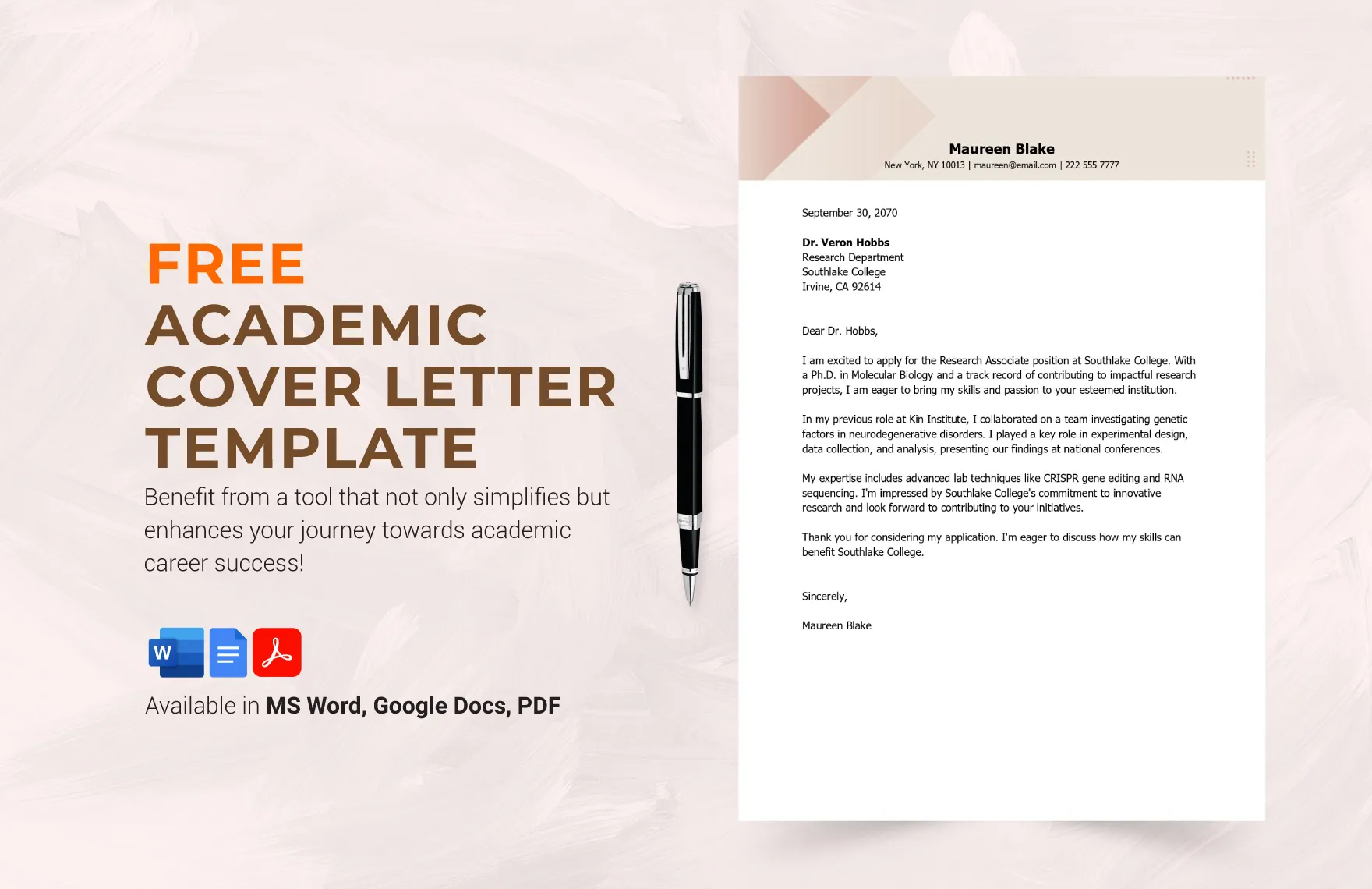
What is an Academic Cover Letter
An academic cover letter is a crucial document accompanying your curriculum vitae (CV) when applying for academic positions. It serves as your introduction to the hiring committee, providing a snapshot of your qualifications, research experience, teaching abilities, and overall fit for the role and the institution. Unlike a general cover letter, an academic cover letter is tailored to the specific requirements of the position and emphasizes your scholarly achievements and potential contributions to the academic community. It’s not just a summary of your CV; it’s an opportunity to articulate your research agenda, teaching philosophy, and how you envision contributing to the department’s goals. Writing a compelling academic cover letter is vital for making a strong first impression and securing an interview. Remember to always customize your letter for each position, highlighting the aspects of your experience that align with the specific needs of the role.
Key Components of an Academic Cover Letter
A well-structured academic cover letter typically includes several key components that showcase your qualifications and suitability for the position. These components work together to present a comprehensive picture of your academic profile. This section will outline each element, from the essential header and contact information to the crucial closing paragraph. By understanding these core sections, you can create a cover letter that effectively highlights your strengths and aligns with the expectations of academic hiring committees. Each component plays a vital role in demonstrating your fit for the position and your potential to contribute to the institution. Remember to keep each section concise, focused, and tailored to the specific job requirements.
Header and Contact Information

Your header should include your full name, address, phone number, and professional email address. It should be formatted consistently and be easily readable. This section provides the essential contact details for the hiring committee to reach you. Ensure your email address is professional and that your phone number is up-to-date. The header should be at the top of the page, typically left-aligned. Always proofread these details carefully to avoid any errors that could prevent the committee from contacting you. Additionally, it’s good practice to include the date and the name and address of the hiring manager or department if you have this information. A clean and professional header sets a positive tone for the entire letter.
The Salutation
The salutation begins the cover letter and sets the tone for your communication. Address the hiring manager by name, if possible. Research the department and the search committee to identify the appropriate recipient. A personalized salutation demonstrates your attention to detail and your genuine interest in the position. If you are unable to determine a specific name, use a professional alternative like ‘Dear Search Committee’. Avoid generic salutations like ‘To Whom It May Concern’ as these can make your application appear less personalized. Always double-check the spelling of the recipient’s name and title. A well-crafted salutation shows that you have taken the time to research the opportunity and personalize your application.
The Opening Paragraph
The opening paragraph is your chance to grab the reader’s attention and make a strong first impression. State the position you are applying for and where you saw the advertisement. Briefly mention your key qualifications and why you are interested in the specific role and institution. Express your enthusiasm for the opportunity and your understanding of the department’s mission or research focus. This paragraph should be concise and highlight your suitability for the position. Use compelling language to hook the reader and encourage them to continue reading. Clearly state your intention to apply and convey your eagerness to contribute to their academic environment. The opening paragraph sets the stage for the rest of your cover letter, so make sure it is impactful and engaging.
Highlighting Your Research Experience

Your research experience is a core component of your academic profile, so you must effectively showcase it in your cover letter. This section should provide a concise overview of your research interests, methodologies, and significant achievements. Highlight your contributions to the field, including any publications, presentations, or grants. Tailor this section to the specific research requirements of the position, emphasizing how your research aligns with the department’s focus. Be specific and provide concrete examples of your research accomplishments. Discuss the impact of your research and your future research goals. A strong research section demonstrates your scholarly expertise and your potential to contribute to the institution’s research environment. Use keywords from the job description to demonstrate alignment.
Research Achievements
Within your research section, emphasize your key achievements. This can include publications in peer-reviewed journals, presentations at conferences, successful grant applications, or any significant findings from your research. Quantify your achievements whenever possible. Use numbers to highlight the impact of your work, such as the number of citations, the amount of grant funding secured, or the number of students you have mentored. Showcase your ability to conduct impactful research and to disseminate your findings effectively. Tailor these achievements to match the requirements of the position. Always provide specific examples to illustrate your successes and to make your achievements more tangible and impressive. Including these details helps the hiring committee evaluate your impact and potential.
Publications and Presentations
Include a concise list of your publications and presentations, formatted according to the standard citation style of your field. Focus on those that are most relevant to the position you are applying for. Highlight your peer-reviewed publications, especially those in high-impact journals. Mention any presentations at significant conferences and workshops. You can also provide links to your publications or your online academic profile, such as your Google Scholar or ResearchGate profile. This allows the hiring committee to easily access your work and learn more about your research contributions. This section offers a quick reference of your scholarly productivity. When including a list of publications, organize them chronologically or thematically, depending on the requirements of the job application.
Teaching Experience and Skills

If the position involves teaching responsibilities, provide details of your teaching experience. Describe the courses you have taught, the level of students, and the teaching methodologies you employed. Highlight your teaching skills, such as your ability to engage students, develop effective curricula, and assess student learning. Include any teaching awards, positive student evaluations, or innovative teaching practices you have implemented. Explain your teaching philosophy and how you approach student learning. Demonstrate your commitment to student success and your ability to create a positive and engaging learning environment. Showcase any experience with online teaching platforms or other innovative educational technologies. The hiring committee seeks candidates who can inspire and educate students effectively.
Teaching Philosophy
Your teaching philosophy should be a concise statement that outlines your approach to teaching. Describe your beliefs about education, your teaching methods, and your goals for student learning. Explain how you create a positive and inclusive classroom environment. Include specific examples of your teaching strategies, such as active learning techniques, the use of technology, or methods for assessing student progress. Show how your teaching aligns with the department’s values and the specific requirements of the position. Tailor your philosophy to address the specific aspects of teaching that are emphasized in the job description. Your teaching philosophy is a great way to showcase your values and principles as an educator. It should also reflect your understanding of the role of teaching and its importance in academia.
Coursework and Training
Mention any relevant coursework, workshops, or training programs you have completed that have enhanced your teaching skills. This can include courses on pedagogy, curriculum development, or online teaching. Include workshops on specific teaching technologies or techniques. If you have participated in a teaching assistant program or mentorship program, be sure to mention it. Any professional development related to teaching should be included. This shows that you are committed to continually improving your teaching skills. Tailor these details to align with the requirements of the position and the values of the institution. Highlighting your additional training and professional development activities can strengthen your application and show your dedication to the role of a teacher.
Addressing the Job Requirements

Carefully review the job description and address each of the stated requirements. This demonstrates that you have thoroughly understood the position and are a good fit. Use the job description as a guide for structuring your cover letter. Highlight how your skills, experience, and qualifications meet each of the criteria mentioned. Provide specific examples to support your claims. Refer to the keywords in the job description and incorporate them naturally into your cover letter. Explain how your research interests, teaching experience, and other qualifications align with the department’s needs. Use the job description as a checklist to ensure you haven’t missed any essential requirements. Addressing the job requirements is crucial in convincing the hiring committee that you are a strong candidate.
Tailoring the Letter to the Position
Each academic position is unique, and your cover letter should reflect that. Customizing your cover letter to each position you apply for is essential. Research the department, the specific faculty, and the institution’s mission to tailor your letter. Emphasize the aspects of your experience that are most relevant to the specific job requirements. Demonstrate your understanding of the department’s research interests and teaching needs. Highlight how your skills and experience align with the role. Tailoring your letter shows that you have taken the time to understand the position and that you are genuinely interested in the opportunity. Generic cover letters are easily spotted, and you must avoid them. A well-tailored letter can significantly increase your chances of securing an interview.
Demonstrating Fit with the Institution
Demonstrate your understanding of the institution’s values and mission. Research the university’s strategic plan, its research priorities, and its teaching philosophy. Explain how your research aligns with the institution’s research focus. Demonstrate your awareness of the department’s specific strengths and goals. Show how you can contribute to the department’s overall mission. Indicate why you are attracted to the institution and how you see yourself fitting into the academic community. Your goal should be to convince the committee that you are the perfect candidate for the role by highlighting the ways you fit in with the institution’s objectives. By showcasing your knowledge of the institution, you show that you are prepared to align your career goals with their mission.
The Closing Paragraph

Conclude your cover letter with a strong closing paragraph. Reiterate your interest in the position and express your enthusiasm for the opportunity. Summarize your key qualifications and reiterate your suitability for the role. Thank the hiring committee for their time and consideration. Indicate your willingness to provide any additional information or materials they might need. Include a call to action, such as stating that you are looking forward to hearing from them soon. End with a professional closing, such as ‘Sincerely’ or ‘Best regards’, followed by your typed name. Proofread the entire cover letter before submitting it, and ensure that the closing paragraph reinforces your key strengths and suitability for the role. The closing paragraph is the last impression you leave, so make it a strong one.
Proofreading and Formatting Your Letter
Careful proofreading and formatting are crucial for a professional cover letter. Proofread your letter multiple times to catch any grammatical errors, spelling mistakes, or formatting inconsistencies. Use a consistent font and formatting throughout the document. Ensure that your paragraphs are well-structured and that your ideas flow logically. Use a professional and readable font such as Times New Roman, Arial, or Calibri. Use clear headings and subheadings to organize your content. Proofread it to see whether all information is correct. Review for consistency. Have a friend or colleague review your cover letter. Always make sure that your cover letter looks good as this helps convey a positive impression of you as a professional.
Common Mistakes to Avoid
Several common mistakes can significantly weaken your academic cover letter. Avoid using generic language and clichés. Do not simply reiterate your CV. Instead, expand on your experiences and showcase your strengths in a way that your CV cannot. Do not include irrelevant information or information that is not directly related to the position. Avoid making the letter too long; ideally, it should be one or two pages. Be accurate and truthful in all your claims. Ensure that your cover letter is free of grammatical errors and spelling mistakes. Do not use jargon or overly complex language that might confuse the reader. Avoid negativity or complaining about previous employers or situations. By avoiding these common mistakes, you can create a strong and compelling cover letter that increases your chances of success. Your letter is a representation of your abilities and you should present it in the best way possible.