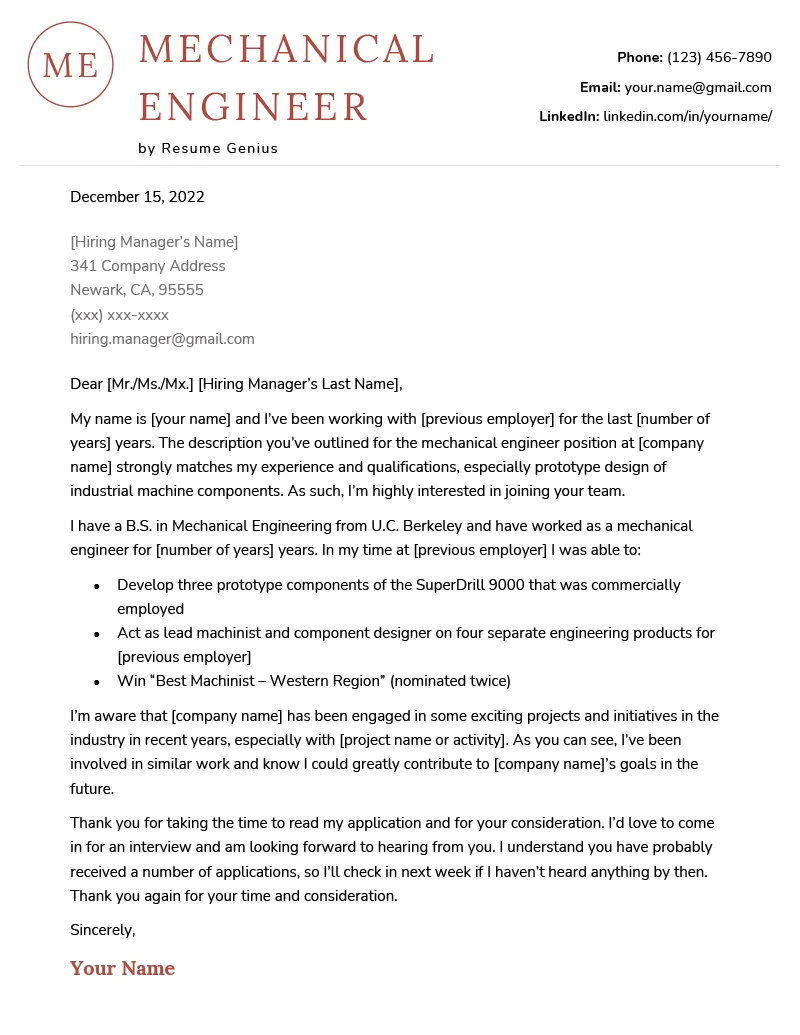
Why a Strong Cover Letter Matters
In the competitive field of civil engineering, a well-crafted cover letter is your first opportunity to make a lasting impression. More than just a formality, it’s your chance to introduce yourself, showcase your personality, and highlight why you’re the ideal candidate for the job. A compelling cover letter can significantly increase your chances of securing an interview, making it a critical component of your job application. It allows you to expand on your resume, providing context to your experiences and demonstrating how your skills align with the specific requirements of the role. This is where you can tell a story and connect your qualifications with the needs of the employer, setting you apart from other applicants. A strong cover letter makes you standout, and in the engineering world, standing out is key.
Crafting a Compelling Cover Letter for Civil Engineers
Creating a compelling cover letter involves more than simply listing your qualifications. It’s about crafting a narrative that demonstrates your understanding of the role and the company’s needs. Start by researching the company and the specific job requirements. This knowledge will guide you in tailoring your letter to the position, highlighting the skills and experiences that are most relevant. A strong cover letter should be concise, well-organized, and easy to read. Use clear, professional language, and avoid jargon that may not be familiar to all readers. The tone should be enthusiastic and professional, conveying your genuine interest in the opportunity. Proofread meticulously to eliminate any errors in grammar or spelling, as these can detract from your professionalism.
Highlighting Your Skills and Experience

Your cover letter is the ideal place to showcase the skills and experience that make you a standout civil engineer. Instead of merely restating your resume, elaborate on specific projects and accomplishments. Discuss your role in these projects, the challenges you faced, and the solutions you implemented. Emphasize your technical skills, such as proficiency in relevant software, knowledge of engineering principles, and experience with different types of projects. Provide concrete examples of how you’ve applied these skills to achieve successful outcomes. Use action verbs to describe your accomplishments and quantify your achievements whenever possible. By highlighting your skills and experiences in a clear and concise manner, you can convince the employer of your ability to make a significant contribution to their team.
Technical Skills to Showcase
Civil engineers require a diverse set of technical skills, and your cover letter is the perfect place to highlight them. Mention your proficiency in relevant software such as AutoCAD, Civil 3D, Revit, and structural analysis programs. Detail your experience with different types of projects, whether it’s bridge design, road construction, or water management. Highlight your understanding of engineering principles, including structural analysis, geotechnical engineering, and hydraulic design. Be sure to include any certifications or licenses you hold, such as a Professional Engineer (PE) license. If you have experience with specific materials or construction methods, be sure to mention that as well. The more detail you provide regarding your technical skills, the better the employer can understand what value you will bring.
Project Management Prowess
Project management is an essential skill for civil engineers. Showcase your experience in managing projects from start to finish, including planning, budgeting, scheduling, and resource allocation. Describe your experience with project teams and your ability to effectively communicate with team members, clients, and stakeholders. Highlight your ability to meet deadlines and stay within budget. If you have experience with risk management or quality control, be sure to mention that as well. Providing examples of successful project management is especially important, as it demonstrates your ability to deliver results. Any project management experience, no matter how small it may seem, is helpful in demonstrating your value to the potential employer.
Software Proficiency

In today’s engineering world, proficiency in various software programs is crucial. In your cover letter, specifically list the software you are proficient in, and provide details on how you use these programs. This may include CAD software for design, structural analysis software for calculations, or project management software for tracking progress. If you have experience with BIM (Building Information Modeling) software, be sure to highlight that, as it is an increasingly important skill in the industry. Don’t just list the software; explain how you use it to solve problems or improve efficiency. For example, state how you used AutoCAD to create detailed construction drawings for a specific project. The more detailed your software descriptions are, the better your chances of impressing the potential employer.
Quantifying Achievements
One of the most effective ways to impress a potential employer is to quantify your achievements. Whenever possible, use numbers and data to demonstrate your impact. For example, instead of saying you ‘managed projects,’ say you ‘managed projects with budgets ranging from $500,000 to $2 million.’ Instead of saying you ‘improved efficiency,’ state that you ‘improved project efficiency by 15% by implementing new scheduling software.’ These types of figures give the employer a clear understanding of your capabilities and the value you bring to the table. Quantifying your accomplishments will make your cover letter more persuasive and memorable.
Showcasing Project Successes
Your cover letter is an ideal platform to highlight successful projects you’ve been involved in. Choose a few of your most impressive projects and provide a brief overview of your role, the challenges you faced, and the outcomes achieved. For each project, highlight key accomplishments, such as completing the project on time and within budget, or exceeding client expectations. Be specific and provide details that demonstrate your skills and expertise. If possible, include quantifiable results, such as cost savings, efficiency gains, or improved project outcomes. Don’t be afraid to boast a little bit about your accomplishments; this is the time to make yourself shine. Be sure to tailor your project examples to match the type of work the employer does, so the prospective employer can see how your experience is relevant.
Demonstrating Problem-Solving Abilities

Civil engineers are often called upon to solve complex problems. Your cover letter should demonstrate your problem-solving abilities by providing examples of how you’ve overcome challenges in your previous roles. Describe a specific problem you faced, the steps you took to analyze the situation, the solutions you developed, and the results you achieved. Highlight your ability to think critically, make sound judgments, and find creative solutions to complex engineering issues. Showcasing your problem-solving skills will give the employer confidence in your ability to handle the challenges that come with the job. If there were any unique challenges or difficulties that you faced, be sure to include those in your explanation, so the reader can gain insight into the context.
Tailoring Your Cover Letter to the Job
The key to a successful cover letter is to tailor it to the specific job you’re applying for. This means researching the company and the role, and customizing your letter to address the specific requirements and expectations. Generic cover letters are easily identified and often discarded. Take the time to carefully review the job description and identify the key skills and experiences the employer is seeking. Then, highlight the skills and experiences that align with those requirements, providing examples of how you’ve demonstrated those skills in the past. This shows the employer that you’ve taken the time to understand their needs and that you’re genuinely interested in the position. Tailoring your letter takes time and effort, but the increased chances of being hired makes it worth the investment.
Researching the Company and the Role
Before writing your cover letter, conduct thorough research on the company and the specific role you’re applying for. Visit the company’s website to learn about its mission, values, and recent projects. Research the company’s culture and work environment. Understand the specific responsibilities and requirements of the role. This information will allow you to tailor your cover letter to the company’s needs and demonstrate your genuine interest in the position. Look for news articles, press releases, or social media posts to gain a deeper understanding of the company. When you show that you have knowledge of the company and the position, it significantly increases your chances of success.
Customizing Your Letter for Specific Requirements

Once you understand the company and the role, customize your cover letter to address the specific requirements outlined in the job description. Identify the key skills, experiences, and qualifications the employer is seeking. Highlight your relevant skills and experiences, providing concrete examples of how you’ve demonstrated those skills in the past. Use the same keywords and phrases from the job description in your cover letter, as this can help your application pass through Applicant Tracking Systems (ATS). Be sure to explain how your skills and experiences align with the company’s needs and how you can contribute to their success. Make your letter a clear and concise summary of your value as an employee.
Formatting and Presentation
The formatting and presentation of your cover letter are just as important as the content. A well-formatted cover letter is easy to read and makes a positive impression. Choose a professional font, such as Times New Roman, Arial, or Calibri, and use a font size of 11 or 12 points. Use clear headings and subheadings to organize your content and make it easy for the reader to scan. Use bullet points to highlight key skills and accomplishments. Use a consistent format throughout the document. Ensure your letter is free of grammatical errors and spelling mistakes. A well-presented cover letter shows that you pay attention to detail and take pride in your work. It’s important to remember that your cover letter is representing you, so the presentation must reflect your personality.
Choosing the Right Font and Layout
Selecting the right font and layout is critical for readability and visual appeal. Choose a font that is clean, professional, and easy to read. Avoid using overly fancy or decorative fonts. Use a standard font size of 11 or 12 points to ensure the text is legible. Structure your letter with clear margins, typically one inch on all sides. Use a single-spaced format within paragraphs and double-space between paragraphs. This will help the reader’s eyes. Proper formatting helps to make your cover letter more attractive and easy to navigate. Also, keep the layout simple and uncluttered. A clean layout makes your letter more visually appealing and allows the reader to focus on your content. Keep in mind that the hiring manager may be reading hundreds of cover letters, so make sure yours is as easy to read as possible.
Proofreading and Editing for Perfection

Proofreading and editing your cover letter is an essential step in the job application process. Even small errors can detract from your professionalism and reduce your chances of getting hired. Before submitting your cover letter, carefully proofread it for any grammatical errors, spelling mistakes, or typos. Read your letter aloud to catch any awkward phrasing or sentence structure. Have a friend, family member, or career advisor review your letter as well. They can provide an outside perspective and identify any areas that need improvement. Check for consistency in formatting and style. Proofreading is critical to ensure that your cover letter is polished and presents you in the best possible light. Taking the time to proofread demonstrates your attention to detail and commitment to quality.
Closing Your Cover Letter Effectively
The closing of your cover letter is your final opportunity to leave a lasting impression on the reader. Express your enthusiasm for the position and reiterate your interest in the opportunity. Thank the reader for their time and consideration. Include a call to action, such as inviting them to contact you for an interview or providing your contact information again. Keep the closing brief and professional. Avoid clichés or overly casual language. The closing is your final chance to make a positive impression, so make it count. The closing can set the tone for future correspondence. By making your closing effective, you increase your chances of moving to the next stage in the hiring process.
Expressing Enthusiasm and Professionalism
Your cover letter should express your genuine enthusiasm for the opportunity and your commitment to professionalism. Show your excitement about the role and the company. Demonstrate your understanding of the company’s mission, values, and recent projects. Use professional language throughout your letter, avoiding slang or informal language. Maintain a positive and confident tone. Convey your genuine interest in the position and your ability to contribute to the company’s success. Your enthusiasm and professionalism will make a positive impression on the reader and make you stand out from the competition. Your enthusiasm should be clear and concise, and reflect your interest in the role.
Providing Contact Information and a Call to Action

Make it easy for the hiring manager to contact you. Provide your contact information, including your phone number and email address. Repeat your contact information at the end of your letter to make it easier for them. Include a call to action, such as inviting them to contact you for an interview. Your call to action should be clear and concise. If you’re applying for a specific position, mention it by name. A strong call to action encourages the reader to take the next step. This demonstrates your interest in the role and makes it easier for them to move forward with your application. By making it easy for them to take action, you increase your chances of being hired.