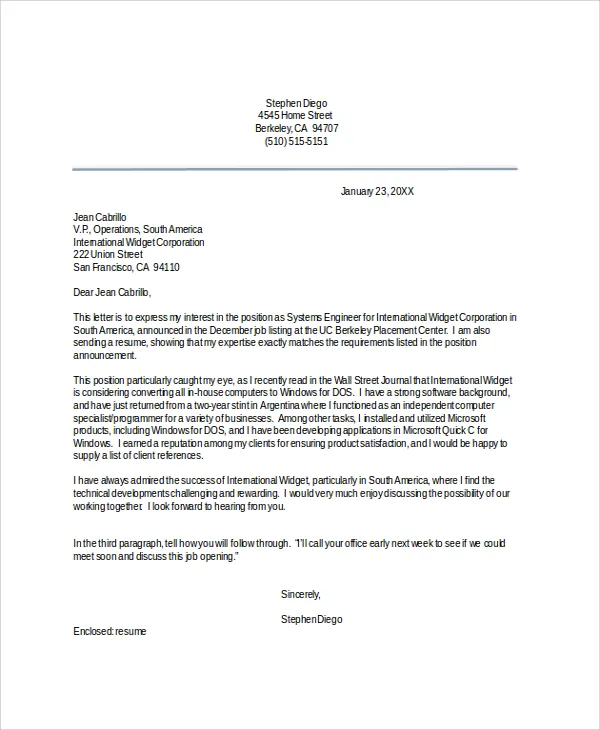
Why Cover Letter Format Matters
Your cover letter is your first impression. It’s your chance to make a compelling case for why you’re the perfect candidate, and the format plays a crucial role in that. A well-formatted cover letter is easy to read, professional, and demonstrates your attention to detail. It shows the hiring manager that you respect their time and that you take the application process seriously. Conversely, a poorly formatted letter can be immediately dismissed, regardless of the content. A cluttered or confusing layout can make it difficult for the reader to grasp your key qualifications and enthusiasm for the role, potentially leading to your application being overlooked. A properly formatted cover letter makes your application look more professional and increases the chances of your resume being read.
Understand the Basic Cover Letter Format
The standard cover letter format consists of several key sections, each with its specific purpose. Following a consistent structure helps ensure that your letter is organized, easy to read, and provides all the necessary information. Understanding this basic structure is the foundation for writing effective cover letters that capture the hiring manager’s attention. Each section contributes to the overall impact of your letter, and neglecting any of these could negatively affect your application. Pay close attention to these sections, and you’ll be able to craft a cover letter that truly stands out from the competition. We will go through each section to ensure you master each part, thus making you a master cover letter writer.
Heading Section

The heading is the very first element of your cover letter. It contains your contact information. This section is crucial as it allows the recruiter to quickly identify you and know how to reach you. It also sets the professional tone of the document. This section should always be at the top of your cover letter, aligned to the left or right, depending on your preference. Ensure it is clear, concise, and easy to read, making it simple for the hiring manager to contact you if they are interested in your application. Always use a readable font like Arial or Times New Roman for this section.
Contact Information
Your contact information typically includes your full name, phone number, email address, and sometimes your LinkedIn profile URL or professional website. Make sure the information is accurate and up-to-date. Use a professional-sounding email address. Double-check all details to avoid any errors that could prevent the recruiter from reaching you. Presenting your contact information in a neat and organized manner will ensure that recruiters can easily find the ways to reach you. Do not forget your phone number and your email address as these are key.
Date
The date is usually placed below your contact information, often aligned to the left or right, depending on the style of your heading. It’s important to include the date to indicate when you wrote the letter. This helps the recruiter to understand when the application was submitted. Use a consistent format for the date, such as month-day-year (e.g., May 15, 2024). The date should be clearly visible and separate from other elements to avoid confusion. This simple detail can make a big difference in your application’s professionalism. A dated cover letter showcases that you are organized.
Recipient’s Information

This section includes the name and title of the hiring manager (if known), the company name, and the company’s address. Addressing the letter to a specific person is always preferred. If the name is not available, try to find it on LinkedIn or the company website. If you can’t find a specific name, use a general salutation like ‘Dear Hiring Manager’. Including the recipient’s information shows that you have researched the company and are genuinely interested in the position. Use the correct title and avoid any typos. Proper addressing shows respect for the recipient and is a mark of professionalism.
Salutation
The salutation begins your letter, setting the tone for your communication. Use ‘Dear Mr./Ms./Mx. [Last Name]’ if you know the hiring manager’s name. If you don’t know the name, use a professional greeting such as ‘Dear Hiring Manager’. Avoid overly casual greetings like ‘Hi’ or ‘Hello’. Your salutation should be followed by a comma. A good salutation sets the tone for the rest of your letter, so it’s important to get it right. This is the first thing they’ll read after the heading, so make sure it’s professional and respectful. Be sure to match the tone of the job requirements; some companies prefer more formal letters while some are less rigid.
Body of the Cover Letter
The body of the cover letter is where you make your case for why you are a good fit for the job. It typically consists of three paragraphs, each with a specific purpose. The body of your cover letter is your primary opportunity to showcase your skills, experience, and enthusiasm for the position. This section is the heart of your cover letter, where you elaborate on your qualifications and demonstrate your understanding of the role and the company. The way you structure and articulate your thoughts here can significantly influence the hiring manager’s perception of you and your candidacy. Make it count.
First Paragraph

In the first paragraph, state the position you are applying for and how you found the job posting. Briefly mention why you are interested in the role and the company. Your introduction should immediately grab the reader’s attention and make them want to learn more. Your initial paragraph should be a concise and engaging introduction that immediately captures the hiring manager’s attention. Start with a clear statement of the position you are applying for and how you learned about the opportunity. This sets the context for your letter. Then, express your enthusiasm for the role and the company. This shows your initiative and genuine interest. Keep it short and sweet, focusing on the essential information.
Second Paragraph
The second paragraph highlights your relevant skills and experiences. This is where you showcase how your qualifications match the job requirements. Provide specific examples to support your claims. Quantify your achievements whenever possible to demonstrate your impact. The middle paragraph is the core of your cover letter, where you elaborate on your qualifications and demonstrate how your skills and experience align with the job requirements. Focus on the key requirements mentioned in the job description and provide specific examples from your work history to illustrate your abilities. Quantify your accomplishments to highlight the impact you made in previous roles. Be sure to tailor this paragraph to the specific requirements of the job you’re applying for. This tailored approach shows the hiring manager that you’ve taken the time to understand the position and are a good fit.
Third Paragraph
In the third paragraph, reiterate your interest in the position and company. Briefly summarize why you are a strong candidate. Include a call to action, such as expressing your availability for an interview. This paragraph provides a concise and impactful conclusion to your cover letter. This section should show your enthusiasm and professionalism, prompting the hiring manager to consider you for an interview. Reiterate your interest in the role and the company, emphasizing your key qualifications and why you’re a strong candidate. Then, end with a clear call to action, such as stating your availability for an interview and thanking them for their time and consideration. Keep this section brief, focused, and action-oriented to leave a positive and lasting impression.
Closing Section

The closing section includes your complimentary close, signature, and typed name. It provides a professional ending to your letter. The closing section provides a final touch of professionalism, leaving a positive impression on the hiring manager. This is the final part of your cover letter, so make sure it is as professional and polished as the rest. This section should be concise, polite, and ensure your communication ends on a positive note. The goal is to reinforce your professionalism and respect for the hiring process.
Complimentary Close
Choose a professional closing such as ‘Sincerely,’ ‘Respectfully,’ or ‘Best regards.’ Avoid informal closings such as ‘Thanks’ or ‘Cheers.’ The complimentary close should be followed by a comma. A well-chosen complimentary close sets the tone for a professional ending. Your choice should be formal and respectful. The closing phrase should be followed by a comma. Keep your complimentary close professional and respectful. Remember, this is the last message they’ll read before your name, so make it count.
Signature
If submitting a digital cover letter, leave space for your handwritten signature. If printing and mailing your cover letter, sign it in blue or black ink. The signature adds a personal touch. In a digital application, it is common to leave space for your signature. If you are mailing a hard copy, sign it with either blue or black ink, which is considered the most professional. This element is more than just a formality; it adds a personal touch that resonates with the reader. It is a subtle way of asserting your authenticity and attention to detail. This small step demonstrates a level of professionalism that can set you apart from other candidates.
Typed Name

Type your full name below your signature. This provides clarity and ensures the hiring manager can easily identify your name. Your typed name should be clearly readable and placed below your signature. It is a standard practice that ensures clarity, making it easy for the reader to identify you. It’s a finishing touch that completes the professional look of your cover letter. Always make sure your name is readable.
Top 5 Tips for an Impressive Cover Letter
Writing a compelling cover letter requires more than just following the correct format. It involves strategic planning and attention to detail. These top five tips will help you create a standout cover letter. They’ll make your application more memorable and increase your chances of securing an interview. Incorporating these tips will help you create a cover letter that will impress any hiring manager. Mastering these techniques will give you a significant advantage in your job search.
Tip 1 Tailor Your Letter
Customize your cover letter for each job application. Research the company and the specific role. Highlight the skills and experiences most relevant to the job description. Tailoring your cover letter demonstrates your genuine interest in the role and the company. Avoid sending generic cover letters. Show the hiring manager that you have read the job description and understand the requirements. Tailor your cover letter to the specific role and company. This will not only increase your chances of getting noticed but also demonstrates your genuine interest in the role. Carefully review the job description, identifying the key skills, experiences, and qualifications the employer is seeking. Make a point to match these elements in your cover letter. This tailored approach shows the recruiter that you have taken the time to research the company and are not simply sending out a generic application. This personalization helps you stand out.
Tip 2 Highlight Relevant Skills

Focus on the skills and experiences that match the job requirements. Use keywords from the job description. Provide examples that showcase your abilities. Highlight your key skills and show how they align with the role. This will immediately show the hiring manager that you’re a suitable candidate. Focus on the skills and experiences that align with the job requirements. Start by carefully reviewing the job description and identifying the key skills and qualifications the employer is seeking. Then, highlight these skills in your cover letter, providing specific examples to showcase your abilities. It’s helpful to incorporate keywords from the job description to ensure your letter is noticed. Tailor your letter to reflect the unique aspects of the role and demonstrate why you’re the best candidate. This will significantly improve your chances of making a great impression.
Tip 3 Quantify Your Accomplishments
Use numbers and data to demonstrate your achievements. Quantify your accomplishments whenever possible. For example, instead of saying ‘Improved sales,’ say ‘Increased sales by 15% in one quarter.’ Quantifying your accomplishments provides concrete evidence of your skills and impact. Use numbers and data to quantify your achievements. Instead of making general statements about your skills and experiences, provide specific examples to demonstrate your impact. This shows your impact and effectiveness in previous roles. Use numbers, percentages, and statistics to back up your claims. For example, if you improved sales, mention the percentage increase over a specific period. By quantifying your achievements, you provide concrete evidence of your abilities. This is important for your success.
Tip 4 Proofread and Edit
Always proofread your cover letter for any errors. Check for grammar, spelling, and punctuation mistakes. Ask someone else to review your letter. A polished cover letter reflects your attention to detail and professionalism. Proofread your cover letter multiple times and ask someone else to review it. This will help you to catch any errors that you may have missed. Check for grammar, spelling, and punctuation mistakes. A polished cover letter reflects your attention to detail and professionalism. Make sure your cover letter is free of errors. A few mistakes could have your application dismissed. Your cover letter must be free from any mistakes. By catching errors before submitting, you increase the chances of making a positive impression.
Tip 5 Keep It Concise

Keep your cover letter concise and to the point. Aim for one page. Focus on the most important information and avoid unnecessary details. Be clear and direct in your language. A brief and impactful cover letter is more likely to be read and remembered. Keep your cover letter concise and to the point. The goal is to communicate your key qualifications and interest efficiently, so aim to keep your cover letter to one page. Focus on the most important information, avoid unnecessary details, and be clear and direct in your language. Concise language makes your letter more impactful. By being clear and focused, you will make a stronger impression and increase your chances of success.
Cover Letter Format Mistakes to Avoid
Avoiding common mistakes can significantly improve the effectiveness of your cover letter. These errors can lead to immediate rejection. Understanding these pitfalls will help you refine your approach. By avoiding common mistakes, you’ll increase your chances of success in your job search. Your goal should be to keep your application free from any mistakes. Always make sure your cover letter is reviewed by a friend or family member.
Common mistakes include generic cover letters, typos and grammatical errors, lack of personalization, and being too lengthy. Other mistakes include not tailoring the letter to the job, not highlighting relevant skills, and using a casual tone.