Understanding the Importance of a Cover Letter for Teaching Abroad
Embarking on a teaching adventure abroad is an exciting prospect, and a well-crafted cover letter is your first step toward making that dream a reality. It’s more than just a formality; it’s a critical tool that can significantly impact your chances of securing an international teaching position. In the competitive landscape of international education, a strong cover letter serves as your initial introduction to potential employers, providing you with the opportunity to showcase your unique skills, experiences, and passion for teaching. The cover letter allows you to go beyond the basic information provided in your resume, enabling you to paint a vivid picture of your qualifications and suitability for the role, while also expressing your enthusiasm for living and working in a new cultural environment. A well-written cover letter can be the deciding factor in whether your application moves forward or gets overlooked.
Why a Strong Cover Letter Matters
A compelling cover letter is not merely a formality; it’s a crucial marketing tool in the competitive field of international teaching. It’s your first impression, your chance to make a memorable impact and grab the attention of the hiring committee. Your resume provides facts, but the cover letter allows you to tell your story, connecting your experiences and skills to the specific requirements of the teaching position and the values of the school. A well-structured cover letter demonstrates your writing proficiency, organizational skills, and attention to detail – all essential qualities for an effective educator. It’s an opportunity to personalize your application and express your genuine interest in the specific school and the opportunity to teach abroad. A strong cover letter sets you apart from other applicants and increases your chances of securing an interview. Remember the initial impression is always important, a great cover letter helps you to move one step closer to your dream job.
Highlighting Your Skills and Experience
Your cover letter provides the perfect platform to showcase your unique skills and experiences, highlighting how they align with the needs of the specific teaching position. Start by carefully reviewing the job description and identifying the key requirements, qualifications, and preferred skills. Then, use your cover letter to provide concrete examples of how you have demonstrated these skills in previous roles. Quantify your achievements whenever possible by providing specific examples, such as the number of students you’ve taught, the improvements you’ve seen in student performance, or the successful projects you’ve led. Emphasize transferable skills, such as communication, collaboration, and problem-solving, which are highly valued in any international teaching environment. Make sure you tailor your responses to the specific needs of the position, focusing on those skills and experiences most relevant to the school and the role.
Tailoring Your Cover Letter to the Specific School
Generic cover letters are easily identified and often discarded. To truly excel, you must tailor each cover letter to the specific school and position. Begin by researching the school thoroughly. Visit their website, read their mission statement, and learn about their values, teaching methodologies, and curriculum. If possible, try to speak with current or former teachers at the school to gain additional insights. In your cover letter, demonstrate your understanding of the school’s specific needs and how your skills and experience align with their requirements. Mention specific programs, initiatives, or aspects of the school that particularly appeal to you. This level of personalization shows your genuine interest and commitment, making your application stand out from the crowd. Showing that you have done your homework and you are not just sending a generic application will greatly improve your chances of getting hired.
Key Components of an Excellent Cover Letter for Teaching Abroad
Personal Introduction and Expression of Interest

Your opening paragraph is critical. It should immediately grab the reader’s attention and clearly state the position you are applying for. Briefly introduce yourself and express your enthusiasm for the opportunity. Mention where you found the job posting and what specifically attracted you to the school or position. Make a strong first impression by conveying your passion for teaching and your excitement about the prospect of teaching abroad. This opening sets the tone for the rest of your letter and encourages the reader to continue exploring your qualifications. You want them to be interested in learning more about you and what you have to offer from the very beginning. The introduction should be concise, enthusiastic, and directly address the reader.
Showcasing Your Qualifications and Credentials
The core of your cover letter should highlight your qualifications and credentials. This is where you provide evidence of your teaching abilities, experience, and education. Detail your relevant teaching experience, emphasizing the subjects and grade levels you have taught. Mention any certifications, licenses, or degrees that are relevant to the position. Support your claims with specific examples of your achievements, such as improvements in student performance, successful implementation of new teaching strategies, or awards and recognition you have received. If you have experience teaching in diverse cultural contexts or working with students from different backgrounds, be sure to highlight this. Make sure that you directly address the requirements listed in the job description and demonstrate how your skills and experience meet those criteria. The goal is to persuade the reader that you are the best candidate for the job.
Highlighting Relevant Teaching Experience
Focus specifically on your teaching experience and skills. Detail the subjects and grade levels you’ve taught, and include the duration of your experience. Describe your teaching methodologies, highlighting your ability to create engaging lesson plans, differentiate instruction, and assess student learning effectively. Provide examples of how you have fostered a positive and inclusive classroom environment. Quantify your achievements whenever possible, such as the percentage increase in student test scores or the number of successful projects you’ve led. If you have experience using technology in the classroom, be sure to mention this, as it is a highly valued skill in many international schools. By focusing on your practical experiences, you can demonstrate your ability to apply your knowledge and skills in a real-world teaching environment.
Demonstrating Cultural Sensitivity and Adaptability

Teaching abroad demands a high degree of cultural sensitivity and adaptability. In your cover letter, demonstrate your awareness of cultural differences and your willingness to embrace new experiences. Discuss any experiences you have had living, working, or traveling in diverse cultural environments. Highlight your ability to communicate effectively with people from different backgrounds and your understanding of cross-cultural communication styles. Mention any language skills you possess and your willingness to learn new languages. Express your enthusiasm for learning about the local culture and integrating yourself into the school community. Show your potential employer that you are not only prepared for the challenges of teaching abroad but also eager to thrive in a new environment and make a positive contribution to the community.
Expressing Enthusiasm and Commitment
The closing paragraph of your cover letter should reinforce your enthusiasm for the position and your commitment to the school. Reiterate your interest in the opportunity and express your desire to contribute to the school’s mission and values. Thank the hiring manager for their time and consideration. State that you are eager for the opportunity to discuss your qualifications further in an interview. Be sure to include your contact information, including your email address and phone number. A strong closing leaves a positive and lasting impression, reinforcing your suitability for the role and your genuine interest in the position.
Formatting and Style for Your Cover Letter
Professional Tone and Language

Your cover letter should maintain a professional tone throughout, using clear, concise, and grammatically correct language. Avoid slang, jargon, or overly casual language. Use formal greetings, such as “Dear Mr. / Ms. [Last Name],” unless the job posting specifically requests a different format. Write in a positive and enthusiastic tone, but avoid exaggeration or overly effusive language. Demonstrate your professionalism by proofreading your cover letter carefully for any errors in grammar or spelling. Keep the tone consistent throughout the document, ensuring that it aligns with the values and culture of the school you are applying to. The tone of your cover letter is important to make sure you present yourself well to your potential employer. Your attention to detail in this area will show that you are serious about the position.
Proper Formatting and Length
Adhere to standard business letter formatting. Use a clear and readable font, such as Times New Roman or Arial, and use a font size between 10 and 12 points. Keep your cover letter concise and focused. As a general rule, your cover letter should be no more than one page in length. Use a professional layout, with appropriate margins and spacing. Divide your letter into distinct paragraphs with clear headings to improve readability. Organize your content logically, starting with your introduction, followed by your qualifications and experience, and ending with your closing. Use bullet points sparingly, and only when necessary to highlight key information or achievements. A well-formatted cover letter shows that you pay attention to detail and respect the reader’s time.
Proofreading and Editing Your Cover Letter
Proofreading and editing are essential steps in the cover letter writing process. After you have completed your first draft, take the time to thoroughly review your letter for any errors in grammar, spelling, punctuation, and formatting. Use a grammar and spell checker, but don’t rely on it entirely. Read your cover letter aloud to catch any awkward phrasing or inconsistencies. Ask a friend, family member, or career advisor to review your cover letter and provide feedback. Pay close attention to the tone and clarity of your writing. Ensure that your cover letter is free of errors and presents you in the best possible light. Proofreading shows your potential employer that you are detail-oriented and have a professional attitude.
Examples and Templates for a Teaching Abroad Cover Letter

Analyzing Successful Cover Letter Examples
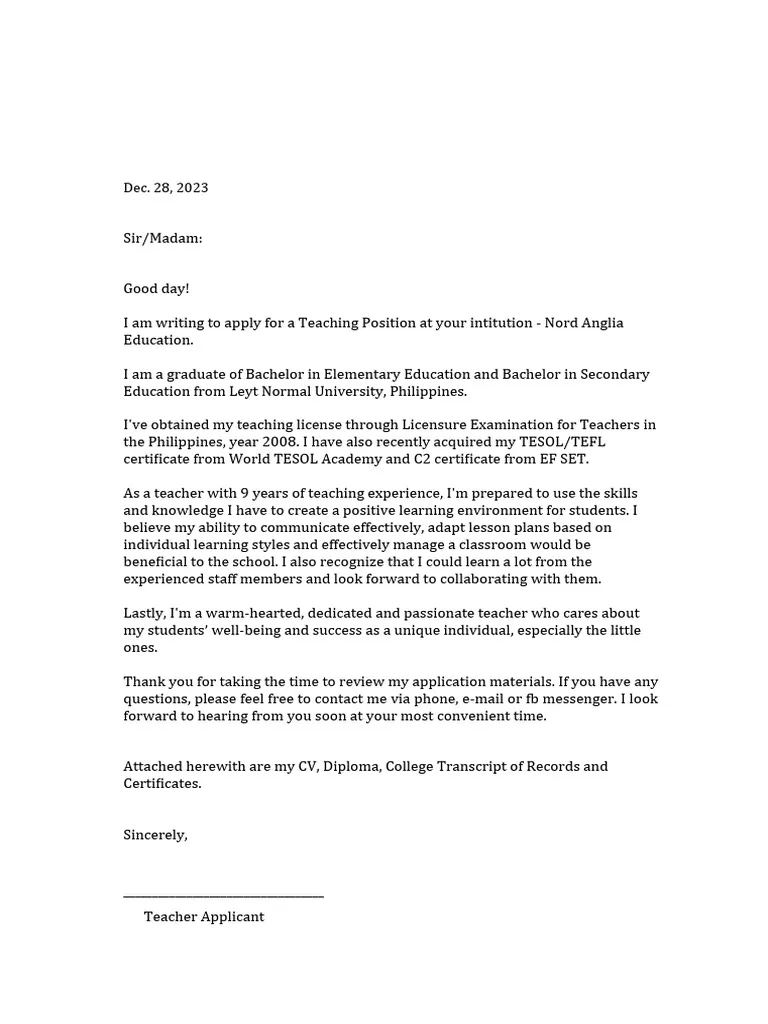
Reviewing successful cover letter examples can provide valuable insights into how to structure and write your own cover letter. Seek out examples of cover letters from teachers who have successfully secured teaching positions abroad. Pay attention to the language used, the tone of the letter, and the way in which the candidate highlights their skills and experience. Analyze how the candidate demonstrates their understanding of the school’s needs and values. Note the specific examples and achievements that the candidate uses to support their claims. By studying successful cover letter examples, you can gain a better understanding of what works and adapt those strategies to your own application. You can also get new ideas that will help you to write a great cover letter.
Adapting Templates to Your Situation
Templates can be a useful starting point for creating your cover letter, but you should never simply copy and paste a template without making significant changes. The key is to adapt the template to your own unique circumstances and the specific requirements of the job. Replace the generic information in the template with your own details. Customize the letter to reflect your skills, experience, and qualifications. Tailor the language and tone of the letter to align with your personal style and the school’s culture. The goal is to use the template as a guide, not as a final product. Remember to make it your own by personalizing the content and ensuring that it accurately represents your skills, experience, and aspirations. Also, make sure that your cover letter is free from all errors before submitting it.
Common Mistakes to Avoid in Your Cover Letter

Generic and Vague Statements
Avoid using generic and vague statements that could apply to any applicant. Instead, be specific and provide concrete examples of your skills and achievements. Instead of saying “I am a good teacher,” provide specific examples of your teaching methods, successes in the classroom, or student outcomes. Avoid using clichés or overly flowery language. Focus on demonstrating your skills and experience in a clear and concise manner. Generic statements show that you have not taken the time to tailor your application to the specific school or position and may lead to your application being rejected.
Focusing Too Much on Yourself
While it’s important to highlight your skills and experience, avoid focusing too much on yourself and neglecting the needs of the school. Instead of talking solely about what you want, demonstrate how your skills and experience can benefit the school and its students. Show that you understand the school’s mission, values, and teaching methodologies. Tailor your cover letter to the specific needs of the position and demonstrate how your contributions will align with the school’s goals. Employers want to know how you can help them, so make sure to show them that you understand what they are looking for in their ideal candidate. Focus on the value you can bring to the school, rather than simply listing your accomplishments.
Ignoring the School’s Needs and Values
Failing to research the school and address their specific needs and values is a common mistake that can significantly reduce your chances of success. Before writing your cover letter, take the time to research the school’s mission statement, teaching philosophy, and curriculum. Tailor your cover letter to show how your skills and experience align with the school’s specific needs and values. If the school emphasizes a particular teaching methodology, for example, be sure to mention your experience with that method. Demonstrate your understanding of the school’s culture and values. The goal is to show the employer that you have carefully considered their needs and that you are a good fit for their community. Ignoring these needs is a sign that you have not taken the time to understand their mission.
Finalizing and Submitting Your Cover Letter
Customizing Your Cover Letter for Each Application
Resist the temptation to use a generic cover letter for multiple applications. Tailor each cover letter to the specific school and position you are applying for. Customize your cover letter by carefully reviewing the job description and highlighting the skills and experience most relevant to the role. Show that you have researched the school and understand its specific needs and values. Personalize your introduction to mention the specific aspects of the school or the position that appeal to you. This level of customization shows your genuine interest and commitment, and it significantly increases your chances of success. Customizing your letter for each job shows that you are willing to go the extra mile to impress the potential employer.
Following Up on Your Application
After submitting your cover letter and resume, follow up with the school or hiring manager to express your continued interest in the position. Send a brief email within a week or two, thanking them for their time and reiterating your enthusiasm for the opportunity. Reference the specific position you applied for and restate your key qualifications. Be professional and courteous in your communication. If you haven’t heard back within a reasonable timeframe, you can send a follow-up email or phone call. Following up shows your proactive attitude and your interest in the position. This is a good way to keep your name fresh in the mind of the hiring manager. Proper follow-up is a good sign that you are dedicated to pursuing the role.