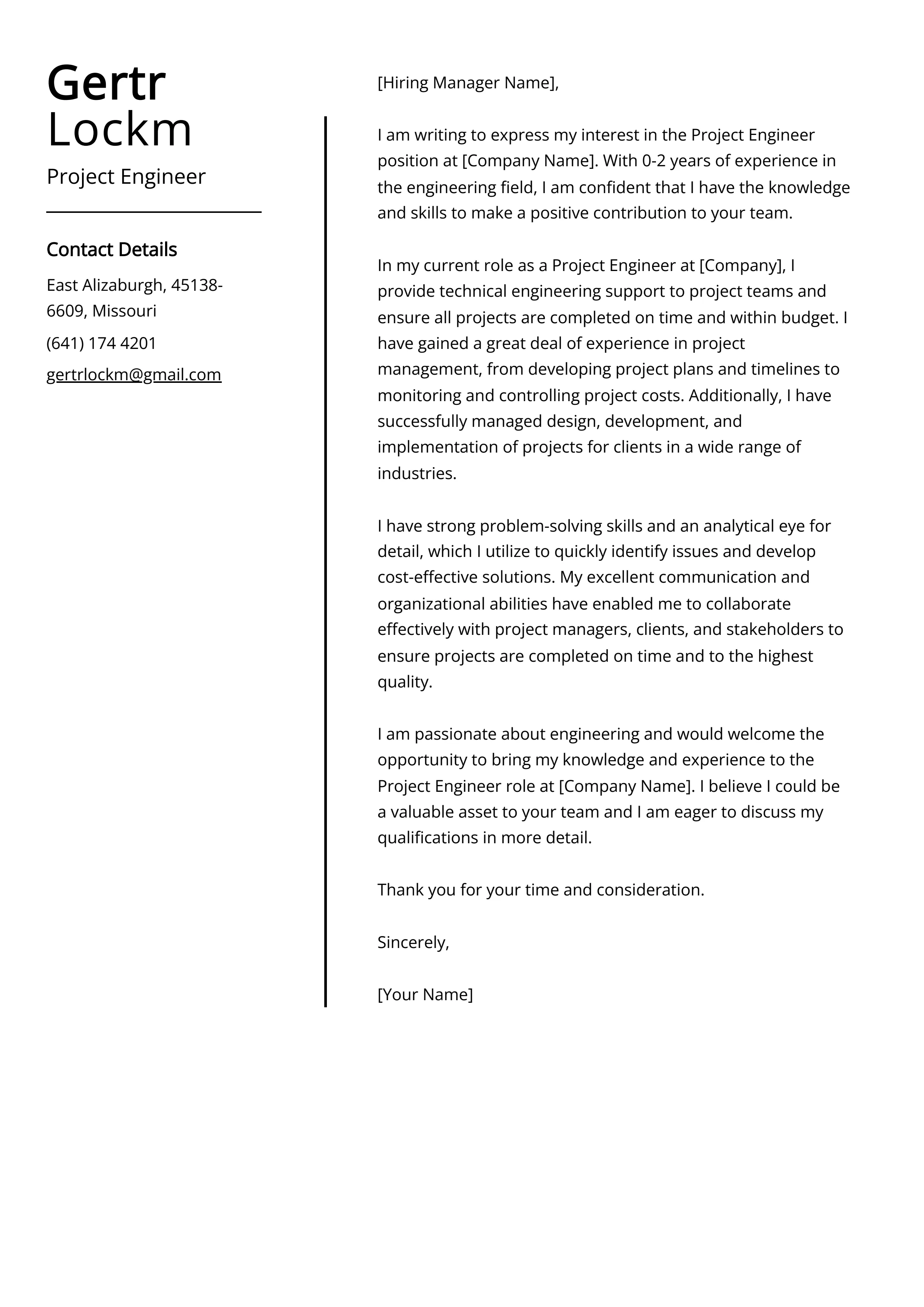
Essential Components of a Project Engineer Cover Letter
A compelling cover letter is a crucial element of any project engineer’s job application. It serves as your introduction, providing an opportunity to showcase your qualifications, enthusiasm, and suitability for the role. Unlike a resume, which offers a factual overview, a cover letter allows you to tell a story, highlighting your accomplishments and explaining why you’re the perfect fit. Mastering the essential components will significantly increase your chances of landing an interview. This guide breaks down the key sections you must include in your cover letter to make a lasting impression on potential employers. Remember, a well-crafted cover letter is your first opportunity to demonstrate your attention to detail, communication skills, and professionalism.
Contact Information and Introduction
The initial section of your cover letter is dedicated to providing the necessary contact details and making a strong first impression. This part sets the foundation for the rest of your application, ensuring clarity and professionalism. It’s your opportunity to ensure the hiring manager can easily reach you and to begin crafting a narrative that captures their attention. Correct formatting and a confident tone are crucial for conveying your professionalism and enthusiasm. This section should be concise, informative, and designed to immediately engage the reader, encouraging them to delve deeper into your qualifications.
Your Name, Address, Phone, and Email

Begin by listing your full name, address, phone number, and professional email address at the top left corner of your cover letter. Use a clear, legible font and maintain consistent formatting throughout the document. Double-check all contact information for accuracy to avoid any missed opportunities. A professional email address is a must; avoid using informal or unprofessional email names. Make sure all the information is up-to-date.
Date and Recipient Information
Following your contact details, include the date. Then, on the left side, address the letter to the hiring manager or the appropriate contact person. If possible, find the name of the hiring manager, as this shows you’ve taken the initiative to research the company. If you can’t find a specific name, use a professional greeting such as “Dear Hiring Manager” or “Dear [Company Name] Hiring Team.” Always use a formal salutation.
Start with a Strong Hook
The introductory paragraph is your chance to grab the reader’s attention. Start with a compelling hook that highlights your passion for project engineering or a key achievement. Briefly mention the position you’re applying for and where you found the job posting. Briefly state why you are writing. Avoid generic openings; instead, craft a sentence that immediately demonstrates your enthusiasm and suitability for the role. Your goal is to make the hiring manager want to read more.
Highlighting Your Relevant Skills and Experience

The core of your cover letter should showcase your skills and experience that align with the job requirements. This section should provide specific examples of how you’ve successfully managed projects, solved problems, and contributed to team goals. Instead of simply listing your responsibilities, focus on the outcomes and achievements that demonstrate your value to the company. Use action verbs to describe your accomplishments and highlight any technical expertise, certifications, or specialized knowledge. This is where you prove you can do the job, backed by evidence and results. Emphasize the skills that align with the job description.
Showcasing Project Management Abilities
Project engineers need to demonstrate strong project management skills. Highlight your experience in planning, executing, and closing projects within budget and on schedule. Provide examples of projects you’ve managed, detailing your role, responsibilities, and outcomes. Mention any methodologies you are familiar with, such as Agile, Scrum, or Waterfall. Use quantifiable metrics to illustrate your success in areas like resource allocation, risk management, and stakeholder communication. Your ability to lead and coordinate cross-functional teams is also important.
Quantifying Your Achievements
Instead of making vague statements about your achievements, quantify them. Use numbers and data to demonstrate the impact of your work. For example, instead of saying, “Improved project efficiency,” say, “Increased project efficiency by 15% through the implementation of [specific strategy].” Quantifiable results provide concrete evidence of your capabilities and make your cover letter more persuasive. Include any cost savings, revenue generated, or deadlines met as a result of your efforts. Using numbers gives the hiring manager a better view of your abilities.
Demonstrating Technical Expertise

Project engineers must also possess solid technical skills. Highlight the specific technical skills that are relevant to the job description. This could include proficiency in CAD software, experience with specific engineering principles, or knowledge of relevant industry standards. Mention any certifications or licenses you hold that demonstrate your technical competence. Providing specific examples of how you’ve applied these skills to solve problems and achieve project goals will further strengthen your application.
Tailoring Your Letter to the Specific Job
A generic cover letter will not impress a hiring manager. Customize your letter for each job application. This involves researching the company, understanding the specific requirements of the role, and aligning your skills and experience accordingly. Tailoring your cover letter demonstrates that you’re genuinely interested in the position and have taken the time to understand the company’s needs. It is far more effective to demonstrate that you understand the needs of the company.
Researching the Company and the Role
Before you start writing, research the company and the specific role you’re applying for. Visit the company’s website, review their social media profiles, and read any recent news articles about the company. Understand the company’s values, mission, and recent projects. Review the job description carefully and identify the key skills and qualifications the employer is seeking. Understanding the company’s needs helps you address their concerns and position yourself as the ideal candidate.
Using Keywords from the Job Description

Incorporate keywords from the job description throughout your cover letter. Identify the key skills, qualifications, and responsibilities listed in the job posting. Use these keywords naturally within your sentences to demonstrate that you meet the required criteria. This strategy also helps Applicant Tracking Systems (ATS) identify your application as a good match. Ensure that your use of keywords is relevant and does not sound forced or unnatural; focus on providing context and demonstrating how your skills align with the job’s requirements.
Expressing Enthusiasm and Interest
Demonstrate your genuine enthusiasm and interest in the company and the role. This can be achieved through your tone, word choices, and specific references to the company’s projects or values. Let the hiring manager know why you are excited about the opportunity and what you hope to achieve. A passionate and enthusiastic cover letter is more likely to capture the reader’s attention and make you stand out from other applicants. Show them you really want the job.
Closing with a Call to Action
The closing of your cover letter is your final opportunity to make a positive impression. Clearly state your desire for an interview and express your availability. Thank the hiring manager for their time and consideration. A strong closing paragraph leaves the reader with a clear call to action and reinforces your interest in the position. Make it easy for the hiring manager to move forward with your application. Use a professional closing, such as “Sincerely” or “Best regards.”
Thanking the Hiring Manager

Always thank the hiring manager for taking the time to review your application. Acknowledge their time and effort in a polite and professional manner. This shows respect and consideration. A simple statement like, “Thank you for your time and consideration” is sufficient. This shows you are professional and have good manners.
Expressing Your Availability for an Interview
Clearly state your availability for an interview. This demonstrates your proactive interest in the role and makes it easier for the hiring manager to move forward with your application. Mention your willingness to discuss your qualifications in further detail and reiterate your contact information. You can say, “I am available for an interview at your earliest convenience” or something similar. Ensure you’re easily reachable.
Formatting and Proofreading Your Cover Letter
The appearance and clarity of your cover letter are just as important as the content. Formatting and proofreading ensure your letter is professional and easy to read. Errors in grammar and spelling can undermine your credibility, so careful attention to detail is essential. Make sure your cover letter is polished and error-free, reflecting the professionalism expected of a project engineer. A well-formatted and error-free cover letter shows attention to detail.
Choosing a Professional Font and Layout

Choose a professional font such as Times New Roman, Arial, or Calibri. These fonts are easy to read and create a professional look. Use a standard font size (11 or 12 points) to ensure readability. Use single spacing within paragraphs and double spacing between paragraphs. Maintain consistent margins (typically 1 inch on all sides). Use a clear and logical layout with appropriate headings and bullet points to break up large blocks of text and improve readability. This will make your cover letter much easier to read. Avoid using excessive colors or graphics that could distract from the content.
Proofreading for Errors
Proofread your cover letter carefully for any grammatical errors, spelling mistakes, and punctuation errors. These errors can significantly detract from your credibility. Read your letter aloud to catch any awkward phrasing or sentences that don’t flow well. Ask a friend, family member, or career counselor to review your letter for feedback. Pay close attention to detail and ensure that your cover letter is polished and error-free. A perfectly proofread cover letter demonstrates professionalism and attention to detail.