Why Cover Letters Matter Boosting Your Application
In the competitive job market, a well-crafted cover letter can be your secret weapon. While a resume provides a snapshot of your experience, a cover letter allows you to tell a story, showcasing your personality, enthusiasm, and how your skills align with the specific job and company. It’s a chance to go beyond the bullet points and demonstrate your genuine interest. Many job seekers underestimate the power of a cover letter, but it can significantly boost your chances of landing an interview. It provides context, explains any gaps in your resume, and helps you stand out from other applicants. Recruiters often use cover letters to gauge your writing skills, attention to detail, and overall fit for the role. A compelling cover letter is your first opportunity to make a positive impression and persuade the hiring manager to read your resume closely. This is why crafting a killer cover letter is paramount for anyone serious about job searching. It’s an investment in your career and a crucial step in the application process, so it is important to take the time to make sure it is perfect.
Essential Elements of a Cover Letter
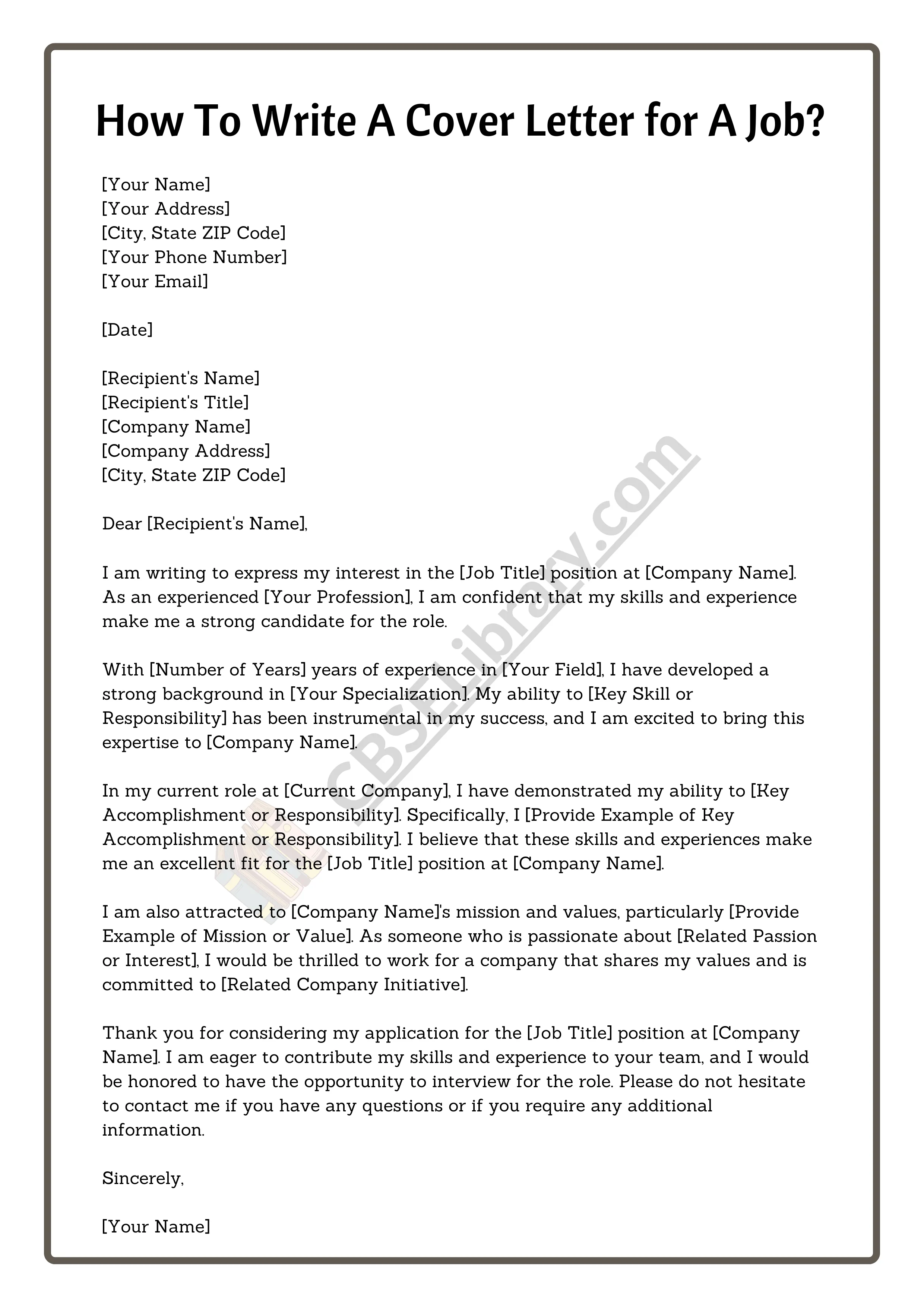
A strong cover letter consists of several key elements that, when combined, create a persuasive and memorable document. Each section plays a vital role in conveying your qualifications, enthusiasm, and suitability for the position. From the header to the closing, every sentence should serve a purpose, reinforcing your message and keeping the hiring manager engaged. Ignoring any of these components could weaken your application. Understanding the importance of each part of the cover letter will allow you to use it to your full advantage when applying for your next job.
Contact Information Your Header

Start with a professional header that includes your full name, address, phone number, and email address. This information should be at the top of your cover letter, making it easy for the hiring manager to contact you. Ensure your email address is professional and appropriate for job applications. Avoid using nicknames or informal language in your contact details. The header is the first thing a recruiter sees, so it sets the tone for the rest of the letter. This section is non-negotiable – omitting it could lead to your application being overlooked. Presenting a clean and organized header demonstrates your attention to detail and professionalism, making a positive first impression. Ensure your contact information is current and accurate to avoid any potential communication issues during the hiring process. Consider using a professional font to enhance the overall appearance of your header, ensuring it aligns with your resume’s design.
The Hiring Manager’s Name Addressing the Letter
Whenever possible, address your cover letter to a specific person – the hiring manager or the recruiter. Research the company and job posting to find the name. Addressing the letter to a specific individual shows that you have done your homework and shows that you are not just sending a generic application. It adds a personal touch that can make you stand out. If you are unable to find a specific name, use a professional greeting such as “Dear Hiring Manager” or “Dear [Department Name] Team.” Avoid generic greetings like “To Whom It May Concern,” which can make your application seem impersonal. If you are unsure, it’s better to be general than to address it to the wrong person. Take the time to make this small yet critical adjustment, and it will significantly increase your chances of a positive response.
Opening Paragraph Making a Strong First Impression
The opening paragraph is your chance to grab the hiring manager’s attention. Start with a strong hook – briefly state the position you are applying for and where you found the job posting. Then, immediately convey your enthusiasm for the role and the company. Mention something specific that excited you about the job or the company’s mission. Avoid generic statements like “I am writing to express my interest.” Instead, focus on what makes you an ideal candidate. This paragraph should be concise, engaging, and clearly state your purpose. The goal is to immediately capture the reader’s attention and compel them to read further. A well-crafted opening paragraph is the foundation of a successful cover letter. Make sure it is interesting and will make the reader want to know more about you.
Highlighting Your Value Showcasing Your Skills

The body of your cover letter is where you highlight your skills, experiences, and how they align with the job requirements. Tailor your letter to the specific job description, emphasizing the skills and experiences most relevant to the position. Provide specific examples of your achievements and how they demonstrate your abilities. Don’t just list your skills; show how you have used them to achieve results. Use action verbs to describe your accomplishments and quantify your achievements whenever possible. This section is the core of your cover letter. It proves to the hiring manager that you are the perfect fit. Remember to focus on the job requirements and what they are looking for in their next team member.
Matching Skills to Job Requirements
Carefully review the job description and identify the key skills and qualifications the employer is seeking. Then, in your cover letter, explicitly address how your skills and experiences meet those requirements. Use the same keywords and phrases from the job description to demonstrate that you understand the role and its demands. This is not about simply repeating the job description. It’s about demonstrating your understanding of it and using the same language to articulate your fit. For each key skill or qualification, provide a specific example of how you’ve used it in the past and what results you achieved. This could include situations where you solved a problem, led a project, or improved a process. Tailoring your letter to the job description is crucial, as it shows that you have taken the time to understand the position and are a good fit.
Quantifying Your Achievements Using Numbers
Whenever possible, quantify your achievements. Numbers add credibility to your claims and provide concrete evidence of your impact. Instead of saying “Improved customer satisfaction,” say “Increased customer satisfaction by 15%.” Use data to demonstrate the value you brought to your previous roles. Examples include sales figures, percentages of cost savings, number of projects completed, or any other measurable results. For instance, if you managed social media, include metrics like follower growth or engagement rates. Quantifying your achievements makes your cover letter more compelling and helps the hiring manager understand the tangible benefits you can bring to their organization. Including metrics makes your cover letter a much stronger application.
Demonstrating Company Knowledge Researching the Employer

Before writing your cover letter, research the company. Understand their mission, values, recent projects, and industry position. This research allows you to tailor your letter to their specific needs and demonstrate your genuine interest in working for them. Reference something specific about the company in your cover letter. This could be a recent project, an initiative, or something you admire about their culture. Mentioning something specific shows that you have taken the time to learn about the company and are not just sending a generic application. Researching the employer will allow you to highlight your understanding of the organization and its values. This helps you stand out and shows your genuine interest. The more you research the employer, the easier it will be to show your excitement for the role and increase your chances of getting the job.
Closing Paragraph Call to Action
Your closing paragraph should summarize your interest in the role and reiterate your key qualifications. It’s also the place to include a call to action – a clear statement of what you want the hiring manager to do next. Express your enthusiasm for an interview and mention your availability. Keep it concise and professional. Avoid clichés like “Thank you for your time and consideration.” Instead, use phrases like “I am eager to discuss my qualifications further in an interview” or “I am available for an interview at your earliest convenience.” Your closing paragraph is your final opportunity to reinforce your interest and encourage the hiring manager to take the next step in the hiring process. Finish strong with this crucial and vital part of the cover letter.
Expressing Enthusiasm and Gratitude
Conclude your cover letter by expressing your enthusiasm for the opportunity and your gratitude for the hiring manager’s time. Thank them for considering your application. This shows professionalism and courtesy. Reiterate your interest in the position and express your eagerness to learn more about the role and the company. End with a professional closing such as “Sincerely” or “Best regards,” followed by your typed name. Proofread the entire letter before sending it. The closing is your last chance to make a positive impression, so make it count by expressing your enthusiasm and gratitude. It will leave a lasting positive impression on the hiring manager.
Proofreading and Editing Ensuring Perfection

Before submitting your cover letter, carefully proofread and edit it. Check for any grammatical errors, spelling mistakes, and typos. Ensure your sentences are clear, concise, and flow logically. Errors can undermine your credibility and make you appear unprofessional. Read your cover letter aloud to catch any awkward phrasing or unclear sentences. Ask a friend or family member to review your letter for a fresh perspective. They may catch mistakes that you overlooked. Proofreading is one of the most vital steps in the application process. Even small errors can significantly reduce your chances of getting an interview. Remember to check the letter multiple times to ensure the letter is perfect and ready to send.
Formatting Your Cover Letter Professional Look
The formatting of your cover letter contributes to its overall professionalism and readability. Use a standard font and font size, typically something like Arial or Times New Roman, set at 11 or 12 points. Maintain consistent spacing throughout the document, with single spacing within paragraphs and a blank line between paragraphs. Align your text to the left, and use a professional layout. Use a clean and uncluttered design. Avoid excessive use of bolding, italics, or underlining. This will make the letter easier to read. These considerations enhance the document’s clarity and attractiveness. Proper formatting shows you pay attention to detail and respect the reader’s time. Remember, a well-formatted cover letter is easier to read and leaves a positive impression on the hiring manager. The formatting makes the application look professional.
Font and Style Considerations
The font and style you use should be professional, legible, and consistent with your resume. Select a standard font like Arial, Times New Roman, or Calibri. These fonts are easy to read and are widely accepted in professional settings. Use a font size between 10 and 12 points for the body of your letter. Avoid using overly decorative or unusual fonts, as they can make your letter look unprofessional. Maintain consistency in your font and style throughout the entire document. This ensures a clean and organized look. Your font and style choices are important, as they reflect your attention to detail. Choose a font that is professional and easy to read. Ensure your cover letter looks clean and professional, reflecting positively on your professionalism. A good font choice helps in having an organized and polished appearance.
Cover Letter Length Best Practices

Keep your cover letter concise and to the point. Aim for one page in length. Hiring managers are busy and may not have time to read lengthy documents. Focus on the most relevant information and highlight your key qualifications. The cover letter should be long enough to tell a story, but not so long that it becomes boring. Keep the letter concise, only including necessary information to ensure it is read and understood. Prioritize quality over quantity, ensuring that your message is clear and compelling. If you find that your letter is exceeding one page, carefully review the content. Remove any unnecessary details. Consider shortening paragraphs or rephrasing sentences to make them more concise. Your goal is to create a compelling introduction without overwhelming the hiring manager. Use the one-page limit to your advantage, making every word count to make the most impactful impression possible.
Common Cover Letter Mistakes Avoiding Pitfalls
Many common mistakes can significantly reduce your cover letter’s effectiveness. Avoid generic templates – personalize each letter to the specific job. Do not simply rehash your resume; instead, expand on your skills and experiences. Be sure to proofread your letter carefully for errors. Be sure to check it multiple times. Avoid using clichés or overly formal language. Focus on clarity and conciseness. Neglecting to tailor your cover letter to the specific job is a major mistake. Always remember to address the letter to a specific person and research the company. By avoiding these common pitfalls, you’ll significantly improve your chances of making a strong impression and getting an interview. Your application will stand out among the rest by avoiding common mistakes. Making small changes can have a big impact on getting the job.
- Using generic templates
- Rehashing your resume
- Making grammatical errors
- Using clichés
- Not tailoring your letter to the job
Conclusion
Writing a compelling cover letter is a critical step in the job application process. By following these guidelines, you can create a standout letter that showcases your skills, experience, and enthusiasm. Remember to tailor each cover letter to the specific job. Proofread carefully, and focus on making a strong first impression. A well-crafted cover letter can significantly increase your chances of landing an interview and ultimately securing your dream job. Take your time. Be sure to follow each step, and you are on your way to getting your next job. Good luck with your job search!