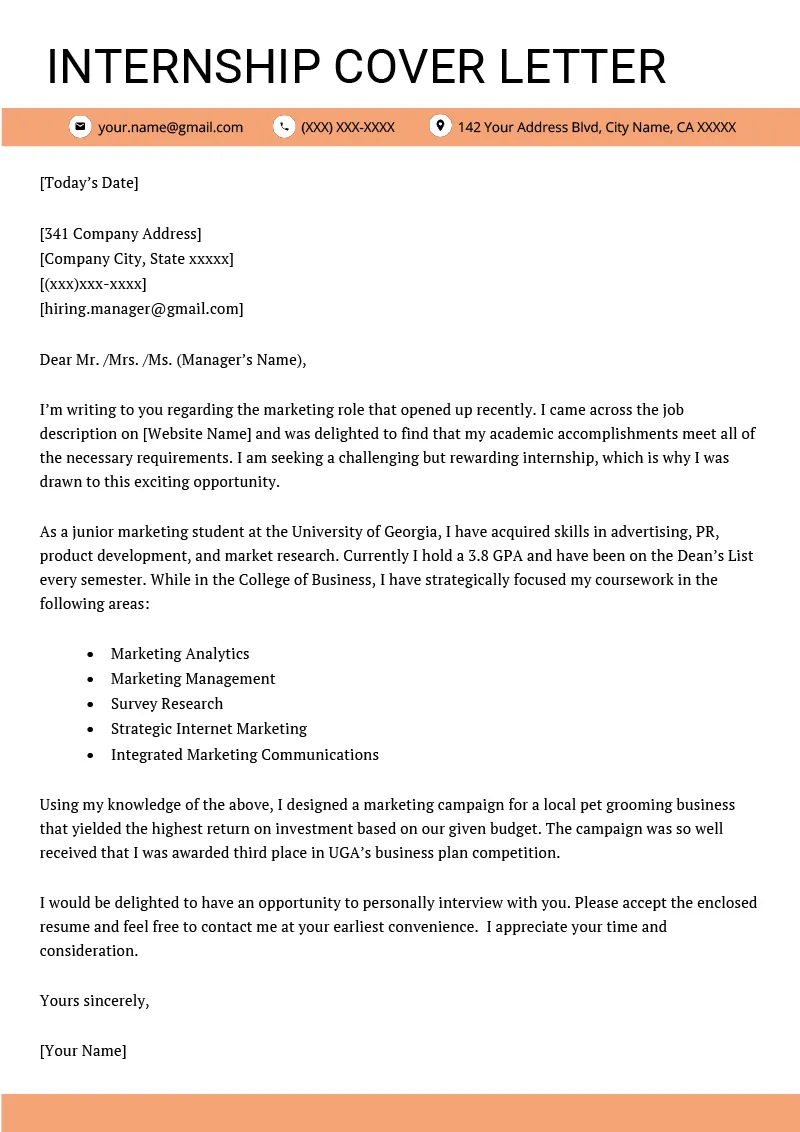
Cover Letter for Internship Why it Matters
A cover letter for an internship position serves as your first formal introduction to a potential employer, and it significantly impacts your chances of landing the role. Unlike a resume, which provides a factual summary of your experience, a cover letter allows you to express your personality, demonstrate your writing skills, and explain why you are the perfect fit for the internship. It allows you to showcase your enthusiasm for the specific opportunity and convey your understanding of the company’s mission and values. A well-crafted cover letter can be the deciding factor in setting you apart from other candidates. Your cover letter also helps you explain any gaps in your resume or highlight experiences that may not be immediately obvious. It provides the perfect opportunity to connect your skills and experiences directly to the internship’s requirements and the company’s needs. The cover letter is a crucial part of your internship application and can elevate your chances of success.
Crafting a Cover Letter for Internship Research
Before you begin writing your cover letter for an internship, it is crucial to conduct thorough research about the company and the specific internship position. Visit the company’s website to learn about its mission, values, and culture. Explore recent news articles, press releases, and social media posts to understand the company’s current projects and goals. Carefully review the internship description to identify the required skills, qualifications, and responsibilities. Understanding the internship position allows you to tailor your cover letter and demonstrate how your skills and experiences align with the role’s requirements. Demonstrate that you have a comprehensive understanding of the company and the internship. This preliminary research will help you create a tailored cover letter that resonates with the employer and showcases your genuine interest in the opportunity. Use this research to highlight relevant information to show how your experience aligns with the position.
Understanding the Internship Position

To effectively tailor your cover letter, understand the internship position you’re applying for. Analyze the job description carefully to identify the key skills, qualifications, and responsibilities. Identify the desired qualities the company is looking for in an intern. Consider the day-to-day tasks and projects you might be involved in, and think about how your skills and experiences align with these expectations. Consider what you hope to gain from the internship, and how you can contribute to the company’s goals. Understanding the internship requirements helps you to articulate your value to the employer. Highlight your qualifications and express your enthusiasm for the role, making your cover letter more compelling. Demonstrating your understanding of the internship position shows you’ve given careful thought to your application and are genuinely interested in the opportunity.
Key Components for a Great Cover Letter
A well-crafted cover letter for an internship position includes several key components. Start with your contact information and the date, followed by the hiring manager’s name and the company’s address. Next, craft a compelling opening paragraph that states your interest in the internship and explains where you found the listing. In the body paragraphs, highlight your relevant skills and experiences, emphasizing accomplishments and quantifying achievements whenever possible. Express your enthusiasm for the internship and explain why you are the best fit for the role. Conclude with a call to action, expressing your availability for an interview and thanking the reader for their time and consideration. Proofread and format the letter professionally to ensure clarity, readability, and attention to detail. These components work together to create a cover letter that is impactful and increases your chances of securing an interview.
Contact Information and Date
At the top of your cover letter, include your contact information. Provide your full name, phone number, email address, and your LinkedIn profile URL (optional). Include the date you are writing the cover letter, which will typically be placed below your contact information. This ensures the hiring manager knows when you applied for the position. Properly formatting this section shows attention to detail and professionalism. Ensure your contact details are accurate and up-to-date to allow the employer to easily reach you. Accuracy is essential to facilitate seamless communication. Proofread to confirm there are no errors in this essential section of your cover letter.
Greeting the Hiring Manager

When writing your cover letter, always address the hiring manager by name if possible. Research the name of the person responsible for hiring interns. If you cannot find the hiring manager’s name, use a professional greeting, such as Dear Hiring Manager or Dear [Department] Team. Avoid generic greetings such as To Whom It May Concern. Personalizing your greeting demonstrates you’ve done your research and are attentive to detail. This attention shows you’re serious about the internship. If you’ve identified the hiring manager, double-check the spelling of their name to ensure you’re addressing them correctly. A well-crafted greeting sets the tone for the rest of your letter. It creates a positive first impression.
Stating Your Interest and Internship Goals
Start your cover letter by clearly stating your interest in the internship position. Specify which internship you are applying for and where you found the job listing. Immediately capture the hiring manager’s attention with a strong opening sentence that highlights your enthusiasm. Briefly explain what you hope to achieve during the internship. This can include gaining experience in a specific area, developing new skills, or contributing to the company’s goals. This demonstrates your proactive attitude and commitment to the role. Stating your interest and goals early in your cover letter quickly tells the employer that you understand what the internship entails and that you are genuinely interested in the opportunity. This shows your proactive attitude and your dedication to achieving those goals.
Highlighting Relevant Skills and Experience
In the body of your cover letter, highlight your relevant skills and experiences. Tailor your response to the requirements of the internship. Showcase your abilities and skills. Refer to specific experiences and projects where you demonstrated those skills. Explain how these experiences have prepared you for the internship. Use action verbs to describe your accomplishments and responsibilities. Focus on the skills and experiences that align with the internship’s requirements, such as communication, teamwork, technical proficiency, or problem-solving abilities. Tailor your cover letter to show how you meet the internship’s needs and showcase your potential. By connecting your skills with the job description, you can easily demonstrate your value and increase your chances of getting the internship.
Showcasing Your Accomplishments

When highlighting your skills and experiences, focus on your accomplishments. Provide specific examples of your achievements. Instead of simply listing your duties, quantify your contributions and results whenever possible. Use the STAR method (Situation, Task, Action, Result) to structure your examples effectively. Describe the situation or challenge you faced, the task you were assigned, the actions you took, and the positive results you achieved. This approach helps employers understand the impact of your actions. Showcasing your accomplishments gives the hiring manager a clear picture of your abilities and potential. Highlighting what you’ve accomplished shows your success and provides strong evidence of your value and skills.
Quantifying Your Achievements
Quantifying your achievements in your cover letter makes your accomplishments more impactful and demonstrates your ability to deliver results. Provide specific numbers, percentages, or data to support your claims. Instead of saying you ‘improved customer satisfaction,’ state that you ‘increased customer satisfaction by 15%.’ When describing a project, mention the time it took to complete or the number of people involved. Quantifying your achievements provides concrete evidence of your skills and impact. It enables the hiring manager to easily grasp the scope and value of your contributions. Make sure your numbers are accurate and relevant to the position. Quantifying accomplishments adds credibility to your application, improving the chances of getting the internship.
Expressing Enthusiasm and Fit
Throughout your cover letter, express your enthusiasm for the internship and the company. Explain why you’re excited about the opportunity and why you are the best fit. Mention what you admire about the company’s mission, values, or culture. Expressing genuine enthusiasm shows your passion and commitment to the role. Connect your personal and professional goals with the internship, and illustrate how the position aligns with your career aspirations. Demonstrate that you’ve researched the company and understand the internship’s requirements. Your enthusiasm and alignment with the company’s values are essential elements that can convince an employer. Express your genuine passion for the internship. This sincerity improves your chance of landing the role.
Concluding with a Call to Action

End your cover letter with a strong call to action. Express your availability for an interview and indicate your willingness to discuss your qualifications further. Thank the hiring manager for their time, consideration, and the opportunity to apply. Reiterate your interest in the position and express your enthusiasm for the company. Keep the conclusion brief and professional. Providing a call to action shows your proactive attitude and encourages the hiring manager to take the next step. By concluding with a strong call to action, you make it easy for the employer to respond and consider your application positively. A well-crafted conclusion increases your chances of moving forward in the application process and securing an interview.
Proofreading and Formatting Your Cover Letter
Proofreading and formatting are crucial steps in ensuring your cover letter is polished and professional. Carefully proofread your letter for any grammatical errors, spelling mistakes, or typos. Have a friend, family member, or career advisor review it. Use a clear and easy-to-read font, such as Arial or Times New Roman, and ensure the font size is between 11 and 12 points. Use single spacing and leave a space between paragraphs. Ensure consistent formatting throughout the document. Poor formatting and errors can diminish the impact of your cover letter and negatively affect your application. Proofreading and appropriate formatting help you create a positive and professional impression, which improves your application.
Ensuring Professionalism
When writing your cover letter, ensure professionalism. Maintain a formal and respectful tone throughout your writing. Use appropriate language and avoid slang, jargon, or overly casual expressions. Tailor your cover letter to the specific job description, and avoid sending a generic letter. Ensure your email address and phone number are professional and appropriate. Before submitting, review your cover letter to ensure there are no grammatical errors. A professional cover letter reflects your dedication and attention to detail. Professionalism shows you’re serious about the internship. It increases the chances of your application being taken seriously.
Formatting for Readability

Format your cover letter for readability to make it easy for the hiring manager to review. Use clear and concise language, and break up long paragraphs into shorter ones. Use bullet points to highlight key skills, achievements, or experiences. Ensure your cover letter is well-organized. Separate different sections of your letter with clear headings and subheadings to make it easy to scan. Keep the layout clean and uncluttered, ensuring your cover letter looks visually appealing. By formatting your cover letter to be easily read and understood, you will engage the hiring manager and maximize your chances of getting an interview.