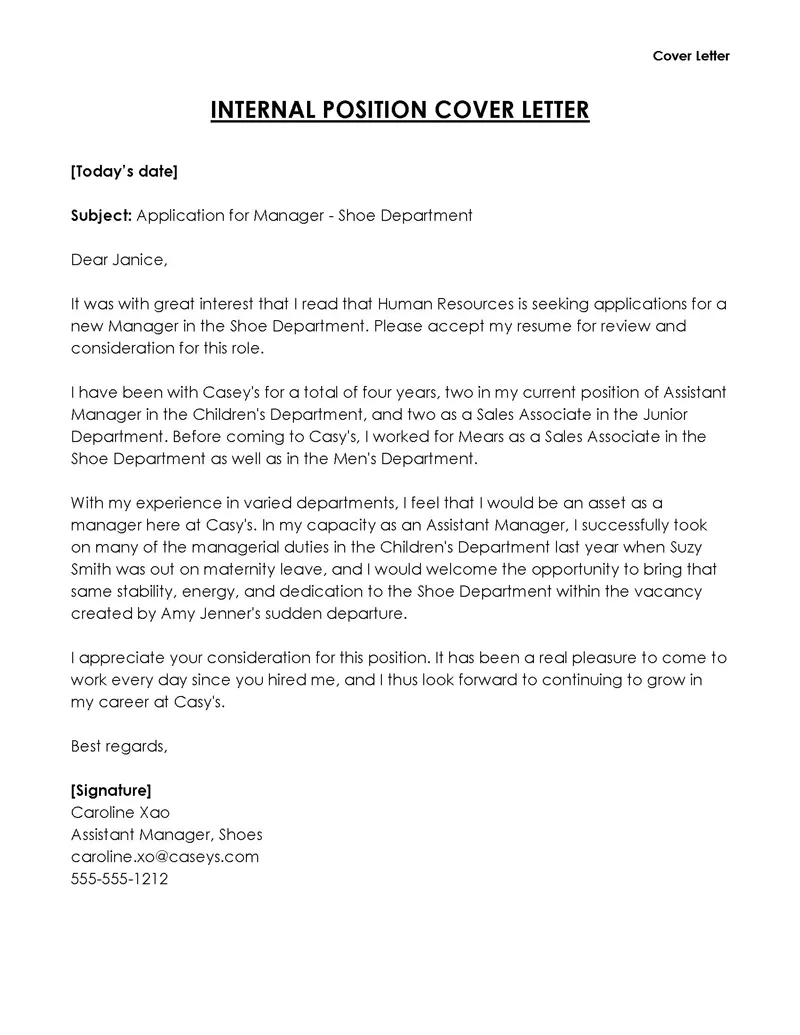
Understanding the Internal Position Cover Letter
An internal position cover letter differs from an external one. It’s a strategic document showcasing your interest and qualifications for a job within your current organization. Unlike external applications where you’re presenting yourself to a new entity, an internal cover letter leverages your existing company knowledge, relationships, and understanding of the culture. This can be a significant advantage, but it also requires a nuanced approach. Your goal is to highlight why you’re the perfect fit while demonstrating your commitment to the company and your understanding of its goals. You are not just applying for a job; you’re building a case for your continued contribution to the company, just in a new capacity. Your cover letter can be a crucial tool in advancing your career and securing the internal role you desire, therefore it’s essential to take it seriously and make it a compelling and well-crafted document.
Researching the Internal Position
Before you begin writing, thoroughly research the internal position. This includes understanding the job description, the required skills, and the expectations of the role. Read the job posting carefully, noting the specific requirements and responsibilities. Research the department or team you’d be joining. What are their current projects and goals? Who would you be reporting to, and what is their management style? If possible, talk to people who currently hold similar positions or work within the team. Learn about the day-to-day tasks, challenges, and opportunities associated with the role. Gathering this information will help you tailor your cover letter and demonstrate your genuine interest and understanding of the position. Showing this prior research makes you look like a strong candidate.
Highlighting Relevant Skills and Experience

Your cover letter must highlight the skills and experience that align with the internal position’s requirements. Review your resume and identify the achievements and responsibilities that are most relevant to the new role. Use specific examples to demonstrate how you’ve successfully applied these skills in your current or previous roles within the company. Quantify your accomplishments whenever possible. For example, instead of saying “Improved customer satisfaction,” state “Improved customer satisfaction by 15% through implementing a new feedback system.” Tailor your language to reflect the terminology used in the job description. This shows you understand the role’s demands and that you can bring immediate value. Ensure you communicate in a way that shows your understanding of your skills and how they are relevant to the new role.
Adapting to the Company Culture
Demonstrate your understanding of the company culture in your cover letter. Internal applicants have an advantage since you already work within the organization and should have a good grasp of its values, mission, and work environment. Reference company initiatives, projects, or values that resonate with you and relate to the new role. Show that you are not just a good fit for the job but also a good fit for the company. This could involve mentioning your participation in company events, your contributions to team projects, or your alignment with the company’s mission. Use the cover letter to emphasize how your values and work ethic align with the company’s values. Tailor your language to reflect the company’s voice and tone, but ensure your writing style remains authentic to your personality.
Formatting Your Cover Letter
Proper formatting is essential for any cover letter. Use a professional and easy-to-read font, such as Arial, Times New Roman, or Calibri, and maintain a consistent font size, usually between 10 and 12 points. Keep the cover letter to one page, using clear headings and sufficient white space to improve readability. Address the hiring manager by name whenever possible. Ensure the letter is well-organized, with a clear introduction, body paragraphs that address your qualifications, and a strong conclusion. Include your contact information at the top of the letter. Proofread your cover letter carefully for any grammatical errors, typos, or formatting inconsistencies. A well-formatted cover letter demonstrates professionalism and attention to detail, making a positive first impression on the hiring manager.
Writing a Compelling Opening

Your opening paragraph is your first opportunity to capture the hiring manager’s attention. Start with a strong statement of intent, clearly stating the position you are applying for and where you saw the posting. Mention something specific that excites you about the role or the team. If you have a personal connection to the company or the team, briefly mention it to create an immediate connection. Briefly summarize your key qualifications and how they align with the job requirements. This helps set the stage for the rest of your letter. Avoid generic opening lines such as “I am writing to apply…” Instead, make your introduction engaging and make the hiring manager want to read more. Your opening is your chance to stand out and make the employer interested in what you have to offer.
Showcasing Your Accomplishments
In the body of your cover letter, provide specific examples of your accomplishments and how they relate to the new position. Use the STAR method (Situation, Task, Action, Result) to structure your examples. Describe the situation you were in, the task you were assigned, the action you took, and the positive result. Focus on quantifiable achievements whenever possible, such as increased sales, improved efficiency, or successful project completion. This approach demonstrates your value and provides concrete evidence of your skills and abilities. Tailor each example to the specific requirements of the new role, ensuring that you are highlighting the most relevant achievements. This section should provide a clear narrative of your professional experience, demonstrating how you have used your skills in the past and how they can be applied to the new position.
Emphasizing Your Internal Knowledge
Leverage your existing knowledge of the company to your advantage. Highlight your understanding of the company’s processes, products, and clients. If you’ve worked on projects that relate to the new role, be sure to mention them, explaining your contributions and the outcomes achieved. This familiarity can be a significant asset, demonstrating that you can hit the ground running. If you have existing relationships with people in the team or department, consider mentioning these connections in a professional way, perhaps by referencing successful collaborations. Use this knowledge to show your enthusiasm for the role and your understanding of how your experience will enable you to succeed. This is where your internal advantage is truly showcased.
Closing Your Cover Letter

Conclude your cover letter with a strong and positive closing. Reiterate your interest in the position and summarize your key qualifications. Express your enthusiasm for the opportunity and your desire to contribute to the team’s success. Thank the hiring manager for their time and consideration. Include a clear call to action, such as expressing your availability for an interview. Provide your contact information again, just in case it is missed. Be confident and enthusiastic, and ensure your closing leaves a lasting positive impression. Ensure that you’re available for any follow up information and be proactive.
Proofreading and Editing Your Cover Letter
Before submitting your cover letter, proofread it carefully. Check for any grammatical errors, typos, or formatting inconsistencies. Read the letter aloud to ensure that it flows well and makes sense. Ask a colleague or friend to review your cover letter for feedback. Fresh eyes can often catch errors or suggest improvements you might have missed. Pay particular attention to your word choice and tone. Ensure that the language you’ve used is professional and appropriate for the company culture. Make sure your cover letter is clear, concise, and well-organized. Proofreading and editing are critical steps to ensure that your cover letter makes a positive impression and showcases your attention to detail.