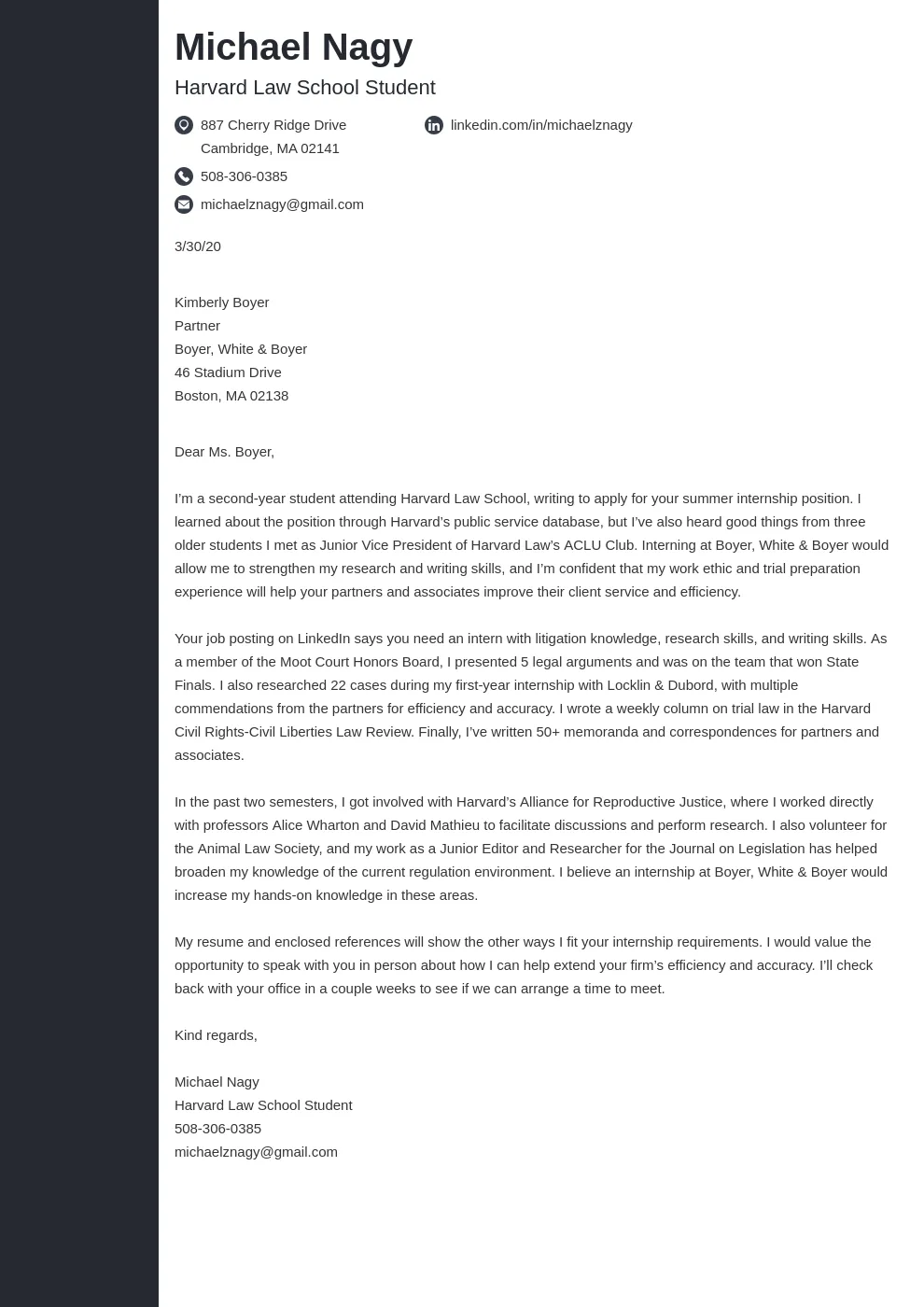
Crafting a Stellar Cover Letter Example
A well-crafted cover letter is your first impression with a law firm, and it’s crucial in securing an interview. This document serves as a personal introduction, highlighting your qualifications and expressing your interest in the specific position. Unlike a resume, a cover letter allows you to showcase your personality, writing skills, and enthusiasm. It’s an opportunity to connect with the hiring manager on a more personal level, demonstrating how your skills and experiences align with the firm’s needs and values. A generic cover letter is easily discarded. A great cover letter, however, grabs attention and gets you closer to your dream job at a law firm. It’s the perfect opportunity to market yourself effectively.
Understanding the Law Firm Landscape
Before you start writing, it is important to understand the landscape of law firms. These range from large international firms to smaller boutique practices. Each has its own culture, values, and expectations. Researching the specific firm you’re applying to is crucial for tailoring your cover letter effectively. For example, a firm specializing in corporate law will likely value different skills and experiences than one focused on criminal defense. Understanding the firm’s mission, its recent cases, and its reputation will help you demonstrate your genuine interest and tailor your application accordingly. This also involves understanding the level of experience and what qualities they are looking for.
Researching the Law Firm

Thorough research is paramount. Start by visiting the law firm’s website. Look for information about their practice areas, recent news, and any publications or articles written by their attorneys. Explore their social media presence to get a sense of their culture and values. Use LinkedIn to identify key contacts, such as hiring partners or associates, and see what information you can gather about the firm’s work environment and expectations. This information can inform the language you use, the skills you highlight, and the reasons you give for wanting to work at the firm. Knowing this information enables you to show a personalized level of interest that sets you apart.
Tailoring Your Cover Letter
A generic cover letter will not cut it. Each cover letter should be tailored to the specific law firm and the position you are applying for. Reference specific details from your research, such as a recent case the firm handled or a value that resonates with you. Customize the content to directly address the requirements mentioned in the job description. Highlight the skills and experiences that are most relevant, using keywords from the job posting. Show the hiring manager that you understand the firm’s needs and that you are a strong fit for the role. This level of personalization shows that you have done your homework, you care, and you are not sending the same message to everyone.
Highlighting Relevant Skills and Experiences
Focus on the skills and experiences that directly align with the requirements of the job. If the job description emphasizes strong research skills, provide examples of your research experience, such as legal research projects or academic achievements. If the firm values strong communication skills, highlight your ability to write clearly and concisely, and provide examples of your communication experience. Use the STAR method (Situation, Task, Action, Result) to describe your accomplishments and show how you have used your skills in real-world situations. The aim is to show, not just tell, what you’re capable of. The best way to showcase your strengths and achievements is to show them.
Showcasing Legal Skills

Highlight your legal skills such as legal research, legal writing, and litigation skills. These are core skills in the legal profession. Provide examples of your experience in these areas, such as drafting legal documents, conducting legal research, or participating in moot court or mock trial. If you have experience with specific software or legal databases, such as Westlaw or LexisNexis, mention those as well. If you’ve handled cases involving specific legal areas, mention those. Tailor this section to match the requirements mentioned in the job description. If you have experience in a particular area of law, make sure it is known.
Demonstrating Soft Skills
Soft skills are crucial for success in the legal field. They include communication, teamwork, problem-solving, critical thinking, and time management. Demonstrate these skills through your examples. For instance, when describing a group project, emphasize your teamwork skills and your ability to contribute to a collaborative effort. When discussing a complex legal issue, highlight your problem-solving skills and your ability to think critically. Show how you manage your time, prioritize tasks, and meet deadlines. Soft skills often make the difference between a good candidate and a great one, so be sure to include them.
Quantifying Achievements in Your Cover Letter
Whenever possible, quantify your accomplishments. Instead of saying you “improved efficiency,” state that you “increased efficiency by 15%.” Instead of saying you “managed a team,” say that you “led a team of 5 paralegals.” Numbers and data make your achievements more concrete and impactful. If you have won any awards or recognitions, mention them and specify the nature of the recognition. Numbers and achievements make a strong impression, so always include them. They give the hiring manager a clearer understanding of your contribution.
Formatting and Structure of the Cover Letter Example

The structure of your cover letter is very important. It should have a clear and professional format. Use a standard business letter format, with your contact information at the top, followed by the date and the hiring manager’s name and title. Maintain a formal tone throughout the letter. The body of the cover letter should be divided into distinct paragraphs to make it easy to read. Each paragraph should address a specific aspect of your qualifications and interest in the position. Use short, concise sentences and avoid jargon or overly complex language. Maintain a professional and readable format. The reader should never struggle to understand what you’re trying to say.
Proper Formatting Techniques
Use a professional font like Times New Roman, Arial, or Calibri, in a size between 10 and 12 points. Use 1-inch margins on all sides of the document. Make sure the letter is well-organized and easy to read. Use bullet points or numbered lists to highlight your key skills and accomplishments. Maintain consistent spacing and formatting throughout the document. Ensure that there are no grammatical errors or typos. It’s critical that everything is easy to read and free from mistakes. Avoid a chaotic layout; keep it clean and direct.
Structuring Your Content for Impact
Your cover letter should have a clear structure that guides the reader through your qualifications and interest. Begin with a strong opening paragraph that grabs the reader’s attention and states your purpose. In the body of the letter, address each of the key requirements of the job description, providing examples of your skills and experience. Conclude with a strong closing paragraph that reiterates your interest in the position and encourages the hiring manager to contact you. Always remember to make it a structured and well-organized document, allowing the reader to easily understand your goals and qualifications.
Common Mistakes to Avoid

Several common mistakes can hurt your chances of getting an interview. One of the most common is failing to tailor the letter to the specific firm or position. Another is using generic language and failing to provide concrete examples of your skills and accomplishments. Other mistakes include grammatical errors and typos, a poor format, and an unprofessional tone. Avoid these mistakes by carefully proofreading your letter and seeking feedback from others. Always show that you are interested in the position and that you have what it takes to succeed. Don’t let simple mistakes cost you the job.
Proofreading and Editing Your Cover Letter Example
Proofreading is the most crucial step. Carefully review your cover letter for any grammatical errors, typos, and formatting inconsistencies. Make sure your sentences are clear, concise, and easy to understand. Read the letter aloud to catch any awkward phrasing or phrasing. Print out a hard copy and review it with a fresh pair of eyes. Do not rely solely on spell-check and grammar-check tools, as they can miss errors. Get help from someone who is a good writer and editor. Ensure the final product represents you in the best possible way.
Reviewing for Errors
Always double-check your cover letter for common errors. Ensure that you have used the correct name and title of the hiring manager and that you have spelled their name correctly. Verify that you have used the correct firm name and address. Check for any inconsistencies in your contact information. If you are submitting your application online, make sure the document is in the correct format and that it is properly attached. Proofreading for errors will help you eliminate distractions and help you stand out. Avoid errors at all costs.
Seeking Feedback

Ask trusted friends, family members, professors, or career advisors to review your cover letter and provide feedback. Their objective perspective can help you identify areas for improvement. Ask them to assess the clarity, conciseness, and overall impact of your letter. Ask whether the letter effectively highlights your skills and experiences and whether it conveys your enthusiasm for the position. Be open to their suggestions and make revisions based on their feedback. It is best to have others provide a fresh perspective to remove any blind spots.
The Importance of a Strong Closing
The closing of your cover letter is your last chance to make a positive impression. End with a strong closing that expresses your enthusiasm for the position and reiterates your interest in the firm. Restate your key qualifications and why you are a good fit for the role. Thank the hiring manager for their time and consideration. Always include a call to action. Make it easy for the hiring manager to contact you. End with a professional closing, such as “Sincerely” or “Respectfully.” A strong closing leaves a lasting impression.
Expressing Enthusiasm and Interest
Your cover letter should convey genuine enthusiasm and interest in the position and the law firm. Explain why you are interested in the firm and what you admire about their work. Show that you have researched the firm and understand their mission and values. Highlight your specific skills and experiences that align with the firm’s needs. Explain why you are excited about the opportunity and how you believe you can contribute to the firm’s success. Your enthusiasm will help you make a strong first impression and demonstrate your passion for the role.
Providing Contact Information

Make it easy for the hiring manager to contact you. Include your phone number, email address, and LinkedIn profile in your contact information. Verify your contact information for accuracy. Make sure your voicemail greeting is professional. Check your email inbox regularly and respond promptly to any messages. Be sure to have your information prominently displayed. The ability to be easily contacted makes it easier to set up an interview.
Examples of Effective Cover Letter Phrases
Use action verbs to start your sentences and bring your experience to life. For example, instead of writing, “I was responsible for legal research,” write, “Conducted extensive legal research.” Tailor the language and examples you use to fit the requirements of the job description. Avoid using jargon or overly complex language. Use a professional tone and maintain a positive and enthusiastic attitude. These phrases will help you showcase your qualifications and make a strong impression on the hiring manager. Always be prepared to follow up.