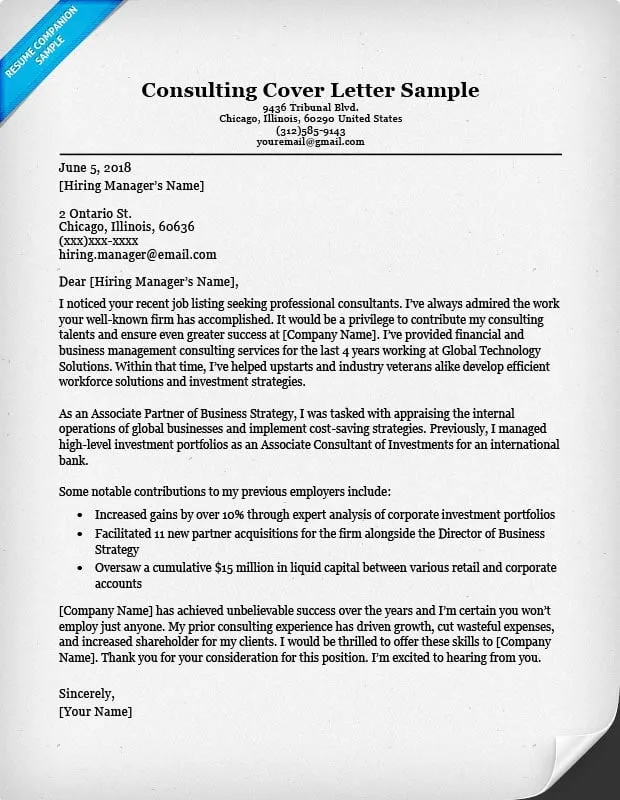
What is a Consulting Cover Letter
A consulting cover letter is a crucial document that accompanies your resume when applying for management consulting positions. It serves as your introduction to the hiring manager, allowing you to highlight your key skills, experiences, and qualifications in a way that a resume alone cannot. Unlike a resume, which provides a factual overview of your career, the cover letter gives you the opportunity to showcase your personality, demonstrate your passion for consulting, and explain why you are the ideal candidate for the specific role. It’s your chance to make a strong first impression and persuade the recruiter to delve deeper into your application. A well-crafted cover letter is essential for standing out in a competitive field and securing an interview.
Key Elements of a Consulting Cover Letter
A compelling consulting cover letter has several core components that work together to create a persuasive narrative. These elements are essential for conveying your professionalism, expertise, and suitability for the role. Each section should be carefully crafted to present a clear and concise picture of your value proposition. Ensuring all key elements are present, will significantly increase your chances of making a positive impression and moving forward in the application process. Remember, each element should align with the specific requirements of the consulting position you are applying for.
Your Contact Information

At the top of your cover letter, begin with your contact information. Include your full name, address, phone number, and professional email address. Ensure your email address is professional (e.g., firstname.lastname@email.com) and that all contact details are up-to-date. This information makes it easy for the recruiter to contact you if they are interested in your application. Accuracy and presentation in this initial section sets the tone for the rest of your letter, showing attention to detail which is crucial in consulting.
The Recruiter’s Contact Information
Below your contact information, and before the salutation, include the recruiter’s contact information. If possible, address the letter to a specific person (the hiring manager or recruiter). Researching the company’s website or LinkedIn can help you identify the correct contact. Addressing the letter to a specific individual shows initiative and demonstrates that you have taken the time to personalize your application. If a specific contact is unavailable, use a general salutation such as ‘Dear Hiring Manager’.
The Greeting
Start your cover letter with a professional greeting. If you know the hiring manager’s name, use ‘Dear Mr./Ms. [Last Name]’. If not, ‘Dear Hiring Manager’ is a safe alternative. Avoid generic greetings like ‘To Whom It May Concern’. The greeting sets the tone for the entire letter, so make sure it is formal and respectful. This initial interaction reflects your understanding of professional etiquette, and it can subtly showcase your ability to interact with diverse stakeholders, a critical skill for any consultant.
Highlighting Your Skills and Experience

The core of your consulting cover letter should focus on highlighting your skills and experience that align with the job description. This is your opportunity to showcase how your qualifications make you the ideal candidate. Provide specific examples of your achievements, demonstrating your ability to solve complex problems and deliver results. Emphasize relevant skills such as analytical thinking, problem-solving, communication, and leadership. Frame your experiences to show you possess the qualities that the consulting firm is looking for. Quantifying your achievements will help in convincing the hiring manager.
Quantifiable Achievements
Whenever possible, quantify your achievements. Instead of stating that you ‘improved efficiency,’ mention that you ‘improved efficiency by 15%,’ resulting in a $50,000 cost saving. Use numbers, metrics, and data to demonstrate the tangible impact of your work. This approach provides concrete evidence of your abilities and allows the recruiter to easily assess your contributions. Quantifiable achievements create a strong impact and make your cover letter more persuasive by directly showcasing the value you can bring to their organization. For example, ‘Led a team of 5 to reduce project completion time by 20% within six months’.
Relevant Experience
Detail your experience that is relevant to the consulting role you are applying for. Focus on projects and roles where you have demonstrated skills that align with the job requirements. Explain your responsibilities, the challenges you faced, and the solutions you implemented. Highlight experiences that showcase your ability to analyze data, develop strategies, and drive results. If you have experience in the industry or with the specific type of projects the consulting firm handles, be sure to mention that as it directly impacts the hiring manager. Showcase the specific skills and experiences that align with the needs of the role.
Tailoring Your Letter

Avoid using a generic cover letter. Tailor each letter to the specific consulting firm and the particular role you are applying for. This shows that you have done your research and are genuinely interested in the opportunity. Customized cover letters stand out by reflecting your understanding of the firm’s values, its clients, and the challenges it faces. By tailoring your letter, you demonstrate that you are invested in the role and understand the unique aspects of the organization you are targeting, which can substantially increase your chances of securing an interview.
Researching the Company
Before you start writing, research the consulting firm. Understand their mission, values, recent projects, and clients. This information will enable you to align your cover letter with their specific needs and demonstrate your genuine interest in the company. Visit their website, read news articles, and explore their social media profiles. This research provides you with valuable insights that can be used to customize your cover letter, showcasing that you understand the firm’s unique selling points and are prepared to contribute meaningfully.
Customizing Your Letter to the Role
Carefully review the job description and tailor your cover letter to match the requirements. Highlight the skills and experiences that are most relevant to the specific role. Use keywords and phrases from the job description to demonstrate that you are a good fit. This customization shows the hiring manager that you have taken the time to understand the role and are confident in your ability to succeed. Be sure to explain how your skills and experiences align with the company’s needs and the specific demands of the position.
Formatting and Tone

The formatting and tone of your consulting cover letter are crucial. They provide insight into your professionalism, attention to detail, and communication skills. A well-formatted, well-written cover letter makes a strong first impression and demonstrates that you take your application seriously. Adhering to these guidelines creates a professional image and increases the chances of your application being taken seriously. Therefore, paying close attention to your choice of words, sentence structure, and overall format is essential.
Professional Formatting Tips
Use a professional font like Times New Roman, Arial, or Calibri, in a readable size (11 or 12 points). Maintain consistent formatting throughout the document. Use single spacing within paragraphs and double spacing between paragraphs. Ensure your letter is well-aligned (left-aligned is typical) with clear margins. Keep the letter concise; aim for one page. A well-formatted cover letter is easy to read and demonstrates your attention to detail. Proper formatting ensures that the recruiter can quickly and efficiently absorb the information presented.
Maintaining a Professional Tone
Use a formal and professional tone throughout your cover letter. Avoid slang, jargon, and overly casual language. Be polite and respectful, but also confident and assertive. Proofread carefully to eliminate any grammatical errors or typos. Your tone should reflect the professional environment you are applying to. Make sure that your word choice, sentence structure, and overall demeanor show respect and understanding. A professional tone conveys that you are serious about the position and have the communication skills needed to succeed in consulting.
Proofreading and Editing

Proofreading and editing are vital steps in the cover letter writing process. A cover letter filled with errors can make a negative impression and undermine your credibility. Take the time to carefully review your letter for any mistakes in grammar, spelling, or punctuation. A polished cover letter demonstrates your attention to detail and professionalism. You should ensure your writing is free of errors so that the reader focuses on the content of your experience and not the mistakes in your writing. It will also signal to the hiring manager that you pay attention to detail and are prepared for the professional environment.
Proofreading Checklist
Use a checklist when proofreading your cover letter. Check for spelling errors, grammatical mistakes, punctuation errors, and inconsistencies in formatting. Ensure the tone is professional and that the letter flows logically. Verify that all contact information is correct and that the letter is addressed to the correct person. Read the letter aloud to catch any awkward phrasing or repetitive words. Proofreading meticulously ensures that your cover letter is polished and professional, enhancing the positive impression it makes on the reader.
Seeking Feedback
Ask a trusted friend, mentor, or career advisor to review your cover letter. They can provide valuable feedback on its content, clarity, and overall effectiveness. A fresh pair of eyes can catch errors that you might have missed. Ask for feedback on the letter’s organization, tone, and whether it effectively highlights your skills and experience. Seeking feedback can dramatically improve the quality of your cover letter, making it more persuasive and increasing your chances of success. This helps in creating a more compelling and error-free document.
Closing the Letter

Conclude your consulting cover letter with a strong closing statement that summarizes your interest in the role and expresses your enthusiasm. Thank the hiring manager for their time and consideration. Include a call to action, such as expressing your eagerness to discuss your qualifications further in an interview. Close with a professional closing such as ‘Sincerely’ or ‘Best regards’, followed by your typed name. A well-crafted closing leaves a lasting positive impression and encourages the hiring manager to move forward with your application. A thoughtful closing can significantly improve the chances of your cover letter being noticed.