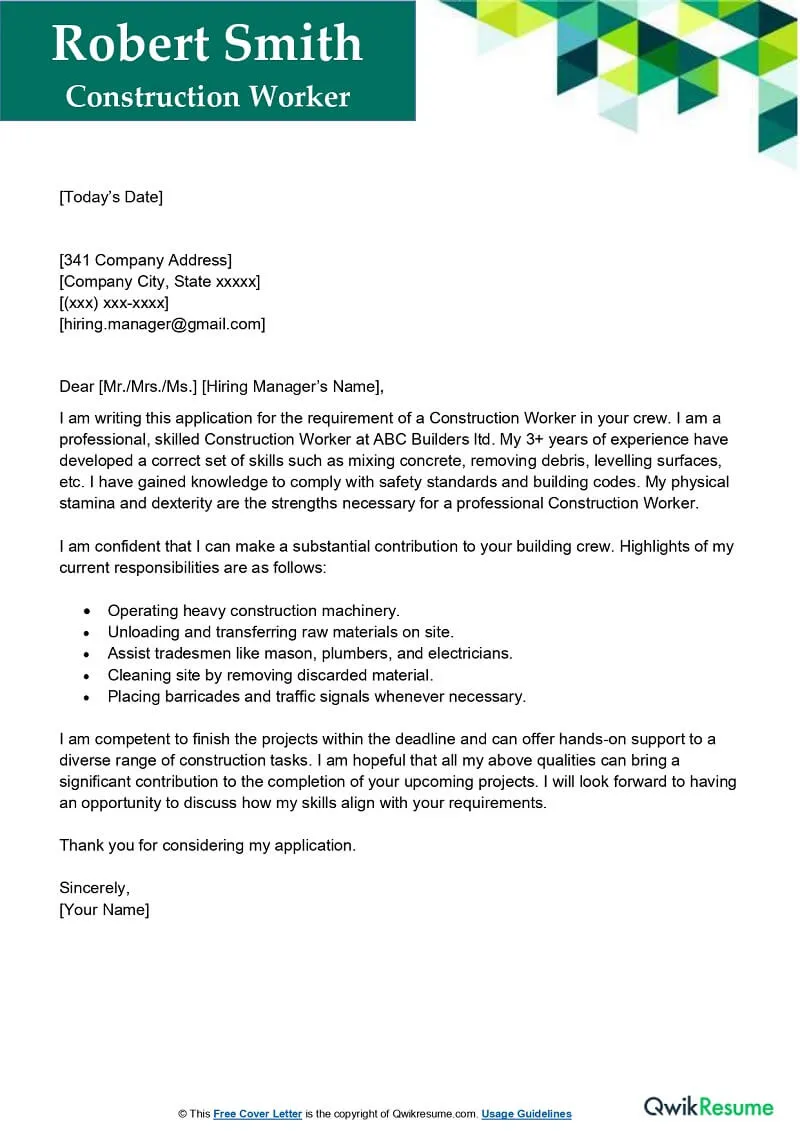
Crafting a Compelling Construction Cover Letter
In the competitive world of construction, a well-crafted cover letter is your first opportunity to impress potential employers. It’s not just a formality; it’s a critical tool that can significantly boost your chances of landing your dream job. A strong cover letter allows you to showcase your skills, experience, and passion for the industry in a way that a resume alone cannot. By taking the time to create a compelling letter, you demonstrate your professionalism and commitment, setting yourself apart from other applicants. This guide will walk you through every step of creating a construction cover letter that will impress any hiring manager.
Understanding the Importance of a Cover Letter
A cover letter serves as your personal introduction to the hiring manager. It allows you to elaborate on your resume, providing context and depth to your qualifications. It’s where you can express your personality, enthusiasm, and genuine interest in the specific role and the company. A well-written cover letter can highlight your unique selling points, making you stand out from the competition. It shows that you’ve taken the time to understand the job requirements and are genuinely interested in contributing to the company’s success. In short, a cover letter is a powerful tool for making a positive first impression and securing an interview.
Highlighting Relevant Skills and Experience

Your cover letter should emphasize the skills and experience most relevant to the construction job you’re applying for. This is your opportunity to connect your past accomplishments with the specific needs of the employer. Instead of simply listing your skills, provide concrete examples of how you’ve used them to achieve positive outcomes in previous roles. Focus on quantifiable results, such as project completion rates, cost savings, or safety improvements. This approach demonstrates your ability to deliver results and adds credibility to your claims.
Identifying Key Skills for Construction Jobs
Construction jobs require a diverse set of skills. Some of the most important include blueprint reading, project management, technical proficiency, problem-solving, and teamwork. Depending on the specific role, you may also need skills in areas like carpentry, electrical work, plumbing, or operating heavy machinery. When writing your cover letter, tailor the skills section to match the job description. Highlight the skills the employer is looking for and provide examples of how you’ve demonstrated them in the past. Think about including communication, leadership, and organizational skills, depending on the role you are applying for.
Showcasing Relevant Experience in Your Letter
Use your cover letter to provide specific examples of your construction experience. Describe the projects you’ve worked on, your role in those projects, and the results you achieved. Quantify your accomplishments whenever possible. For example, instead of saying “Managed construction projects,” you could say “Managed construction projects, completing them on time and under budget 95% of the time.” This level of detail provides concrete evidence of your abilities and demonstrates your value to the potential employer. Remember to focus on the experience that aligns with the job requirements.
Tailoring Your Cover Letter to the Job Description

A generic cover letter will not make a strong impression. To truly stand out, you must tailor your letter to each specific job application. This requires careful analysis of the job description and a clear understanding of the employer’s needs. Demonstrating that you understand the requirements and are a good fit for the role will dramatically increase your chances of getting an interview. Tailoring your cover letter proves you’ve done your homework and are genuinely interested in the position.
Analyzing the Job Requirements
Carefully read the job description, paying close attention to the required skills, experience, and qualifications. Identify the key responsibilities and expectations outlined by the employer. Make a list of these requirements and compare them to your own skills and experience. This analysis will guide you in highlighting the most relevant information in your cover letter. Look for keywords and phrases used in the job description and incorporate them into your letter where appropriate. This will help your application get past any automated screening systems and catch the eye of the hiring manager.
Customizing Your Letter to Match the Needs
Once you’ve analyzed the job requirements, customize your cover letter to address them directly. Highlight the skills and experience that align with the employer’s needs. Use specific examples to demonstrate how you’ve successfully met similar challenges in the past. Explain why you’re a good fit for the role and how you can contribute to the company’s success. Demonstrate your understanding of the company’s values and goals. By demonstrating this connection, you show the employer that you are a good fit for the position and have taken the time to understand their needs.
Formatting Your Construction Cover Letter

The format and layout of your cover letter are just as important as the content. A well-formatted letter is easy to read and visually appealing. It reflects professionalism and attention to detail. Poor formatting can distract from your message and make it difficult for the reader to focus on your qualifications. Make sure your cover letter is clean, organized, and easy to navigate. This will demonstrate your professionalism and make a positive first impression on the hiring manager.
Choosing the Right Format and Layout
Use a professional font, such as Times New Roman, Arial, or Calibri, and maintain a consistent font size (11 or 12 points) throughout the letter. Use standard one-inch margins and single-space the body of your letter, with a double space between paragraphs. Include your contact information at the top of the letter, along with the date and the employer’s contact information. Keep your letter concise, ideally one page long. Use clear headings and bullet points to break up large blocks of text and make your letter easier to read.
Proofreading and Editing Your Cover Letter
Proofreading is essential to ensure your cover letter is free of errors. Spelling and grammatical errors can undermine your credibility and make a negative impression. Carefully read your cover letter multiple times. Check for typos, grammatical errors, and inconsistencies in formatting. Use spell check and grammar check tools, but don’t rely on them entirely. Have a friend or colleague review your letter as well. A fresh pair of eyes can often catch errors that you might miss. Pay close attention to detail; it shows professionalism.
Writing a Strong Opening and Closing

The opening and closing paragraphs of your cover letter are crucial for making a strong impression. The opening should immediately grab the reader’s attention and make them want to learn more about you. The closing should reiterate your interest in the position and encourage the reader to contact you. These two sections frame your letter, and make your application more engaging.
Creating a Captivating Opening Statement
Start your cover letter with a strong opening statement that immediately grabs the reader’s attention. State the position you’re applying for and where you saw the job posting. Briefly highlight your most relevant qualifications or achievements. Consider using a hook to capture the reader’s interest. For example, you could mention a specific project you worked on or a skill that aligns directly with the job requirements. Avoid generic opening lines. Instead, show your enthusiasm and understanding of the role and the company from the start.
Concluding with a Call to Action
End your cover letter with a strong call to action. Reiterate your interest in the position and express your enthusiasm for the opportunity. Thank the reader for their time and consideration. Include a statement indicating your availability for an interview and how you can be reached. For example, you could say, “I am eager to discuss my qualifications further and can be reached at [phone number] or [email address].” This closing demonstrates your professionalism and makes it easy for the employer to contact you.
Using Action Verbs and Keywords

Action verbs and keywords are essential for making your cover letter compelling and attracting the attention of hiring managers. Action verbs bring your accomplishments to life. Keywords ensure your letter is relevant to the job and can help it pass through applicant tracking systems. Using these elements will make your letter more engaging, and improve your chances of getting noticed.
Incorporating Industry-Specific Terminology
Use industry-specific terminology to demonstrate your knowledge and understanding of the construction field. This will show that you’re familiar with the language of the industry and can communicate effectively with other professionals. Research the specific terms and acronyms used in the job description and incorporate them into your cover letter. This will help your cover letter resonate with the hiring manager and demonstrate that you are knowledgeable about the industry.
Demonstrating Enthusiasm and Interest
Your cover letter is the perfect place to express your enthusiasm for the construction industry and the specific job opportunity. Showing your genuine interest can significantly impact your chances of getting hired. Employers want to hire candidates who are passionate about their work and excited about the opportunity. Let the hiring manager see your passion for construction.
Expressing Your Passion for Construction

Convey your passion for construction by highlighting the aspects of the industry that excite you. Discuss your interest in the company’s projects or its mission. Explain why you enjoy working in construction. Be specific and genuine in your expression. Personalize your cover letter by including examples of your previous experience in this field. This will go a long way in showing the recruiter you are passionate about the construction field and make you stand out.
Adding Personal Touches to Your Letter
While it’s important to maintain a professional tone, adding a personal touch can help you connect with the reader on a deeper level. This could include mentioning something specific you admire about the company or sharing a relevant anecdote from your experience. However, be mindful of keeping the tone professional and avoiding anything that could be perceived as unprofessional. Personalizing your cover letter will make it more memorable and help you to make a positive impression on the hiring manager.
Including Contact Information and References
Providing accurate contact information and mentioning your references is crucial for ensuring the hiring manager can easily reach you and learn more about your qualifications. This information provides an important final step in the application process. Ensure that you are easy to reach and that the employer can easily access your references.
Providing Accurate Contact Details
Make sure your contact information is accurate and up-to-date. Include your full name, phone number, email address, and LinkedIn profile URL (if applicable). Double-check all the details to avoid any errors. Consider using a professional-sounding email address and a voicemail message that is clear and professional. Always make sure your contact information is easily accessible and displayed prominently at the top of your cover letter.
Mentioning Your References
In most cases, it is sufficient to state that references are available upon request. You can include this statement at the end of your cover letter. Be prepared to provide references if the employer requests them. Contact your references in advance to let them know that you are applying for a job and that they may be contacted. This will give them time to prepare a positive recommendation.