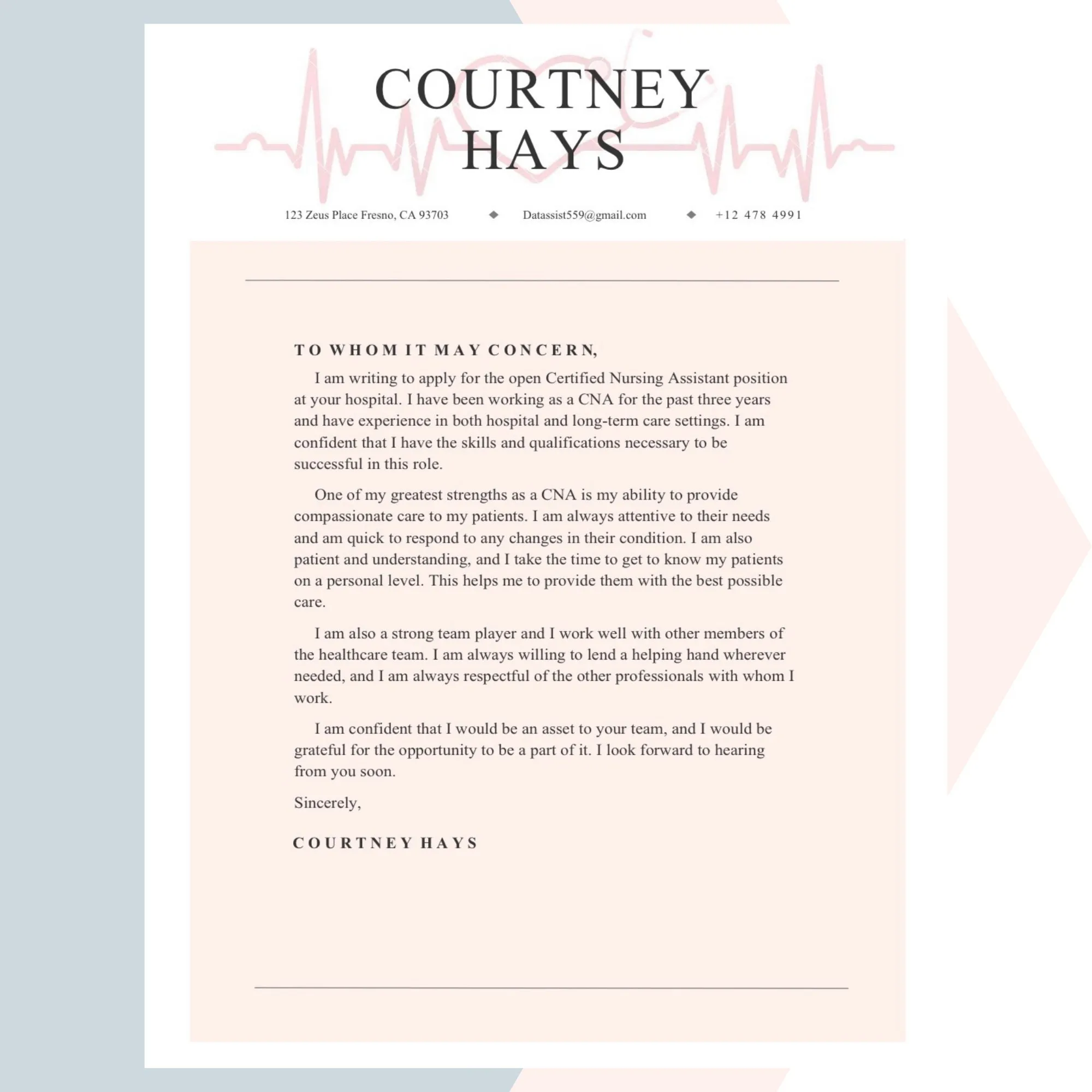
The Purpose of a CNA Cover Letter
A cover letter serves as your introduction to a potential employer, providing an opportunity to showcase your personality, skills, and enthusiasm for the Certified Nursing Assistant (CNA) position. Unlike your resume, which lists your qualifications, the cover letter allows you to tell a story, explaining why you are the perfect fit for the role and the facility. It’s a chance to make a strong first impression and demonstrate your communication skills, which are crucial in healthcare. A well-crafted cover letter can significantly increase your chances of securing an interview, setting you apart from other applicants who may only submit a resume. It’s your chance to connect with the hiring manager on a personal level, highlighting your passion for patient care and your commitment to the healthcare profession. Make the best of it.
Highlighting Your Skills
Your cover letter should explicitly highlight the skills that make you a strong CNA candidate. This is where you go beyond simply listing your abilities and begin to demonstrate your competence. Consider the specific requirements outlined in the job description and directly address them. This targeted approach shows the employer that you have read the job posting carefully and understand their needs. Mentioning these skills in your cover letter and relating them to your previous experience helps show how you’ve successfully utilized those skills. This is how to make yourself shine above all the others.
Key Skills to Include

Focus on the key skills essential for a CNA role, such as patient care, vital signs monitoring, personal hygiene assistance, and communication. Emphasize your ability to work effectively as part of a team, your empathy, and your problem-solving skills. Don’t forget to highlight any specialized skills, like experience with specific medical equipment or training in particular care settings. Communication, compassion, and competence are the pillars of excellent patient care. Demonstrating your understanding of these essential abilities in your cover letter is a great start to standing out among your peers.
Quantifying Your Achievements
Instead of just listing your skills, quantify your achievements whenever possible. Use numbers and data to demonstrate the impact you’ve made in previous roles. For example, you might state, “Assisted an average of 10 patients daily with personal care, resulting in a 95% patient satisfaction rate.” Such specific examples provide tangible evidence of your capabilities. This shows potential employers not just what you can do, but also the results you’ve achieved. Numbers and statistics help make a very strong case for your candidacy.
Providing Examples
Provide concrete examples from your past experiences. Describe a situation where you used your skills to solve a problem, comfort a patient, or improve patient outcomes. For instance, you might recount a time when you identified a change in a patient’s condition and promptly notified the nurse, preventing a potential complication. These stories make your skills more relatable and show the employer how you apply your skills in real-world scenarios. Personal anecdotes, backed by facts, show your real experience.
Formatting Your Cover Letter

The format of your cover letter is just as important as its content. A well-formatted letter is easy to read, professional, and reflects your attention to detail. Pay close attention to the layout and ensure it’s visually appealing and organized. Poor formatting can distract from the core message and give a negative impression. A clean, professional format shows that you care about details and takes the time to make your presentation shine.
Choosing the Right Font and Size
Use a professional and readable font, such as Times New Roman, Arial, or Calibri. Keep the font size between 10 and 12 points for easy readability. Ensure consistent formatting throughout the document to make the letter appear polished. The font should be easily readable, and the size should be suitable for easy consumption without being too large or too small. Using these fonts is a common standard and immediately signals that you have a professional approach.
Header and Contact Information
Your header should include your full name, address, phone number, and email address. Also, include the date and the hiring manager’s name and title, if known, along with the facility’s name and address. Use a professional email address. This information ensures that the hiring manager can easily contact you and that your letter looks professional. This header is the first thing the hiring manager will see, so ensure it is clean and clear. If you can, learn the hiring manager’s name and address your letter to them directly, and this shows you care enough to do your research.
Structuring Your Letter

Organize your letter logically with a clear introduction, body, and conclusion. The introduction should state the position you’re applying for and where you saw the job posting. The body should highlight your skills, experiences, and achievements, providing specific examples. The conclusion should reiterate your interest in the role and express your eagerness to be interviewed. Keep your paragraphs concise and use bullet points when necessary to break up the text and improve readability. A well-structured letter helps the reader understand your qualifications quickly and efficiently.
Common Mistakes to Avoid
Avoiding common mistakes is crucial to making a positive impression. Proofread carefully, tailor your letter to the specific job, and avoid generic language. Your cover letter should be polished and professional to make a strong first impression. The extra effort to avoid these mistakes can significantly improve your chances of success.
Typos and Grammatical Errors
Typos and grammatical errors can undermine your credibility. Always proofread your cover letter multiple times and consider having someone else review it. Use a grammar checker to catch errors you might miss. Errors can give the impression that you’re not detail-oriented, which is a critical attribute in the healthcare field. Ensure you have a professional approach by double checking your work.
Generic Letters

Sending a generic cover letter that could apply to any job is a mistake. Tailor each cover letter to the specific role and the facility. Show that you’ve researched the organization and understand their needs. Generic letters show a lack of interest and effort. Customization, on the other hand, shows you care enough to dedicate time to making yourself stand out. Every employer appreciates when you make the effort to show genuine interest in their opportunity.
Focusing on Your Needs
Avoid focusing solely on what you want from the job. Instead, emphasize what you can offer the employer. Highlight how your skills and experience align with their needs and goals. While it’s important to express your interest in the position, the primary focus should be on demonstrating how you can contribute to the organization. This focus makes it obvious that you are thinking of more than just yourself and that you really want to help.
Tailoring Your Letter
Tailoring your cover letter to each specific job application is crucial. This involves researching the facility, matching your skills to the job requirements, and customizing your letter to reflect these specifics. A customized letter demonstrates that you care enough to put in the effort to demonstrate why you’re the right fit. It allows you to show genuine interest and understanding of the role and organization.
Researching the Facility

Before writing your cover letter, research the facility. Understand their mission, values, and the specific needs of their patients. This information will help you tailor your letter to demonstrate that you understand the organization’s goals and are a good fit for their culture. A little research can pay big dividends. Showing that you understand the facility’s mission and values demonstrates that you’ve invested the time and effort to learn about the organization.
Matching Skills to Job Requirements
Carefully review the job description and identify the key skills and qualifications the employer is seeking. Then, highlight the skills and experiences you possess that match those requirements. Use the same keywords and phrases from the job description in your cover letter to demonstrate that you’re a strong match. This targeted approach makes it easy for the hiring manager to see the alignment between your qualifications and their needs. Your cover letter should always reflect the job posting.
Proofreading Your Letter
Proofreading your cover letter is one of the most important steps in the writing process. This means carefully checking your letter for any errors in grammar, spelling, punctuation, and formatting. Proofreading ensures that your letter looks polished and professional, reflecting your attention to detail. It is essential to demonstrate that you are capable of meticulous and careful work, which is important in CNA roles.
Seeking Feedback

Ask a trusted friend, family member, or career counselor to review your cover letter. Fresh eyes can often catch mistakes that you might miss. Feedback can also help you improve the content and clarity of your letter. Their insights can improve your writing and presentation. Getting a second opinion can make a big difference.
In conclusion, a well-crafted cover letter is vital for landing your dream CNA job. By focusing on highlighting your skills, quantifying your achievements, formatting your letter professionally, avoiding common mistakes, and tailoring your letter to each application, you can significantly increase your chances of success. Remember to proofread carefully and seek feedback to ensure your cover letter is polished and effective. Good luck with your job search!