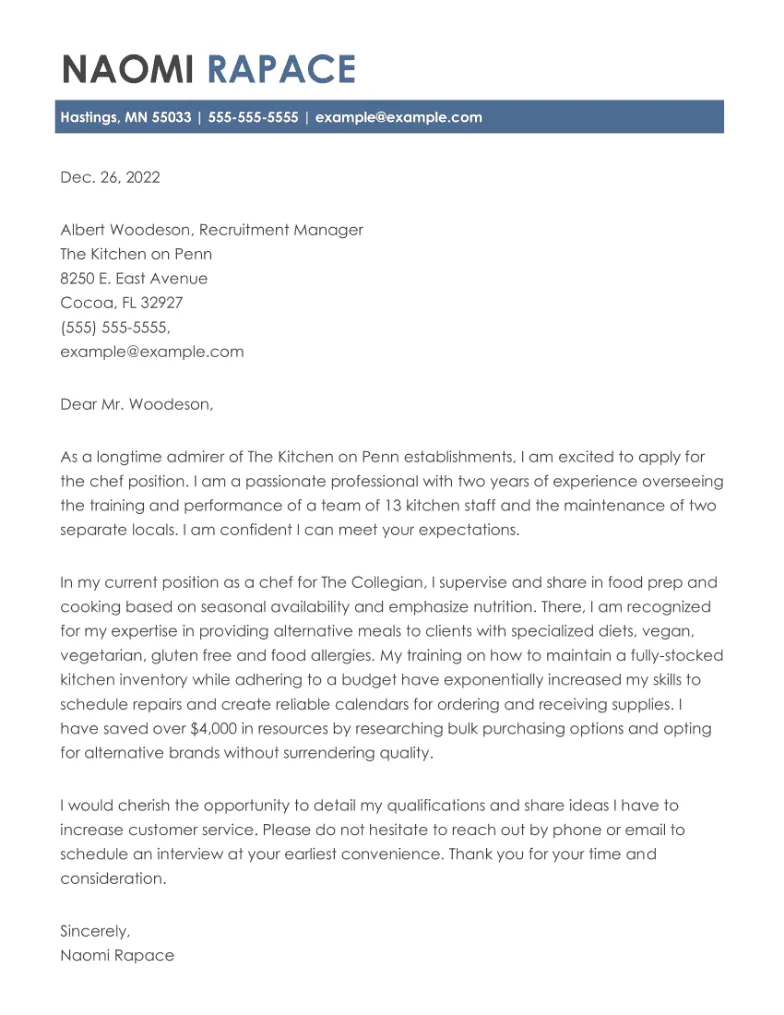
Why Chef Cover Letters Matter
A chef cover letter is your first impression on a potential employer. It’s more than just a formality; it’s your opportunity to stand out from the competition and showcase your culinary expertise. In a competitive job market, a well-crafted cover letter can be the deciding factor in securing an interview. It allows you to highlight your unique skills, experience, and passion for cooking in a way that a resume alone cannot. Think of it as a personal introduction, a chance to tell your story and explain why you are the ideal candidate for the role. A strong cover letter demonstrates professionalism, attention to detail, and a genuine interest in the position, which are all highly valued by employers. Moreover, it’s a place to exhibit your personality and creativity, qualities that are essential in the culinary world. By using a compelling cover letter, you can significantly increase your chances of landing your dream job as a chef.
Highlight Your Culinary Skills
When writing your chef cover letter, it is crucial to emphasize your culinary skills. Focus on the specific skills that align with the job requirements. For instance, if the job description mentions a need for expertise in a particular cuisine, make sure to highlight your proficiency in that area. Be specific and provide examples of how you’ve utilized these skills in past roles. Mention any specialties you have, such as pastry, sauces, or grilling. Don’t just list skills; show how you’ve applied them to achieve positive outcomes. For example, instead of stating “Proficient in menu planning,” write “Developed and implemented a new menu that increased restaurant revenue by 15%.” This approach demonstrates your capabilities and offers concrete evidence of your abilities, making your application more compelling. You can also include skills such as food safety knowledge and management of kitchen staff, if appropriate.
Showcase Relevant Experience

Your cover letter is the perfect place to detail your relevant experience. Don’t just list your past positions; instead, provide context and highlight your accomplishments in each role. Describe your responsibilities and the impact you made. Use action verbs to create a vivid picture of your contributions. For instance, instead of writing “Worked at Restaurant X,” write “Managed a team of 10 cooks at Restaurant X, consistently ensuring high-quality food preparation and adherence to health and safety standards.” Quantify your achievements whenever possible, such as “Reduced food waste by 10% through improved inventory management.” Furthermore, tailor the experience you highlight to match the specific requirements of the job. Review the job description carefully and emphasize the experiences and skills that the employer values most. If you’re applying for a position in fine dining, focus on your experience in upscale restaurants. If it is a more casual setting, then highlight corresponding experience.
Tailor Your Letter to the Job
Personalization is key to a successful cover letter. Always customize your cover letter for each job application. Avoid sending out generic letters; instead, take the time to research the company and the specific role. Address the hiring manager by name if possible. Mention specific aspects of the job that appeal to you, such as the cuisine, the restaurant’s reputation, or the opportunity for professional growth. Explain why you are interested in that particular position and how your skills and experience align with the company’s needs. This shows that you’ve taken the time to understand the role and are genuinely interested in joining their team. Show your understanding of their brand and vision for the restaurant. This customization shows that you’re not just looking for any job, but are specifically interested in the opportunity they offer. This level of attention increases your chances of getting noticed and making a positive impression.
Mention Key Achievements
Highlight your key achievements to make a lasting impression on the hiring manager. Quantifiable results are especially effective, as they demonstrate the tangible impact you’ve made in previous roles. For example, include things like, “Successfully launched a new menu that increased customer satisfaction by 20%,” or “Reduced food costs by 15% through strategic inventory management.” Focus on accomplishments that align with the job requirements and demonstrate your ability to excel in the role. Use strong action verbs to describe your achievements, such as “Led,” “Managed,” “Implemented,” and “Improved.” Provide specific details about your contributions and the positive outcomes that resulted. This could be increasing revenue, improving efficiency, reducing costs, or enhancing customer satisfaction. Including these achievements validates your skills and provides compelling evidence of your competence.
Emphasize Your Passion and Personality

In the culinary world, passion and personality are just as important as technical skills. Your cover letter is an opportunity to showcase your enthusiasm for cooking and your unique approach to the craft. Express your love for food, your creativity, and your dedication to providing exceptional dining experiences. Let your personality shine through your writing style. Use a tone that is professional yet authentic. Share what motivates you as a chef and what you enjoy most about your work. Mention your culinary philosophy and any unique perspectives you bring to the kitchen. This helps the hiring manager get a sense of who you are as a person and as a chef, making you more memorable and relatable. It makes your letter less about the job and more about you, showing your passion for the culinary arts.
Formatting Your Chef Cover Letter
The format of your cover letter can significantly impact how it’s received. It should be easy to read and visually appealing. Use a professional font like Arial or Times New Roman, with a font size between 10 and 12 points. Keep the letter concise, ideally no more than one page. Use clear headings and bullet points to break up large blocks of text and make the information easier to digest. Ensure consistent formatting throughout the document, including margins, spacing, and alignment. A well-formatted letter demonstrates attention to detail and professionalism. Proper formatting indicates that you care about making a positive impression. Pay attention to the overall visual appearance, creating a professional look. A clean and organized cover letter will leave a favorable impression on the hiring manager.
Proper Salutation and Closing
A professional salutation and closing are essential components of a chef cover letter. Start your letter with a formal salutation, such as “Dear Mr/Ms. [Last Name]” if you know the hiring manager’s name. If you don’t know the name, use “Dear Hiring Manager” or “Dear Restaurant Team.” Avoid generic greetings like “To Whom It May Concern.” In the closing, use a professional sign-off, such as “Sincerely,” “Best regards,” or “Yours faithfully.” Before submitting, make sure that you have included your contact information in your signature, providing a professional and easy way for the hiring manager to contact you. Proofread your salutation and closing carefully to ensure accuracy and professionalism. These small details can make a big difference in how your cover letter is perceived.
Font, Size, and Readability

The font and size of your cover letter play a critical role in its readability and overall appeal. Choose a professional and easy-to-read font such as Arial, Calibri, or Times New Roman. Avoid overly decorative or complex fonts that can distract the reader. Use a font size between 10 and 12 points to ensure the text is legible without being too large or too small. Use appropriate spacing between lines and paragraphs to create a clean and uncluttered layout. This will allow the hiring manager to easily read and understand your qualifications and experience. A well-formatted letter reflects your attention to detail and professionalism, making a strong first impression. Consider using bolding for headings to give the reader quick navigation.
Proofread and Edit Carefully
Before submitting your chef cover letter, proofread and edit it meticulously to ensure it is free of errors. Spelling and grammar mistakes can damage your credibility and make you appear unprofessional. Check for any typos, grammatical errors, and punctuation mistakes. Use a spell-checker and grammar checker, but also read the letter carefully yourself, as these tools may not catch all errors. Have a friend or family member review your letter for an extra set of eyes. Look for clarity, conciseness, and a compelling writing style. Revise any awkward phrasing or unclear sentences. A well-edited cover letter shows your attention to detail, your commitment to excellence, and your respect for the hiring manager’s time. Make sure your name and contact information are correct.
Additional Tips for a Winning Cover Letter
In addition to the core components, consider these additional tips to make your chef cover letter stand out. Research the restaurant or establishment you’re applying to and tailor your letter to their specific needs and values. Mention any relevant certifications, awards, or recognition you have received. Highlight your experience with different cuisines, cooking techniques, or kitchen management systems. Include a brief statement about your career goals and what you hope to achieve in the position. If you have a portfolio or website showcasing your culinary work, be sure to include a link in your cover letter. Keep it concise, professional, and tailored to each job. Focus on what makes you unique and how you can contribute to the team. This will set you apart from other candidates and significantly increase your chances of success.