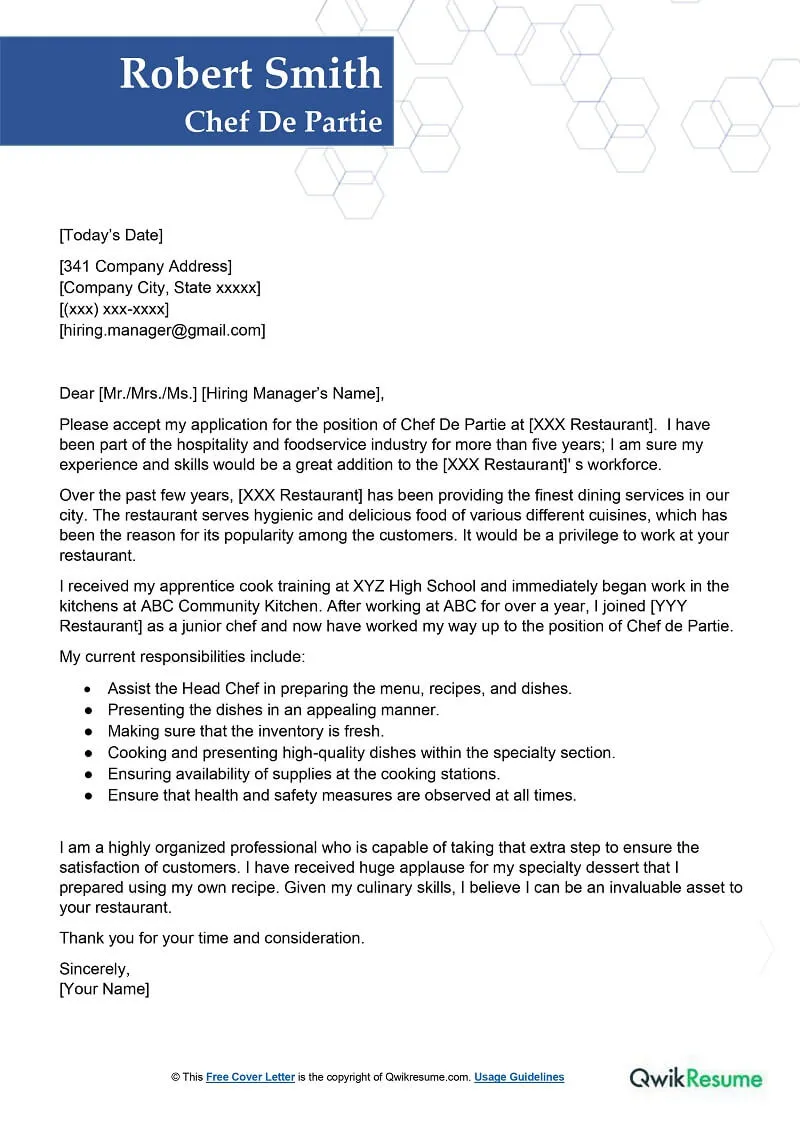
Understanding the Importance of a Chef Cover Letter
A chef cover letter is your first opportunity to make a lasting impression on a potential employer. It’s more than just a formality; it’s a crucial tool that allows you to showcase your culinary skills, experience, and passion for the culinary arts. In a competitive job market, a well-crafted cover letter can set you apart from other applicants, highlighting your unique qualifications and making a compelling case for why you’re the perfect fit for the role. It provides context to your resume, allowing you to elaborate on your achievements and demonstrate your understanding of the specific requirements of the job. A strong cover letter shows that you’ve taken the time to personalize your application, indicating genuine interest in the position and the restaurant or establishment.
Key Elements of a Compelling Chef Cover Letter
To create a chef cover letter that grabs attention, focus on these key elements. Start with a professional heading that includes your contact information and the date. Address the hiring manager directly, if possible, to show you’ve done your research. The body of your letter should highlight your most relevant skills and experience, tailored to the specific job description. Show your passion for culinary arts, and conclude with a strong call to action, expressing your enthusiasm and availability for an interview. Remember to keep it concise and engaging, avoiding generic phrases. Proofread meticulously to ensure there are no grammatical errors or typos; a polished cover letter reflects your attention to detail, a critical trait in the culinary world. It is very important to make sure your cover letter stands out in the application.
Highlighting Your Culinary Skills and Experience

When describing your skills and experience, be specific and results-oriented. Don’t just say you have experience; quantify your achievements. For example, instead of saying ‘Managed kitchen operations,’ state ‘Managed kitchen operations for a team of 15, resulting in a 15% reduction in food costs within six months.’ Mention specific cuisines you specialize in, techniques you’ve mastered (e.g., sous vide, molecular gastronomy), and any awards or recognition you’ve received. Use action verbs to describe your responsibilities and accomplishments, such as ‘developed,’ ‘implemented,’ ‘managed,’ and ’trained.’ Provide examples of how you’ve improved efficiency, increased customer satisfaction, or contributed to the profitability of previous establishments. This helps the hiring manager understand the value you can bring to their team. Mention your ability to work under pressure and with others, or in a team.
Showcasing Relevant Certifications and Training
List any relevant certifications, such as culinary degrees from accredited institutions, food safety certifications (e.g., ServSafe), or specialized training in specific cuisines or techniques. Include the name of the certifying organization, the date you obtained the certification, and any specific skills or knowledge it provided. Highlighting these credentials demonstrates your commitment to professional development and your understanding of industry standards. If you’ve participated in any culinary competitions or workshops, be sure to mention them, as they showcase your dedication to continuous learning and your passion for excellence in the culinary field. Adding your certifications will show the hiring manager your level of qualifications for the job you’re applying for. This will also help the recruiter to determine your value for the role.
Demonstrating Your Passion for Culinary Arts
Let your enthusiasm for food and cooking shine through. Describe what inspires you in the culinary world, and how you stay current with industry trends. Talk about your favorite ingredients, your approach to menu creation, or your philosophy on providing exceptional dining experiences. If you’ve worked with renowned chefs or had opportunities to learn from culinary masters, mention those experiences. Show that you’re not just looking for a job, but a fulfilling career where you can contribute your creativity and expertise. Express your genuine excitement about the specific cuisine or concept of the restaurant to show that you’re truly interested in the role. This will help you stand out from other applicants.
Tailoring Your Cover Letter to the Specific Job

A generic cover letter is easily recognized and often discarded. To make your application stand out, tailor each cover letter to the specific job and restaurant. Carefully review the job description and identify the key requirements and desired skills. Then, customize your letter to address those specific needs, highlighting the relevant experience and skills you possess. If the restaurant has a specific culinary style or focuses on a particular type of cuisine, emphasize your experience in that area. Avoid using a generic cover letter. This shows you care about the role and the company and have taken the time to personalize your application. This approach greatly increases your chances of getting an interview. Do a little research so you can fully understand the expectations of the role.
Researching the Restaurant and Its Cuisine
Before writing your cover letter, research the restaurant to understand its concept, cuisine, and values. Visit their website, browse their menu, and read reviews from customers. If possible, visit the restaurant and experience the atmosphere firsthand. This information will help you tailor your cover letter to reflect your understanding of the restaurant’s unique characteristics. Show that you appreciate their culinary style and are familiar with the ingredients and techniques they use. Addressing these specific details shows genuine interest and demonstrates that you’re a good fit for their team. It also demonstrates that you have taken the time to know the company before applying for the role, which can set you apart from other applicants who may have just randomly applied.
Addressing the Hiring Manager Directly
Whenever possible, address the hiring manager by name. This simple step shows you’ve taken the time to identify the person who will be reviewing your application, adding a personal touch to your letter. If the hiring manager’s name isn’t listed in the job posting, try to find it on the restaurant’s website or LinkedIn. A direct address makes your cover letter feel less generic and more personal, showing that you have a genuine interest in the position and have done your homework. If you are unable to find the name of the hiring manager, you can use a general salutation, such as ‘Dear Hiring Manager,’ but it is best to make an effort to find the specific person’s name if possible.
Matching Skills with Job Requirements

Carefully review the job description and create a list of the required skills and qualifications. Then, review your own skills and experience and identify how they align with the job requirements. In your cover letter, directly address the key requirements, providing specific examples of how you’ve demonstrated those skills in previous roles. Use keywords from the job description to help your application pass through applicant tracking systems (ATS). This will also help the hiring manager quickly understand how your skills and experience make you the ideal candidate for the role. Make sure your letter aligns with the company’s expectations to help you get an interview.
Formatting Your Cover Letter for Maximum Impact
The format of your cover letter is just as important as its content. A well-formatted letter is easy to read and makes a positive first impression. Use a professional-looking font, such as Arial, Times New Roman, or Calibri, and maintain a consistent font size (typically 11 or 12 points). Use clear headings and bullet points to break up large blocks of text and make your letter more scannable. Maintain a professional layout, with standard margins and line spacing. Ensure the letter is well-organized, with a clear introduction, body, and conclusion. Proper formatting shows that you pay attention to detail and take pride in your work. Your cover letter should look professional. It will help you stand out from other candidates.
Choosing the Right Font and Layout
Select a font that is easy to read and professional-looking. Avoid overly ornate or stylized fonts. Arial, Times New Roman, and Calibri are all good choices. The layout of your cover letter should be clean and uncluttered. Use standard margins (typically 1 inch on all sides) and line spacing (single or 1.15). Use clear headings and bullet points to break up large blocks of text. This makes your letter more visually appealing and easier for the hiring manager to scan. The layout should be organized to make the hiring manager easily understand your key points without losing their attention. Using a readable format is vital for an impressive application.
Keeping the Letter Concise and Engaging

Keep your cover letter concise and to the point. Aim for one page, or at most, one and a half pages. Get straight to the most important information, and avoid unnecessary details or lengthy paragraphs. Use strong action verbs and impactful language to capture the hiring manager’s attention. Focus on your key skills and experiences that are most relevant to the job. Maintain an enthusiastic and positive tone throughout the letter, showing your passion for the culinary arts and your interest in the opportunity. Keeping the letter concise and engaging is one of the most important keys to a successful chef application.
Proofreading and Editing for Perfection
Proofread your cover letter carefully before submitting it. Check for any grammatical errors, typos, or spelling mistakes. Have a friend or colleague review your letter as well. Sometimes, a fresh pair of eyes can catch errors you might have missed. Ensure your contact information is correct and up-to-date. A polished cover letter reflects your attention to detail and your commitment to excellence, qualities highly valued in the culinary field. Proofreading also helps you ensure all the information you have provided is correct and up to date, especially any information relating to your work experience and the skills you possess.
Writing a Strong Call to Action
End your cover letter with a strong call to action. Express your enthusiasm for the opportunity and your desire to learn more about the position. State your availability for an interview and provide your contact information again. Thank the hiring manager for their time and consideration. Avoid generic phrases like ‘I look forward to hearing from you.’ Instead, try something like ‘I am very excited about the opportunity to discuss my qualifications further and am available for an interview at your earliest convenience.’ This demonstrates your proactive approach and your genuine interest in the role. It will also increase your chances of receiving a positive response.
Expressing Enthusiasm and Availability

In the closing paragraph, reiterate your enthusiasm for the position and the restaurant. Mention something specific that excites you about the opportunity. For example, if the restaurant is known for its innovative approach to seafood, mention your experience with seafood and how you’d love to contribute your skills. State your availability for an interview, and specify your preferred method of contact (phone or email). This demonstrates your proactive approach and willingness to move forward in the hiring process. Making a good impression on the recruiter is crucial for your application. This will also show your interest in the role, increasing your chance of getting hired.
Providing Contact Information
Make sure your contact information is easily accessible. Include your full name, phone number, and email address. Consider including a link to your professional online profile (e.g., LinkedIn) or your online portfolio (if you have one). Ensure your email address is professional and appropriate. Double-check that all the information is accurate and up-to-date. This will make it easy for the hiring manager to contact you for an interview and will ensure that you don’t miss any important communication. You must be easily contacted for an interview opportunity.