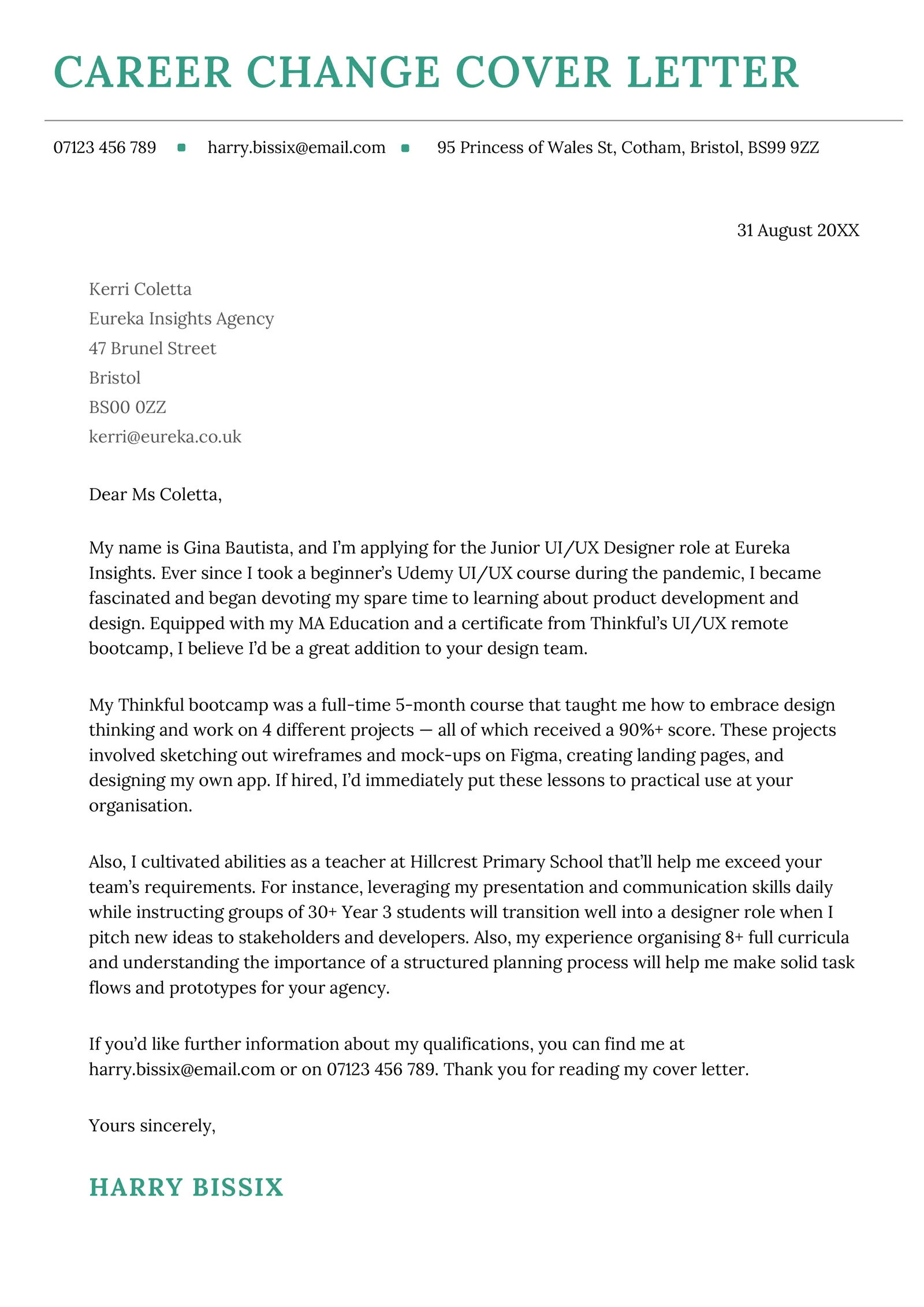
Why a Career Change Cover Letter is Crucial
A cover letter is your first impression, and when you’re changing careers, it plays a critical role. It’s an opportunity to explain your career shift, highlight transferable skills, and demonstrate your enthusiasm for the new role. Unlike a resume, which provides a factual overview of your experience, a cover letter lets you tell your story, connecting the dots between your past and your desired future. It allows you to address the hiring manager directly, showcasing your personality and passion. A well-crafted cover letter for a career change can overcome any initial skepticism and position you as a strong candidate, even if your background isn’t a perfect match.
Highlighting Transferable Skills
One of the keys to a successful career change cover letter is emphasizing transferable skills. These are the skills you’ve developed in previous roles that are valuable in your new desired field. They bridge the gap between your past experience and the requirements of the new job. Think about communication, problem-solving, leadership, project management, and technical skills. Identifying and highlighting these transferable skills makes your application more compelling and demonstrates your ability to succeed in the new role.
Identifying Your Key Skills

To identify your key skills, start by carefully reviewing the job description. Make a list of the skills and qualifications the employer is seeking. Then, analyze your own experiences and identify instances where you’ve demonstrated those skills. Use action verbs to describe your accomplishments, and quantify your achievements whenever possible. This proactive approach proves you’re not just stating you have skills, but you also provide evidence of them. Remember, the goal is to create a clear picture of how your skills align with the job requirements.
Showcasing Achievements and Quantifiable Results
Don’t just list your responsibilities; showcase your accomplishments. Provide concrete examples of what you achieved in your previous roles. This is particularly important when changing careers because you need to convince the hiring manager that you can deliver results, even if your background isn’t directly related to the new field. Use the STAR method (Situation, Task, Action, Result) to structure your examples, highlighting the impact of your work.
Quantifying Your Accomplishments
Whenever possible, quantify your achievements. Use numbers, percentages, or specific metrics to demonstrate the impact of your work. This adds credibility to your claims and makes your achievements more compelling. For example, instead of saying “Improved customer satisfaction,” say “Increased customer satisfaction scores by 15%.” Quantifiable results are a powerful way to demonstrate your value and prove that you can deliver results in your new career.
Addressing the Career Change Directly

It’s crucial to address the career change directly in your cover letter. Don’t try to hide it or gloss over it. Acknowledge your career transition and explain your motivations for making the change. Be honest and transparent about your reasons. Hiring managers appreciate candidates who are upfront about their career goals and aspirations. Explain your rationale behind the career shift and show your excitement for the new opportunity.
Explaining Your Motivation for Change
Clearly articulate why you’re making a career change. What draws you to this new field or role? What excites you about the opportunity? Your explanation should be sincere and demonstrate your passion for the new career path. This is your chance to show the hiring manager that you have carefully considered your decision and are genuinely committed to the new role. Your enthusiasm can be a great asset in the job search process.
Also, connect your past experience to the new role. Show how your previous experiences, even if in different fields, have prepared you for this new opportunity. This shows you are a fast learner and can apply knowledge of many different areas to your current roles. Highlight the skills and experiences that are most relevant to the job requirements.
Tailoring the Cover Letter to Each Job
Never use a generic cover letter. Each cover letter should be tailored to the specific job and company you’re applying for. Review the job description carefully and identify the key skills and qualifications the employer is seeking. Then, customize your cover letter to highlight the relevant skills and experiences from your background. Show the employer that you understand their needs and are a good fit for their organization.
Researching the Company and the Role

Before writing your cover letter, research the company and the role. Visit the company’s website, read news articles, and browse their social media profiles to learn more about their mission, values, and culture. Understand the role’s responsibilities and the challenges the person in that position will face. This research will allow you to tailor your cover letter more effectively and demonstrate your genuine interest in the opportunity. Show that you understand the company’s business and how your skills can contribute to its success.
Using Keywords and Formatting for Applicant Tracking Systems
Many companies use Applicant Tracking Systems (ATS) to screen applications. To increase your chances of getting your cover letter read by a human, use keywords from the job description. Integrate these keywords naturally throughout your cover letter, without keyword stuffing. Also, pay attention to formatting. Use a clear and readable font, and keep the layout clean and organized. This will ensure that your cover letter is both ATS-friendly and easy for a human reader to review.
Crafting a Strong Opening and Closing
The opening and closing paragraphs are crucial. They’re your first and last chance to make a strong impression. The opening paragraph should grab the reader’s attention and clearly state your interest in the role. The closing paragraph should reiterate your interest, summarize your key qualifications, and include a call to action.
Writing a Compelling Opening Paragraph

In your opening paragraph, immediately state the position you’re applying for and how you learned about it. Briefly explain why you’re interested in the role and why you’re a good fit. Highlight your career change and express your enthusiasm for the new field. Make the reader want to continue reading. A strong opening sets the tone for the rest of your cover letter.
Ending with a Call to Action
In your closing paragraph, reiterate your interest in the role and summarize your key qualifications. End with a clear call to action, such as “I am eager to discuss my qualifications further” or “I am available for an interview at your earliest convenience.” This tells the hiring manager the next step you expect, and it shows your enthusiasm and initiative.
Formatting and Proofreading
The formatting and proofreading of your cover letter are just as important as its content. A well-formatted and error-free cover letter shows professionalism and attention to detail. Poor formatting or errors can immediately disqualify you from consideration. Make sure your cover letter looks professional and is ready to be reviewed by the hiring manager.
Formatting Tips for Readability

Use a clear and readable font, such as Arial or Times New Roman, with a font size between 11 and 12 points. Use a standard one-inch margin on all sides. Use bullet points to list your skills and achievements. Break up large blocks of text with short paragraphs and headings. A well-formatted cover letter is easy to read and helps the hiring manager quickly understand your qualifications.
Proofreading Your Cover Letter
Proofread your cover letter carefully before submitting it. Check for any grammatical errors, spelling mistakes, and typos. Read it aloud to catch any awkward phrasing or unclear sentences. Ask a friend or family member to proofread it as well. A polished, error-free cover letter demonstrates professionalism and increases your chances of landing an interview. Taking this extra step can make all the difference.
In conclusion, writing a career change cover letter requires careful consideration and a strategic approach. By highlighting transferable skills, addressing your career change directly, tailoring your letter to each job, and using keywords effectively, you can significantly increase your chances of getting noticed. Remember to focus on your achievements, quantify your results, and show your genuine enthusiasm for the new role. With a well-crafted cover letter, you can successfully navigate your career change and land your dream job.