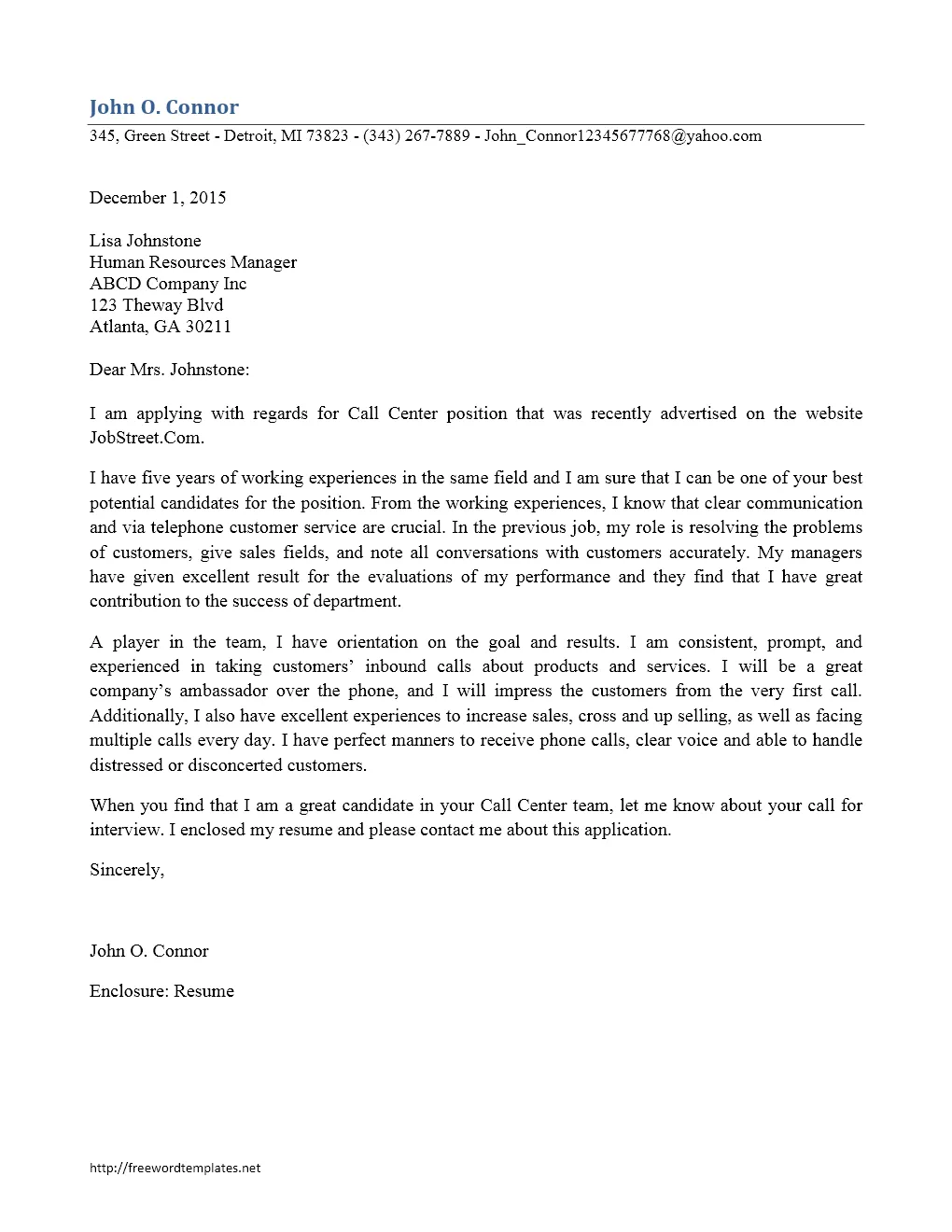
Why You Need a Strong Call Center Cover Letter
In the competitive world of call center jobs, a well-crafted cover letter is your first opportunity to make a positive impression. It’s more than just a formality; it’s a crucial tool that sets you apart from other applicants. A compelling cover letter showcases your personality, enthusiasm, and relevant skills, all of which are vital for success in a customer-focused role. The cover letter allows you to elaborate on your qualifications in ways that a resume alone cannot. By providing specific examples of your achievements and demonstrating how your experience aligns with the job requirements, you increase your chances of landing an interview. Think of it as your personal sales pitch, designed to convince the hiring manager that you are the ideal candidate for the position. Without a strong cover letter, your application might be overlooked, regardless of your qualifications.
Highlighting Relevant Skills for Call Center Roles
Call centers demand a unique set of skills. When writing your cover letter, focus on skills that highlight your ability to excel in a customer service environment. These are skills that are critical for providing excellent service. Think about your experiences and how they have equipped you with these skills. Providing concrete examples of how you have used these skills in the past is key to making your cover letter stand out. This section should be a focused presentation of your most relevant skills, demonstrating a clear understanding of what the role requires. It’s a chance to show, not just tell, the hiring manager that you possess the qualities they are looking for.
Communication Skills

Excellent communication is the cornerstone of any successful call center agent. Highlight your ability to speak clearly and concisely, actively listen to customers, and adapt your communication style to suit different individuals. Show how you have effectively conveyed information, resolved conflicts, and built rapport with customers in past roles. Provide concrete examples of instances where your communication skills led to positive outcomes, such as improved customer satisfaction or successful problem resolution. Mention any specific communication training or certifications you have received, such as conflict resolution or active listening workshops. Demonstrating strong communication skills is essential for making customers feel heard, understood, and valued, which ultimately reflects well on the company.
Problem-Solving Abilities
Call center agents are often the first point of contact for customers experiencing issues. Showcase your problem-solving abilities by describing instances where you identified issues, analyzed the situation, and developed effective solutions. Highlight your ability to think critically, remain calm under pressure, and find creative ways to resolve customer problems. Quantify your achievements whenever possible. For instance, you might state that you reduced resolution times by a certain percentage or increased customer satisfaction scores by addressing issues efficiently. Emphasizing your problem-solving abilities demonstrates your capacity to handle customer inquiries effectively and contribute to positive customer experiences.
Customer Service Experience
Previous customer service experience is a significant asset. Provide detailed examples of your roles in customer-facing positions. Focus on your ability to handle customer inquiries, resolve complaints, and go the extra mile to meet customer needs. Quantify your accomplishments whenever possible. For example, mention how you exceeded customer satisfaction targets or received positive feedback from customers. If you have experience using customer relationship management (CRM) software or other relevant tools, be sure to mention those skills. Highlighting your customer service experience provides evidence of your ability to provide excellent service and ensures that customers feel valued.
Key Components of an Effective Cover Letter

A well-structured cover letter follows a logical flow and contains essential elements to grab the reader’s attention and highlight your key qualifications. Each section should have a clear purpose, and the overall tone should reflect professionalism and enthusiasm. Make sure to address the letter to the hiring manager, if possible, by researching their name on LinkedIn or the company website. Doing so demonstrates your attention to detail and genuine interest in the role. The introduction is your chance to make a strong first impression, while the body of the letter should showcase your relevant skills and experiences, backed by specific examples. The conclusion provides a final opportunity to reiterate your interest and express your enthusiasm for the opportunity.
Formatting Your Cover Letter
Formatting matters. A well-formatted cover letter is easy to read and reflects professionalism. Use a clear and professional font, such as Times New Roman or Arial, with a font size between 11 and 12 points. Maintain consistent margins and spacing throughout the document. Use headings and bullet points to break up large blocks of text and make it easier for the hiring manager to scan the document. Ensure your letter is properly aligned, either left-justified or fully justified, and avoid using excessive formatting or distracting elements. Proofread your letter carefully to eliminate any errors in formatting, which will make it look polished and professional.
Personalizing Your Cover Letter
Generic cover letters are easily recognizable and often get overlooked. Tailor each cover letter to the specific job you are applying for. Research the company and the role, and use the information to customize your letter. Show that you understand the company’s values and the specific requirements of the position. Use keywords from the job description and highlight how your skills and experience align with those requirements. Mention the company’s products or services, and express your genuine interest in working there. Personalizing your cover letter demonstrates that you are serious about the opportunity and have taken the time to consider your fit within the company.
Action Verbs to Use in Your Cover Letter

Using strong action verbs is a powerful way to make your cover letter more impactful and demonstrate your accomplishments. Start each bullet point or sentence describing your responsibilities and achievements with dynamic verbs. Examples of action verbs include ‘managed’, ‘resolved’, ‘assisted’, ‘implemented’, ‘improved’, ‘collaborated’, ’trained’, ‘achieved’, and ’exceeded’. Action verbs bring your experiences to life and showcase your skills effectively. By using strong verbs, you can create a more engaging and persuasive cover letter. They immediately give a strong impression to the hiring manager. Review the job description for keywords and align your verb choices.
Common Mistakes to Avoid
Avoid common mistakes that can undermine your application. These mistakes include sending a generic cover letter, making grammatical errors, using a casual tone, and failing to tailor the letter to the specific job. Another major mistake is providing irrelevant information or focusing too much on your needs rather than the needs of the employer. Always proofread your cover letter carefully to catch any errors in spelling, punctuation, or grammar. Ensure that your cover letter is clear, concise, and tailored to the specific job requirements to maximize your chances of success.
Grammar and Spelling Errors
Grammar and spelling errors can create a negative impression of your attention to detail and professionalism. Always proofread your cover letter carefully. Use a spell checker, but don’t rely on it completely; it won’t catch every error. Ask a friend or family member to review your letter. A fresh pair of eyes can often spot mistakes you’ve missed. Incorrect grammar and spelling errors create a perception of carelessness, making it difficult to portray yourself as a skilled applicant. Take the time to ensure that your cover letter is polished and free from errors.
Generic Cover Letters

Sending a generic cover letter is a sure way to make your application stand out for the wrong reasons. Hiring managers can easily recognize generic letters that have been sent to multiple companies. This can create the impression that you are not truly interested in the specific role or company. Always tailor your cover letter to each job. Research the company, review the job description, and highlight how your skills and experience match the requirements. Show that you understand the company’s values and express your genuine interest in working there. Personalizing your cover letter demonstrates a commitment to the opportunity, increasing your chances of getting an interview.
Tailoring Your Letter to the Specific Job
Customize your cover letter to reflect the specific job requirements and company culture. Start by carefully reviewing the job description and identifying the key skills and qualifications the employer is seeking. Then, highlight your relevant skills and experiences, providing specific examples to demonstrate how you have used those skills in the past. Use keywords from the job description throughout your letter to show that you understand what the employer is looking for. Research the company, and incorporate information about its values, mission, and products or services. By tailoring your letter, you demonstrate that you are a good fit for the role and have taken the time to learn about the company. This level of personalization can greatly increase your chances of success.
Reviewing and Proofreading Your Cover Letter
Before submitting your cover letter, take the time to review and proofread it carefully. Check for any errors in grammar, spelling, punctuation, and formatting. Ensure that your letter is clear, concise, and easy to read. Ask a friend or family member to review your letter as well, as a fresh pair of eyes can often spot mistakes that you might have missed. Use a spell checker, but don’t rely on it completely. Proofreading helps ensure that your cover letter is polished and professional, improving your chances of making a positive impression on the hiring manager. Thorough proofreading is a crucial step in the job application process, so don’t skip it.
Call Center Cover Letter Examples

Reviewing examples of successful call center cover letters can provide valuable insights and inspiration for writing your own. Look for examples that showcase the skills and qualities valued by call center employers. Analyze how the applicants highlight their experience, use action verbs, and tailor their letters to the specific job requirements. Adapt elements from these examples to your own cover letter, ensuring that you maintain your unique voice and showcase your individual strengths. Here, you can view example cover letters for a variety of call center positions, each demonstrating best practices.
Example 1 Customer Service Representative
This example showcases a customer service representative cover letter. The focus is on the applicant’s ability to handle customer inquiries, resolve issues, and provide excellent service. The letter highlights the applicant’s communication, problem-solving, and active listening skills. It provides specific examples of how the applicant has exceeded customer expectations and received positive feedback. It emphasizes the applicant’s experience with CRM software and ability to handle high call volumes. The tone is professional and enthusiastic, demonstrating the applicant’s passion for providing excellent customer service.
Example 2 Technical Support Specialist
This technical support specialist cover letter emphasizes the applicant’s technical skills, problem-solving abilities, and ability to troubleshoot technical issues. The letter highlights the applicant’s experience with specific software, hardware, and troubleshooting tools. The applicant provides examples of resolving technical issues and assisting customers with technical problems. It showcases the applicant’s communication skills, ability to explain technical information in a clear and concise manner, and their patience when working with customers. It uses specific technical jargon, and emphasizes the applicant’s dedication to providing excellent technical support.
Example 3 Bilingual Call Center Agent

This cover letter highlights the applicant’s bilingual skills and ability to communicate effectively with customers in two languages. It emphasizes the applicant’s experience in providing customer service in both languages and provides examples of bridging communication gaps. The applicant showcases their cultural sensitivity and ability to build rapport with customers from diverse backgrounds. The letter also highlights the applicant’s knowledge of the products or services and their ability to provide accurate information. It demonstrates the applicant’s ability to handle multiple tasks, such as taking calls and handling written communications in multiple languages. The tone reflects the applicant’s enthusiasm for working in a bilingual role.
Final Tips for Success
In addition to the basics, there are a few extra steps you can take to improve your chances of landing an interview. Always research the company and the specific role before writing your cover letter. Tailor your letter to match the company’s culture and the specific job requirements. Use keywords from the job description to demonstrate your understanding of the role and the employer’s needs. Highlight your relevant skills and experience, backing up your claims with specific examples and quantifiable achievements. Proofread your cover letter carefully to avoid any errors. Most importantly, convey your enthusiasm for the role and your passion for providing excellent customer service. A compelling cover letter can significantly improve your chances of getting hired.
Following Up on Your Application
After submitting your cover letter and resume, consider following up with the hiring manager or the company’s HR department. A follow-up email or phone call can demonstrate your continued interest in the position and reinforce your qualifications. Express your appreciation for the opportunity and reiterate your enthusiasm for the role. Ask about the status of your application and express your willingness to answer any questions or provide additional information. Timing is essential; it’s generally recommended to follow up within one to two weeks of submitting your application. A well-timed and professional follow-up can show initiative and keep you at the forefront of the hiring manager’s mind, which can boost your chances of getting an interview.