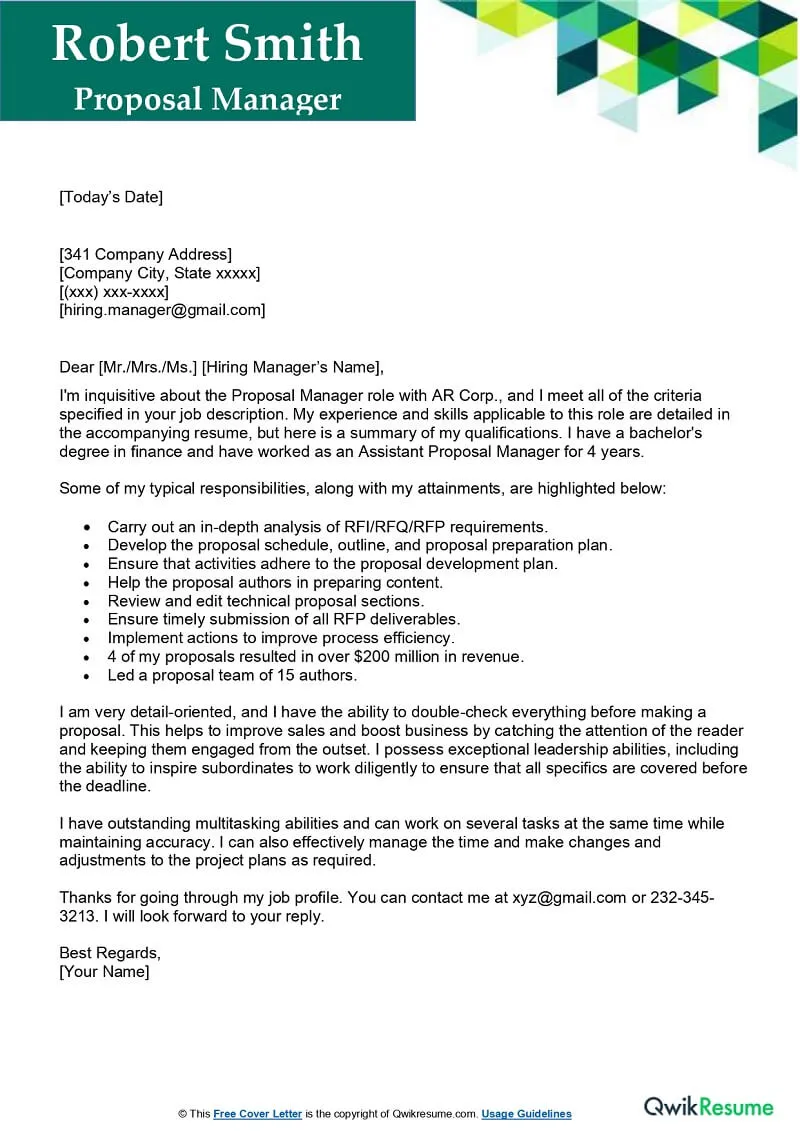
Understand the Purpose of the Cover Letter
A business proposal cover letter serves as the introduction to your proposal, setting the stage for a positive first impression. It’s more than just a formality; it’s a crucial opportunity to grab the reader’s attention and encourage them to delve deeper into your proposal. Think of it as your initial handshake, the first step in building rapport and demonstrating your understanding of their needs. The cover letter should clearly state the purpose of the proposal, highlighting the problem you intend to solve or the opportunity you aim to seize for the potential client. It should also summarize your key strengths and why you’re the ideal choice, enticing the reader to learn more. A well-crafted cover letter shows professionalism and attention to detail, increasing the likelihood that your proposal will be read and considered seriously.
Highlight Your Value Proposition
Your value proposition is the heart of your cover letter. It’s where you showcase the unique benefits and advantages your services or products offer to the prospective client. Clearly articulate how your solutions address their specific needs and challenges. Instead of simply listing features, emphasize the outcomes they can expect: increased revenue, reduced costs, improved efficiency, or enhanced brand reputation. Use concise and compelling language to demonstrate how your expertise aligns with their objectives. Quantify your claims whenever possible by including statistics, testimonials, or case studies. This shows the tangible value you bring and sets you apart from competitors. By focusing on what the client gains, you build a strong case for why they should choose you.
Tailor the Letter to the Recipient

Generic cover letters often end up in the recycling bin. To make your cover letter stand out, it must be tailored to the specific recipient and their organization. This personalized approach demonstrates that you’ve done your homework and understand their unique situation. Customization goes beyond simply changing the company name; it requires a deep understanding of their industry, current challenges, and future goals. This level of detail showcases that you value their business and are genuinely interested in helping them succeed. When your proposal and cover letter show you understand the client’s business, you greatly increase your chances of moving forward.
Research the Company
Before you write a single word, research the company. Understand their mission, values, and recent activities. Visit their website, review their social media profiles, and read industry news. Identify key personnel, their roles, and their priorities. The goal is to gather enough information to demonstrate that you understand their needs and can offer relevant solutions. Demonstrating you’ve researched their business will make the cover letter feel less generic and more directly helpful to the needs of the client.
Address Specific Needs
The most impactful cover letters address specific needs. Once you’ve researched the company, identify their pain points, challenges, or opportunities. Then, in your cover letter, show how your proposal directly addresses these issues. Speak the language of your audience. If they emphasize innovation, highlight how your solutions are cutting-edge. If they prioritize cost savings, quantify the potential financial benefits. By aligning your proposal with their needs, you prove your relevance and increase your chances of making a favorable impression. Addressing specific needs shows the client that you’re a good fit and a good choice to solve their problems.
Keep it Concise and Focused

Time is precious, so respect the reader’s time. Your cover letter should be concise and to the point. Aim for one page, or no more than a few paragraphs. Avoid unnecessary jargon or overly technical language. Focus on the essential information: the purpose of the proposal, your value proposition, and a clear call to action. Every sentence should serve a purpose, contributing to your goal of getting the reader to review your proposal. This doesn’t mean sacrificing detail, but it does require careful editing and a ruthless approach to eliminating anything that doesn’t directly support your key message. A short, well-written cover letter will always be better received than a long, rambling one.
Use a Professional Tone
The tone of your cover letter sets the stage for your entire proposal. Maintain a professional, yet approachable, tone throughout. Avoid slang, overly casual language, or humor that could be misinterpreted. Use formal salutations (e.g., “Dear Mr./Ms. [Last Name]”) and closings (e.g., “Sincerely,” or “Best regards”). Proofread carefully to eliminate any grammatical errors or typos, as they detract from your credibility. Your writing should reflect the quality of your work and your commitment to excellence. A professional tone builds trust and conveys that you take their business seriously.
Proofread for Errors
Errors in your cover letter can instantly undermine your credibility. Always proofread meticulously before sending your proposal. Check for grammatical errors, spelling mistakes, and inconsistencies in formatting. Consider having a colleague review your letter for a fresh perspective. Even a small error can create a negative impression, suggesting a lack of attention to detail. Proofreading ensures your message is clear, concise, and polished, showing your professionalism and respect for the recipient’s time. A clean, error-free cover letter will greatly enhance your chances of success.
Include a Strong Call to Action

Don’t leave the reader wondering what to do next. Your cover letter needs a clear call to action. Tell the recipient precisely what you want them to do, such as: review the proposal, schedule a meeting, or contact you with questions. Make the call to action specific and easy to act upon. For example, instead of saying, “Please consider my proposal,” say, “I encourage you to review the attached proposal and contact me at your earliest convenience to discuss next steps.” The stronger your call to action, the more likely you are to get the desired response. This clearly states the next steps and encourages the client to take the next step with your business.
Offer Next Steps
Following up is essential to keep the momentum going after you’ve sent your proposal. Provide clear instructions for what happens next. This may include a follow-up phone call, an invitation to schedule a meeting, or a specific date by which you expect a response. Make it as easy as possible for the recipient to take the next step in the process. Offering next steps provides the recipient with a clear path forward and prevents the proposal from getting lost. This proactive approach demonstrates your commitment to the project and your desire to move forward.