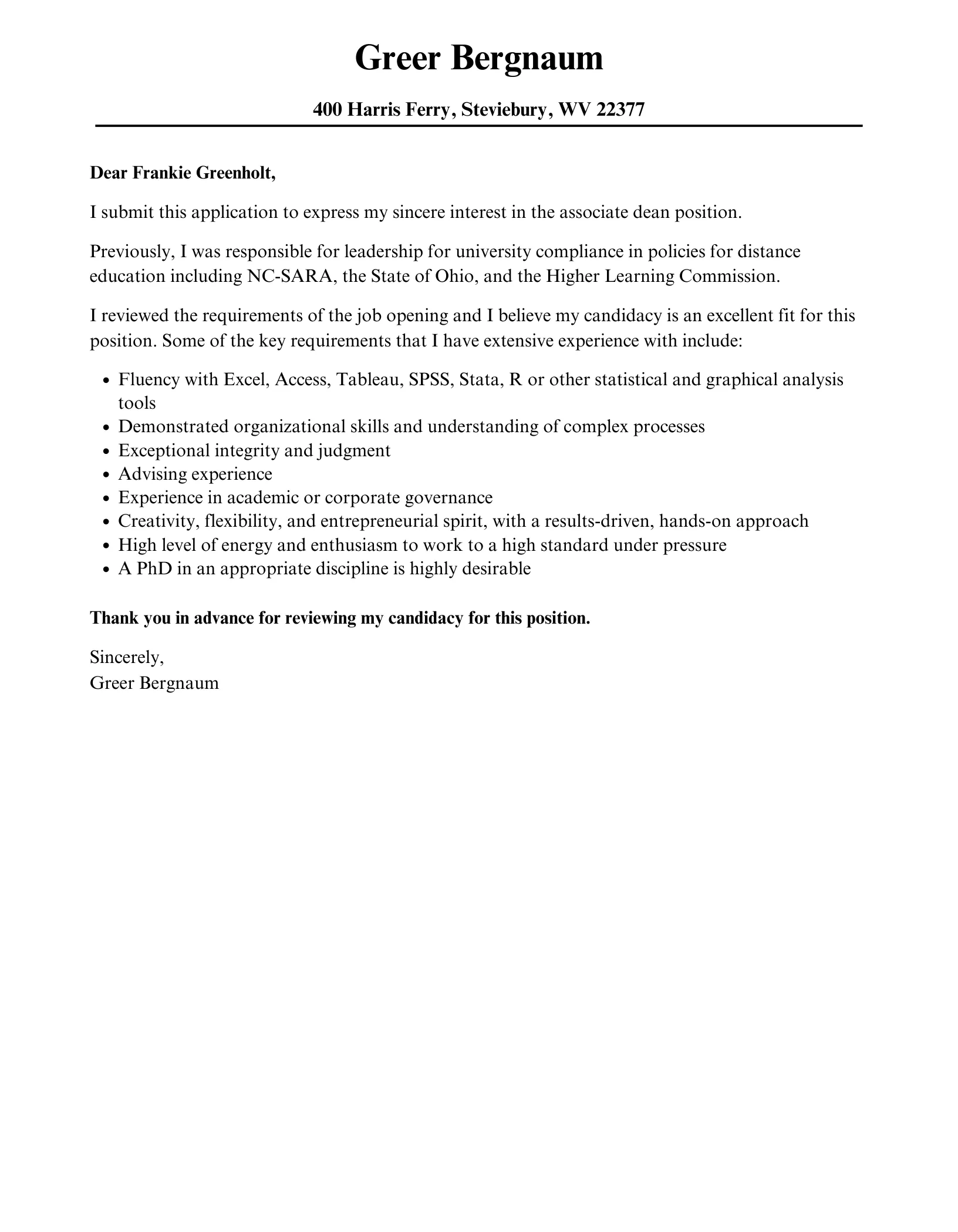
Understanding the Associate Dean Role
Before you start crafting your cover letter, it’s crucial to understand the multifaceted role of an Associate Dean. This position is a significant leadership role within academic institutions, often bridging the gap between faculty, students, and administration. The responsibilities can be incredibly diverse, demanding a unique blend of skills and experiences. Understanding the scope of this role will help you tailor your cover letter effectively, highlighting the skills and experiences most relevant to the position and the institution you’re applying to. It involves strategic thinking, problem-solving, and a commitment to the advancement of academic excellence and student success. Demonstrate a clear understanding of these aspects in your cover letter to show you’ve done your research and are a strong fit for the role.
Key Responsibilities of an Associate Dean
Academic Leadership

Associate Deans often play a vital role in shaping academic programs, curriculum development, and faculty support. They might be involved in program reviews, accreditation processes, and fostering a culture of continuous improvement in teaching and research. Highlighting your experience in curriculum development, academic program assessment, or faculty mentorship will demonstrate your capacity for academic leadership. Showcasing your involvement in these areas illustrates your commitment to academic excellence and your ability to contribute to the strategic goals of the institution.
Administrative Duties
Administrative duties often include budget management, resource allocation, policy implementation, and ensuring the smooth operation of academic departments. Highlighting your experience with budgeting, resource management, or policy development will demonstrate your administrative capabilities. Providing specific examples of how you’ve managed budgets, streamlined processes, or implemented new policies effectively can significantly strengthen your application. Be sure to mention experience with strategic planning and institutional governance, as these are often critical components of administrative roles in higher education.
Student Affairs
Associate Deans frequently contribute to student support, advising, and the overall student experience. Your cover letter should showcase your experience in student advising, mentoring, and student affairs. Highlighting initiatives to enhance student success, such as student support programs or student retention strategies, can be highly effective. Emphasize your commitment to creating a positive and inclusive learning environment that supports student growth and well-being, as this demonstrates your ability to connect with students and understand their needs. Consider including examples of successful student support initiatives you’ve led or participated in.
Crafting Your Associate Dean Cover Letter

Your cover letter is your first impression, so it must be well-crafted and tailored to the specific role and institution. The goal is to showcase your qualifications, skills, and experience in a compelling way, clearly demonstrating why you’re the best candidate for the position. A well-written cover letter not only introduces you but also provides the hiring committee with a glimpse of your personality, leadership style, and commitment to higher education. It should be professional, concise, and easy to read, making it clear that you understand the position’s requirements and have the skills to succeed. Consider it a roadmap of your qualifications, guiding the reader through your relevant accomplishments and aspirations.
Formatting Your Cover Letter
The format of your cover letter can significantly impact its readability and professionalism. A clean and organized layout is essential for making a positive impression. Choose a professional font like Times New Roman, Arial, or Calibri, and maintain a consistent font size, usually between 10 and 12 points. Use clear headings and subheadings to break up the text and make it easy for the reader to scan and find the information they need. Ensure ample white space between paragraphs to avoid a cluttered appearance. A well-formatted cover letter indicates that you pay attention to detail, a crucial quality for a leadership role. Also, ensure the letter fits on one page, as hiring managers are often pressed for time.
Header and Contact Information
Start with your contact information in the header, including your name, phone number, email address, and LinkedIn profile URL (if applicable). Make sure this information is accurate and up-to-date. In the header, also include the date of your application. This helps the hiring committee easily contact you and provides context to your application. Use a professional email address; avoid using a casual or unprofessional one. Your header should be clearly formatted and easily accessible, ensuring that your contact information is readily available to the recipient. It should also be consistent in style with the rest of your application materials, projecting a professional and polished image.
Recipient’s Information

Next, include the recipient’s information, which typically includes the hiring manager’s name, title, the department, and the institution’s address. If you can’t find the hiring manager’s name, address your letter to ‘Search Committee’ or ‘Hiring Manager’ to be safe. Use the correct title and spelling of the name. Doing your research and addressing the letter to a specific individual shows that you’ve taken the time to learn about the institution and the position. Including this information not only shows your attention to detail but also gives the letter a more personal touch, showing that you’re genuinely interested in the role and the institution.
The Salutation
Start your cover letter with a professional salutation. If you know the hiring manager’s name, use ‘Dear Mr./Ms./Dr. [Last Name]’. If you don’t know the name, use a general greeting like ‘Dear Search Committee’ or ‘Dear Hiring Manager’. Avoid using overly casual salutations such as ‘Hi’ or ‘Hello’. Always ensure you spell the person’s name correctly. The salutation sets the tone for the entire letter, so a professional approach is crucial. It also shows respect and establishes a formal relationship from the outset. Using the correct salutation shows attention to detail and is a good way to begin making a positive impression.
Writing a Compelling Opening
The opening paragraph is crucial for grabbing the reader’s attention. State the position you’re applying for and how you learned about it. Immediately highlight your most relevant qualifications or your passion for the role or institution. This opening should be concise and focused, setting the tone for the rest of the letter. If a specific aspect of the job posting resonates with you, mention it in the opening. A well-crafted opening immediately establishes your interest in the position and encourages the hiring manager to continue reading. The goal is to make a strong, positive first impression.
Highlighting Relevant Experience

In the body paragraphs, showcase your experience and how it aligns with the job requirements. Use the job description as a guide, and address each key requirement, demonstrating your competence. Provide specific examples of your accomplishments, using the STAR method (Situation, Task, Action, Result) to detail how you handled challenges and achieved positive outcomes. Quantify your achievements whenever possible; for example, ‘Increased student retention rates by 15%’ or ‘Managed a budget of $X’. Use action verbs to describe your responsibilities and accomplishments. This will help the hiring committee understand your experience and skills, making you a strong candidate. Prioritize the most relevant experiences and tailor your examples to the specific needs of the institution.
Quantifying Achievements
Numbers speak volumes. Whenever possible, quantify your accomplishments to demonstrate the impact you’ve made in previous roles. Instead of saying you ‘improved student engagement,’ say you ‘increased student engagement by 20% through the implementation of X program.’ Numbers add credibility and provide concrete evidence of your abilities and achievements. Quantifying achievements makes it easier for the hiring committee to understand the value you bring to the table. Be specific and include data wherever you can to support your claims, showing tangible results of your efforts. Remember, metrics help differentiate you from other candidates.
Demonstrating Leadership Skills
Leadership is a crucial skill for an Associate Dean. Highlight your leadership abilities by providing examples of how you’ve led teams, managed projects, or influenced positive change. Describe your leadership style and how it has contributed to the success of previous projects or initiatives. Talk about how you’ve mentored or supported faculty and staff. Focus on your ability to inspire and motivate others, make strategic decisions, and foster a collaborative environment. Provide examples of your decision-making process and how it positively impacted your previous institutions. Show how you handle challenges and make a difference through leadership.
Showcasing Relevant Skills

Identify the key skills required for the Associate Dean position, such as communication, problem-solving, strategic planning, and budget management, then provide specific examples of how you’ve demonstrated these skills. For instance, if the job description emphasizes communication skills, describe a situation where you effectively communicated complex information to a diverse audience, improving understanding and collaboration. Tailor your skills to match the requirements of the specific job description. Show, don’t just tell, how you possess the skills needed to succeed in the role. Use keywords from the job description to make your skills easily identifiable.
Communication Skills
Strong communication skills are essential for an Associate Dean. Highlight your ability to communicate effectively, both verbally and in writing, with a variety of stakeholders, including faculty, students, and administrators. Provide examples of your experience presenting to large groups, writing reports, or facilitating meetings. Emphasize your ability to listen, understand, and respond to different viewpoints. Communication is critical for building relationships and achieving consensus. Describe instances where you have successfully navigated difficult conversations or mediated conflicts using excellent communication skills.
Problem-solving abilities
Demonstrate your problem-solving skills by providing examples of how you have identified, analyzed, and resolved complex issues. Share specific instances where you’ve used critical thinking to develop solutions and make sound decisions. Highlight your ability to think strategically and proactively address potential problems. Emphasize your experience with data analysis and using evidence to inform your decision-making. Showing your ability to solve problems is crucial. It highlights your capability to handle unforeseen challenges and make data-driven decisions to support the institution’s goals.
Adaptability

Showcase your ability to adapt to change and thrive in a dynamic environment. Higher education is constantly evolving, and an Associate Dean must be flexible and resilient. Share examples of how you’ve successfully navigated organizational changes, embraced new technologies, or adapted to different situations. Highlight your willingness to learn new skills and take on new challenges. Being adaptable is important, especially for a leadership role, because it shows that you can handle shifting priorities and new challenges to help the institution succeed.
Addressing the Specific Requirements
Carefully review the job description and address each of the specific requirements listed. Identify the key qualifications and tailor your cover letter to match these needs. Use the language from the job description and provide specific examples of how your experience and skills align with the requirements. This demonstrates that you’ve carefully considered the role and are a strong fit. Show that you understand the needs of the institution and have the capabilities to meet them. By addressing the specific requirements, you make it clear that you are the right candidate.
Researching the Institution
Before writing your cover letter, research the institution thoroughly. Understand its mission, values, and strategic goals. Show that you understand the institution’s unique culture and how your skills and experience can contribute to its success. Mention specific initiatives, programs, or departments that resonate with you. This research will help you tailor your letter and demonstrate your genuine interest in the role and institution. Tailoring your cover letter makes you stand out. It shows you are dedicated and have a clear understanding of the school’s needs. This will greatly increase the chances of getting an interview.
Aligning Your Skills

Make a clear connection between your skills and the needs of the institution. Use the job description to identify the key skills and qualifications the institution is seeking, then provide specific examples of how your skills meet these requirements. Show that you have the necessary experience in areas like curriculum development, budget management, or student affairs. Providing examples of your achievements helps the hiring committee see how you can add value and contribute to the institution. Demonstrating how you can apply your skills to address the institution’s unique challenges will increase your chances of being selected.
Tailoring the Letter
Avoid using a generic cover letter. Customize your letter for each position you apply for. Tailoring shows the hiring committee that you’ve carefully considered the position and the institution, which makes a big difference. Use the job description as a guide to identify the specific requirements and tailor your letter accordingly. Show that you have an understanding of the school’s mission and values, and explain why your skills and experience make you the ideal candidate. This tailoring demonstrates your genuine interest in the role and that you are willing to put in the effort required to apply.
Closing Your Cover Letter
The closing paragraph is your final chance to make a strong impression. Express your enthusiasm for the position and reiterate your interest in the institution. Thank the hiring committee for their time and consideration. Conclude with a call to action, such as inviting them to contact you for an interview or offering to provide additional information. The closing should be professional and leave a positive, lasting impression, signaling your commitment and eagerness to move forward in the application process.
Expressing Enthusiasm
Clearly express your enthusiasm for the position and the institution. Convey your excitement about the opportunity to contribute to the institution’s mission and goals. Mention any specific aspects of the role or the institution that particularly appeal to you. Your enthusiasm can make a lasting impression, demonstrating your genuine interest and making you stand out among other candidates. Show that you’re genuinely excited about the chance to join their team, which will make you more memorable.
Including a Call to Action
End your cover letter with a call to action, which prompts the hiring committee to take the next step. Invite them to contact you to schedule an interview or to discuss your qualifications further. Making it easy for them to take the next step improves your chances of moving forward in the application process. Include your contact information again to make it easy for them to reach you. Always thank the hiring committee for their time and consideration. This will solidify your interest and demonstrate your professionalism and preparedness.
Proofreading and Editing
Thoroughly proofread and edit your cover letter before submitting it. Errors, typos, and grammatical mistakes can undermine your credibility and professionalism. Check for clarity, conciseness, and accuracy. Read your letter aloud to identify any awkward phrasing or sentences. Consider having a friend or colleague review your letter to catch errors you might have missed. Ensure that the formatting is consistent and that all the information is accurate. A polished, error-free cover letter demonstrates attention to detail and professionalism, making a positive impression on the hiring committee.
Common Mistakes to Avoid
Avoiding common mistakes can significantly improve your cover letter and increase your chances of success. Be aware of the potential pitfalls and take steps to prevent them. Addressing these issues will make your application stand out. Pay close attention to detail, and make sure your cover letter presents you as a competent and qualified candidate. You should approach the cover letter with meticulousness, professionalism, and thorough preparation. Remember, the cover letter gives you a great chance to impress a potential employer and to ensure the institution’s confidence in your skills.
Generic Language
Avoid using generic, cookie-cutter phrases or clichés. Tailor your cover letter to the specific role and institution, showcasing your unique skills and experience. Use your own voice and personality to make your letter more engaging and memorable. Generic language fails to make a good impression and suggests a lack of genuine interest. Be specific and avoid using phrases that could apply to any job. Replace general statements with examples of your accomplishments, highlighting your qualifications and showing how you can contribute to the institution’s success. This approach makes your letter more personal and tailored.
Typos and Grammatical Errors
Typos and grammatical errors can damage your credibility and make you appear careless. Thoroughly proofread and edit your cover letter before submitting it. Ensure that the grammar, spelling, and punctuation are perfect. Use a grammar checker and have a friend or colleague review your letter. Correcting any errors is crucial to showcase your attention to detail and professionalism. A well-edited cover letter shows respect for the hiring committee’s time and demonstrates your ability to communicate effectively. By being careful, you can showcase your abilities and make sure your application materials are the best they can be.
Ignoring the Job Requirements
Make sure you carefully read the job description and address each of the requirements. Tailor your cover letter to highlight the skills, experience, and qualifications listed in the job posting. Ignoring the requirements will make you seem like you haven’t read the job description, which can result in your application being rejected. Ensure you provide specific examples of how your skills and experience meet the job’s needs. This is essential for demonstrating that you are a good fit for the role. Ignoring the requirements is a significant error, so address them to strengthen your cover letter.
Associate Dean Cover Letter Sample
Here’s a sample structure and examples of how to structure your cover letter. These examples will help guide you in crafting your own unique cover letter. Adapt this structure to highlight your unique skills and experiences, and make sure it’s personalized for each position you apply for.
Sample Cover Letter Structure
- Your Contact Information
- Date
- Hiring Manager’s Name (if known), or ‘Hiring Committee’
- Hiring Manager’s Title
- Institution’s Name
- Institution’s Address
- Salutation (Dear Mr./Ms./Dr. [Last Name] or Dear Search Committee)
- Opening Paragraph: State the position you’re applying for and how you found it, and include a brief summary of your top qualifications.
- Body Paragraphs (2-3): Highlight relevant experience and skills, providing specific examples of your accomplishments.
- Closing Paragraph: Express enthusiasm, and include a call to action (e.g., invite them to contact you for an interview).
- Closing (Sincerely, Best regards, etc.)
- Your Typed Name
Contact Information Example
Jane Doe 123 Main Street Anytown, CA 12345 (555) 123-4567 jane.doe@email.com linkedin.com/in/janedoe
Opening Paragraph Example
I am writing to express my interest in the Associate Dean position at [Institution Name], as advertised on [Platform where you saw the advertisement]. With over ten years of experience in academic leadership, curriculum development, and student affairs, I am eager to contribute my skills and dedication to [Institution Name]’s mission of academic excellence and student success.
Experience Paragraph Example
In my role as [Your Previous Role] at [Your Previous Institution], I successfully led the curriculum revision process, resulting in a 15% increase in student satisfaction scores. I managed a $2 million departmental budget, and through strategic resource allocation, I improved faculty research productivity by 10%. Furthermore, I implemented a new student mentoring program that increased student retention rates by 8%.
Skills Paragraph Example
My key strengths include communication, strategic planning, and problem-solving. I have extensive experience in presenting complex information to diverse audiences, including faculty, students, and administrators. I am adept at strategic planning, having developed and implemented several successful strategic initiatives. Through data-driven problem-solving, I identified and resolved key challenges. I am also able to deal with different personalities and create opportunities to encourage collaboration, and resolve conflicts.
Closing Paragraph Example
I am enthusiastic about the opportunity to join [Institution Name] and contribute to its continued success. I am eager to discuss my qualifications in more detail. Thank you for your time and consideration. Please contact me at your convenience to schedule an interview.
Key Takeaways for a Great Cover Letter
Writing a strong cover letter is a crucial step in the application process for an Associate Dean position. Always be concise, and use specific examples to showcase your qualifications and skills. Customize each letter to match the job requirements and the institution’s values. By following these guidelines and avoiding common errors, you can create a compelling cover letter that grabs attention, highlighting your ability to lead and contribute to the success of the institution. Ensure you have good structure, and a professional tone. A great cover letter demonstrates your preparedness, shows enthusiasm, and provides a positive first impression. Using these steps, you should have no problems getting to the interview stage!