Understanding the Analyst Cover Letter
An analyst cover letter serves as your introduction to a potential employer, going beyond the details presented in your resume. It’s your chance to make a strong first impression, showcase your personality, and demonstrate your suitability for the specific analyst role. A well-crafted cover letter is not just a formality; it’s a strategic tool to highlight your skills, experiences, and passion for the position, ultimately increasing your chances of securing an interview. Think of it as your personal marketing document, designed to capture the hiring manager’s attention and convince them to learn more about you.
Key Components of an Analyst Cover Letter
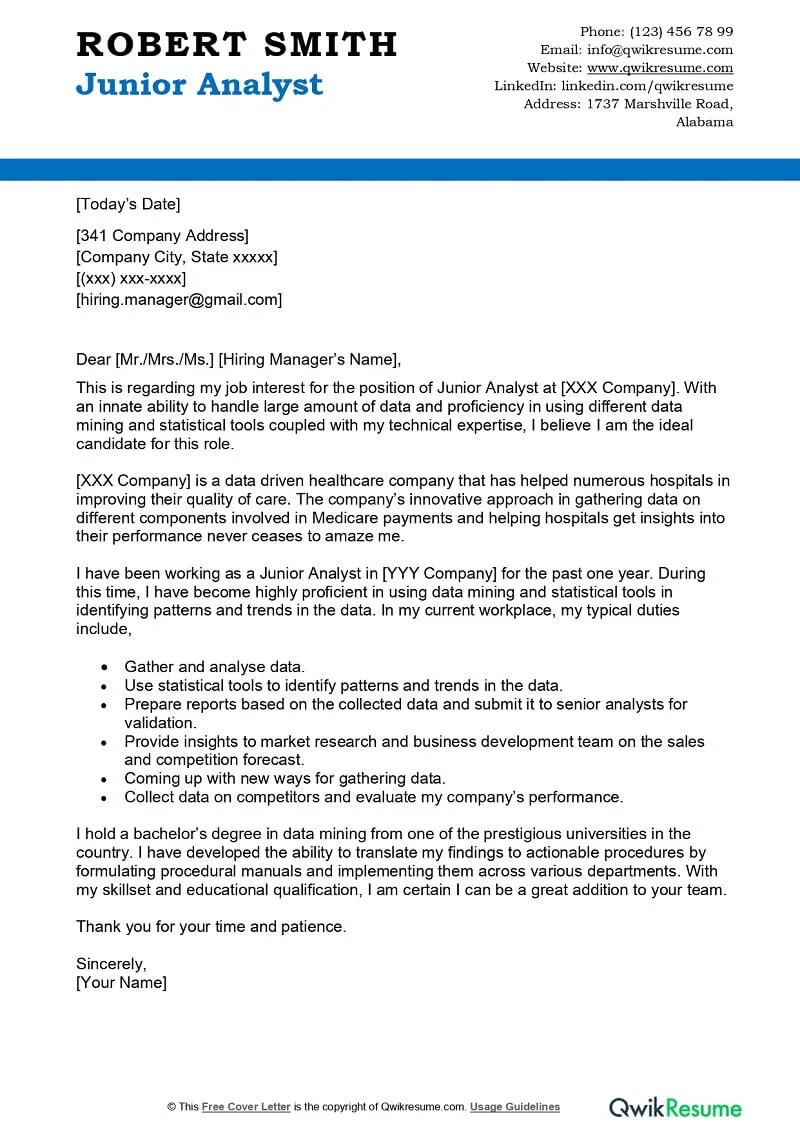
Every analyst cover letter, regardless of the specific role or industry, should include several essential components. These components work together to present a cohesive and compelling narrative about your candidacy. Skipping any of these might make your letter seem incomplete or unprofessional. Therefore, include all the key components, beginning with your contact information at the top. Next is the date, followed by the recipient’s information, which includes the hiring manager’s name, title, and the company’s address. Following the recipient information, a professional greeting sets the tone. The body of the letter should focus on your skills and experience, why you are interested in the role, and your understanding of the company. Finally, a strong conclusion reiterates your interest and invites further communication. Remember to proofread it before submitting it.
Your Contact Information

At the very top of your analyst cover letter, provide your contact information. This should include your full name, phone number, email address, and optionally, your LinkedIn profile URL. Ensure your email address is professional, and your voicemail greeting is clear. This information allows the hiring manager to easily reach out to you. Always double-check the accuracy of your contact details to avoid any missed opportunities. Making it easy for the employer to contact you increases your chances of getting invited for an interview.
Date and Recipient Information
Following your contact information, include the current date. Then, provide the recipient’s information which is usually the hiring manager’s name and title. If you can’t find the hiring manager’s name, use “Dear Hiring Manager”. Knowing the hiring manager’s name shows that you have done your research and are interested in the position. Include the company’s address, as well. If you are sending an email, you can put the information in the email body instead. This demonstrates attention to detail and personalization, which is a key factor when it comes to setting yourself apart from the competition.
Professional Greeting
Begin your analyst cover letter with a professional greeting. “Dear Mr./Ms./Mx. [Last Name]” is the standard. If you don’t know the hiring manager’s name, use “Dear Hiring Manager” or “Dear [Company Name] Hiring Team.” Avoid informal greetings like “Hi” or “Hello.” The greeting sets the tone for the entire letter, and a professional greeting signals your respect for the company and the hiring process. Ensuring you address the recipient correctly and avoiding casual language is a good way to make a great first impression.
Crafting a Compelling Opening

The opening of your analyst cover letter is crucial because it’s your chance to grab the reader’s attention immediately. Avoid generic openings. Instead, express your enthusiasm for the position and briefly mention where you found the job posting. State your interest in the role and the company, highlighting what specifically excites you about the opportunity. A strong opening should clearly state the position you’re applying for and quickly convey your understanding of the role’s responsibilities. A captivating opening should establish the foundation for the rest of the letter and encourage the hiring manager to keep reading.
Highlighting Your Skills and Experience
This is the core of your analyst cover letter. Carefully review the job description and identify the key skills and experiences the employer is seeking. Then, in your cover letter, provide specific examples of how your skills and experience align with the job requirements. Instead of simply listing your skills, show how you have applied them to achieve results in past roles. Use the STAR method (Situation, Task, Action, Result) to structure your examples, providing context, explaining your role, detailing your actions, and quantifying your achievements whenever possible. This allows the hiring manager to see the value you could bring to their organization.
Quantify Your Achievements
Whenever possible, quantify your achievements. Use numbers and data to demonstrate the impact you made in previous roles. This makes your claims more credible and gives the hiring manager a clear understanding of your abilities. For instance, instead of saying, “Improved efficiency,” state, “Improved efficiency by 15% through process optimization.” Quantifiable results immediately grab the attention of the reader and give them a clear picture of the value you bring. When you provide numbers and data to illustrate your successes, your achievements become more tangible and convincing, which is a very effective way to create a strong impact.
Tailoring to the Specific Role

Avoid using a generic cover letter. Customize your letter for each specific analyst role you apply for. Research the company and the position thoroughly to understand the requirements and expectations. Address the specific needs of the role by emphasizing relevant skills and experience. Show how your qualifications align with the role’s responsibilities. This demonstrates your genuine interest in the position and that you have taken the time to understand the requirements of the job. By personalizing your cover letter for each role, you show the hiring manager that you are dedicated and committed to the company.
Demonstrating Your Interest
Clearly express your interest in the analyst role and the company. Explain why you’re drawn to this specific opportunity. Show genuine enthusiasm. Refer to something that excites you about the role or the company’s mission. Avoid generic statements, and instead, provide specific reasons for your interest. By demonstrating genuine interest, you differentiate yourself from other applicants who might send generic applications. Expressing enthusiasm can often make a significant difference, showcasing your passion and commitment.
Showcasing Your Research and Company Knowledge
Before writing your cover letter, research the company thoroughly. Mention specific aspects of the company’s work, mission, or values that resonate with you. This shows that you’ve invested time and effort to understand the organization and that you’re genuinely interested in being part of their team. This information allows you to tailor your letter to the company’s specific needs, demonstrating your genuine interest and attention to detail. Your cover letter should reflect your informed perspective, adding value beyond the basic qualifications.
Concluding Your Cover Letter

The conclusion of your analyst cover letter should reiterate your interest in the position and thank the hiring manager for their time and consideration. State your enthusiasm for the opportunity and the contributions you could make. Avoid simply restating your skills. Instead, end with a strong call to action, such as expressing your eagerness to discuss your qualifications further in an interview. A professional closing should reinforce your interest and leave a lasting impression.
Expressing Gratitude and Call to Action
Conclude your analyst cover letter by expressing gratitude for the hiring manager’s time and consideration. Thank them for reviewing your application and the opportunity. End with a call to action, indicating your eagerness to discuss your qualifications further in an interview. This could be as simple as stating that you are available for an interview at their earliest convenience. By expressing gratitude and including a call to action, you politely prompt the hiring manager to take the next step, which increases your chances of moving forward in the hiring process. Make sure to check the application’s instructions to determine the appropriate way to follow up.
Formatting and Proofreading Your Cover Letter
A well-formatted and error-free cover letter is crucial for making a professional impression. Sloppy formatting or grammatical errors can undermine your qualifications and make it difficult for the hiring manager to focus on your skills and experience. Therefore, before submitting your cover letter, review and format it properly, ensuring it is easy to read and visually appealing. Proofread your document carefully to eliminate any errors. By paying attention to these details, you demonstrate your professionalism and respect for the hiring process.
Formatting Guidelines

Follow standard formatting guidelines to make your analyst cover letter easy to read. Use a professional font like Times New Roman, Arial, or Calibri, and keep the font size between 10 and 12 points. Use single spacing within paragraphs and double spacing between paragraphs. The letter should be approximately one page in length, and use a clear layout with proper margins (1 inch on all sides). Use a professional font, such as Times New Roman or Arial, with a font size between 10 and 12 points. Ensure the letter is well-organized with clear sections and headings. A well-formatted cover letter is easier to read and presents a polished image.
Proofreading Tips
Proofread your analyst cover letter carefully for any errors in grammar, spelling, and punctuation. It is helpful to read your letter aloud to catch any awkward phrasing or typos. Ask a friend or colleague to review your cover letter for a fresh perspective. Use spell-check and grammar-check tools, but don’t rely on them entirely. They may not catch all errors. Pay attention to the details and ensure your cover letter is free of errors. By thoroughly proofreading your cover letter, you show respect for the hiring manager and your attention to detail.
Common Mistakes to Avoid
Several common mistakes can diminish the impact of your analyst cover letter. By avoiding these errors, you can significantly increase your chances of success. Make sure your cover letter is tailored to each specific role, and avoid generic and cliché phrasing. Always address the requirements of the job description and include information about your enthusiasm for the position.
Generic Language and Clichés

Avoid using generic phrases and clichés that don’t add any value to your application. These statements can make your cover letter sound impersonal and uninspired. Always strive for clarity and specificity, using original language that reflects your unique skills and experiences. Generic statements don’t stand out and do not provide any specific details about your qualifications. Replacing these with more specific and detailed descriptions of your skills will provide a better overall impression of your abilities.
Ignoring the Job Description
Always carefully review the job description and tailor your cover letter to meet the specific requirements. Ignoring the job description is a major mistake. The hiring manager is looking for candidates who can meet their specific needs. Therefore, your cover letter should highlight the skills and experiences that are most relevant to the role. Address the key requirements and demonstrate how your qualifications align with the job’s needs. By tailoring your letter to the job description, you show the hiring manager that you have taken the time to understand the role and that you’re a good fit.
Lack of Enthusiasm
A lack of enthusiasm can make your cover letter seem dull and uninteresting. When writing your cover letter, express your excitement about the analyst role and the company. Use enthusiastic language and convey your genuine interest in the opportunity. Demonstrate that you are excited about the prospect of working for the company and contributing to its success. Hiring managers want to hire someone who is enthusiastic about the job and eager to contribute. Therefore, let your passion shine through in your writing.
Finalizing and Submitting Your Cover Letter

Before submitting your analyst cover letter, ensure everything is in order. Check for any errors, and then save the file using a clear naming convention. Follow the instructions for submitting your application. By taking these final steps, you show professionalism and attention to detail, maximizing your chances of getting noticed.
Saving Your Cover Letter
Save your analyst cover letter using a clear and professional naming convention. For instance, use “[Your Name] - Cover Letter - [Job Title]” as the file name. This helps the hiring manager to easily identify your document. Ensure the format is appropriate. Typically, a PDF is recommended because it preserves the formatting of your document. Choose a file name that is clear, easy to identify, and shows professionalism. Taking this simple step helps ensure that your application is well-organized and ready for submission.
Submitting Your Cover Letter
Carefully follow the instructions for submitting your cover letter. Adhere to the application process and guidelines specified in the job posting. Include your cover letter as requested, whether as an attachment or in the body of your email. Double-check the application to ensure all required documents are included and that you have met all requirements. Submitting your application correctly shows that you pay attention to detail and respect the hiring process. If you follow the instructions for submission, you have taken all the necessary steps to make sure your application stands out.