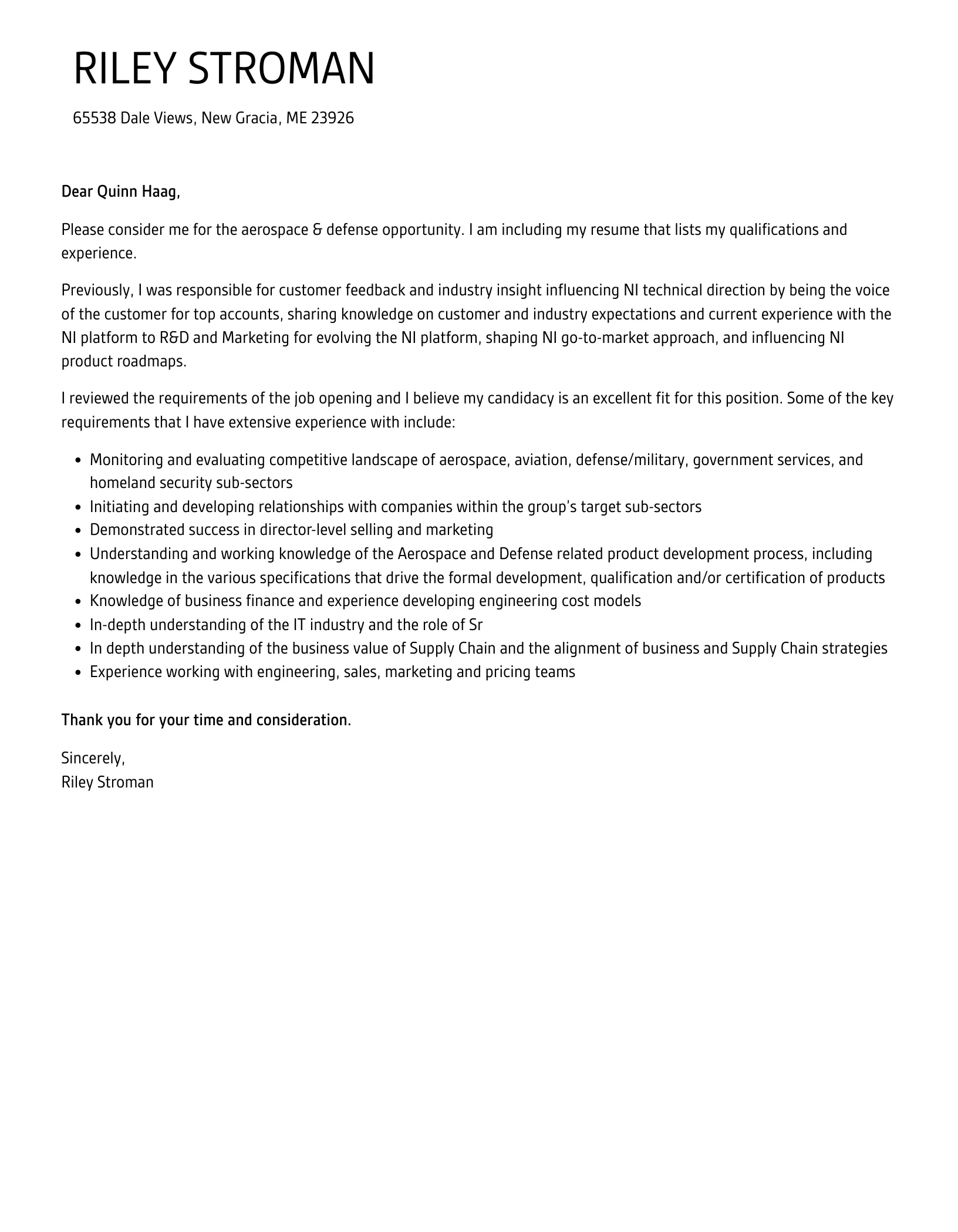
What is an Aerospace Cover Letter?
An aerospace cover letter is a crucial document accompanying your resume when applying for jobs in the aerospace industry. It serves as your first introduction to a potential employer and provides an opportunity to showcase your skills, experience, and passion for the field. Unlike a resume, which lists your qualifications, a cover letter allows you to explain why you are the ideal candidate and how your background aligns with the specific requirements of the role. It’s your chance to make a strong first impression and persuade the hiring manager to review your resume in detail.
The Importance of a Strong Aerospace Cover Letter
In the competitive aerospace industry, a well-crafted cover letter can significantly increase your chances of landing an interview. It demonstrates your communication skills, attention to detail, and genuine interest in the company and the specific position. A compelling cover letter allows you to elaborate on experiences and skills that might not be fully detailed in your resume, such as project work, teamwork abilities, and problem-solving capabilities. This document can highlight your understanding of the company’s mission, values, and how your skills and experiences align with their needs. By personalizing your letter, you show you’ve taken the time to research the company and the role, which makes you a more appealing candidate.
Key Components of an Aerospace Cover Letter

A strong aerospace cover letter consists of several essential components, each playing a vital role in conveying your qualifications and enthusiasm. These components work together to present a complete picture of your suitability for the job. The structure ensures that the most important information is presented clearly and concisely, enabling the hiring manager to quickly understand your key skills and experiences.
Header & Contact Information
Begin your cover letter with a professional header that includes your contact information. This typically includes your full name, address, phone number, and email address. Ensure the header is easily visible and clearly formatted. It’s important to include the date and the recipient’s contact information, such as the hiring manager’s name, title, and the company’s address. Accuracy is paramount at this stage; verify all details before submitting. This part of the cover letter makes it easy for recruiters to contact you if they want to schedule an interview.
Greeting & Opening
Address the hiring manager directly whenever possible. If you know the name of the person reviewing applications, use their name to personalize your greeting; this shows you’ve done your research and are genuinely interested in the position. Your opening paragraph should capture the reader’s attention immediately and state the specific position you’re applying for. This is a place to concisely express your enthusiasm for the job and the company. A strong opening sets the tone for the rest of the letter and encourages the reader to continue. Avoid generic greetings; instead, use a personalized greeting that shows you’ve taken the time to understand the opportunity.
Body Paragraphs: Showcasing Your Skills

The body of your cover letter is where you demonstrate how your skills and experience match the job requirements. Highlight your most relevant qualifications and provide specific examples of your accomplishments. Break down this section into several paragraphs, each focusing on a specific skill or experience. Use action verbs to describe your achievements and quantify your results whenever possible. Connect your skills directly to the needs of the role, showing the employer how you can contribute to their team. This demonstrates that you have the ability to make an immediate impact. When showcasing your skills, concentrate on the key skills mentioned in the job description.
Highlighting Relevant Experience
Focus on the experience that is most pertinent to the job you are applying for. Highlight the projects, internships, or jobs where you have directly applied relevant skills. Mention the specific types of aircraft, systems, or technologies you have worked with. When describing your responsibilities, tailor your descriptions to the needs of the employer. Mention the outcomes and results of your work in previous roles. Ensure that you tailor your descriptions to the job, for example, if the job description mentions specific software or hardware that the employer uses, you need to highlight your previous experience with the same.
Quantifying Achievements
Whenever possible, quantify your achievements to demonstrate the impact of your work. Use numbers, percentages, and specific data to showcase your accomplishments. For example, instead of saying you ‘improved efficiency,’ you could say you ‘increased efficiency by 15%.’ Metrics add credibility to your claims and provide tangible evidence of your capabilities. Focus on achievements that directly benefit the employer, such as cost savings, increased productivity, or improved safety. Make sure that the statistics are correct, as errors can damage your credibility.
Tailoring to the Specific Job

Customize each cover letter for the specific job and company. Review the job description carefully and identify the key requirements and keywords. Align your skills and experience with these requirements, using the same language as the job posting. Mention the company’s projects, values, or recent achievements to show that you’ve researched the organization and are genuinely interested in joining their team. This personalization sets you apart from generic applicants who send the same letter to multiple employers.
Demonstrating Passion for Aerospace
Express your enthusiasm for the aerospace industry and the specific role you are applying for. Share what excites you about aerospace and what motivates your interest in the field. Mention any relevant projects, certifications, or personal interests that demonstrate your passion. This will let your prospective employer know that you are genuinely interested in the job and are more likely to stay in the role long term. Explain why you are drawn to the company’s mission, values, or specific projects. It helps to show that you’re not just looking for a job, but a meaningful career opportunity.
Closing & Call to Action
Your closing should summarize your interest in the position and reiterate your key qualifications. Express your gratitude for the reader’s time and consideration. End with a clear call to action, such as requesting an interview. Include your contact information once again to make it easy for the hiring manager to reach you. Make sure that your closing is professional and shows enthusiasm, while still maintaining a polished and respectful tone. A well-crafted closing ensures a positive final impression.
Proofreading & Formatting

Before submitting your cover letter, proofread it carefully for any errors in grammar, spelling, and punctuation. Use a grammar checker, but also read it aloud to catch any awkward phrasing. Ensure that your formatting is consistent and professional. Use a standard font size, such as 11 or 12 points, and a readable font like Times New Roman, Arial, or Calibri. Maintain consistent spacing and alignment throughout the document. A well-formatted and error-free cover letter reflects your attention to detail and professionalism, significantly improving your chances of making a positive impression.
Common Mistakes to Avoid
Avoid these common mistakes to ensure your cover letter effectively presents your qualifications. Being aware of these issues will help you make a strong application and make it stand out.
Generic Language
Avoid using generic and vague language that could apply to any job. Tailor your cover letter to each specific position, highlighting the skills and experiences most relevant to the role. Show that you understand the company’s needs and how you can contribute to their goals. Use specific examples and concrete details to support your claims instead of general statements.
Typos and Grammatical Errors

Typos and grammatical errors can damage your credibility and make you appear unprofessional. Always proofread your cover letter carefully before submitting it. Use a grammar checker and consider having a friend or colleague review it. Even a small error can undermine your application, so make sure everything is perfect. Correcting errors shows that you take pride in your work and pay attention to detail.
Ignoring the Job Description
Failing to address the specific requirements listed in the job description is a major mistake. Carefully review the job description and tailor your cover letter to highlight your qualifications that match those needs. Use the same keywords and phrases as the job posting to demonstrate that you understand the role and are a good fit. Address each key requirement and provide specific examples of how you have met those requirements in the past. Make sure the information in your cover letter relates to the job.
Overly Long Cover Letters
Keep your cover letter concise and to the point. Aim for a one-page letter unless otherwise specified. Hiring managers often have to review numerous applications, so they appreciate brevity. Focus on your most relevant qualifications and accomplishments. Avoid unnecessary details or lengthy explanations. If you cannot keep your cover letter to one page, consider cutting down on detail to the key information.
Examples of Effective Aerospace Cover Letters

Reviewing examples of successful aerospace cover letters can provide valuable insights and guidance. Look for letters that showcase a strong understanding of the job requirements, highlight relevant skills and experiences, and demonstrate genuine passion for aerospace. Analyze the structure, language, and tone to learn how to effectively present your qualifications. Customize the example templates to suit your unique qualifications and the specific job you are applying for. By reviewing these examples, you can better understand what makes an effective cover letter.