Essential Components of an Accounting Manager Cover Letter
A well-crafted cover letter is a critical tool in your job search arsenal, especially when applying for an Accounting Manager position. It provides an opportunity to showcase your skills, experience, and personality in a way that your resume cannot. Unlike a resume, a cover letter allows you to tell a story, highlighting your career trajectory and explaining why you are the ideal candidate for the role. It’s your first impression on a potential employer; therefore, every aspect, from the format to the content, needs to be impeccable. This guide provides expert tips to help you create a compelling cover letter that captures the attention of hiring managers and sets you apart from other applicants. The goal is not just to submit a letter but to craft a persuasive narrative that demonstrates your value and increases your chances of securing an interview. Mastering this will significantly elevate your application and help you land your dream job.
Header Section Contact Information
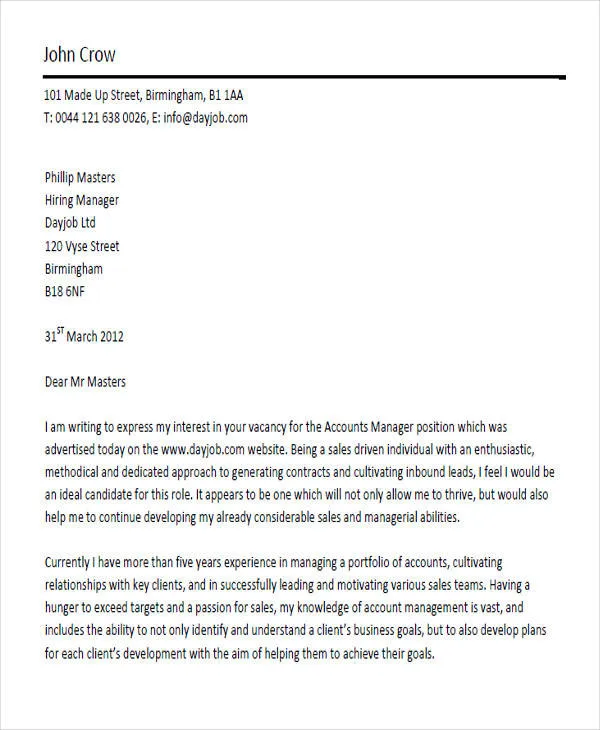
The header of your cover letter is the first thing a hiring manager will see, so it’s crucial to get it right. Begin by including your full name, address, phone number, and professional email address. Ensure that your email address is professional and appropriate; avoid using nicknames or informal language. Next, include the date, followed by the hiring manager’s name and title, and the company’s name and address. If you are unsure of the hiring manager’s name, do some research on LinkedIn or the company website. Addressing the cover letter to a specific person is always better than using a generic greeting. This header section should be clear, concise, and well-formatted, setting the stage for a professional and polished cover letter.
Applicant’s Information

Include your full name, current address, phone number, and a professional email address. Double-check for any typos or errors in this section to avoid any communication issues. Consider using a simple, easy-to-read font to ensure the information is clear and accessible.
Hiring Manager’s Information
Find the hiring manager’s name, title, company name, and company address. If you can’t find the name, try to find it on LinkedIn or company website. Always address the cover letter to a specific person. This demonstrates initiative and attention to detail.
Professional Greeting
Start your cover letter with a formal greeting such as “Dear Mr./Ms. [Last Name]” or “Dear [Hiring Manager Name]”. Avoid informal greetings like “Hi” or “Hello.” If you are unsure of the hiring manager’s name, use “Dear Hiring Manager” or “Dear [Company Name] Hiring Team.”
Opening Paragraph Grabbing Attention

The opening paragraph is your chance to make a strong first impression. Start by stating the position you are applying for and where you found the job posting. Briefly mention something specific about the company that interests you or why you are excited about the opportunity. Your opening paragraph should capture the reader’s attention and make them want to continue reading. Avoid generic opening statements; instead, tailor your introduction to the specific job and company. Show that you have researched the company and understand their needs, demonstrating that you are not just sending out a generic application but are genuinely interested in the role and the organization.
Highlighting Key Skills and Experience
This is the core of your cover letter. Here, you should highlight your relevant skills and experience. Carefully review the job description and identify the key requirements. Then, in your cover letter, provide specific examples of how your skills and experiences align with these requirements. Use action verbs to describe your accomplishments, and whenever possible, provide quantifiable results. This is where you showcase your ability to manage financial operations, lead accounting teams, and ensure compliance with accounting standards. Tailor each cover letter to match the specific requirements of the job. Avoid simply restating your resume; instead, expand on your achievements and demonstrate how your skills can benefit the company.
Quantifiable Achievements
Use numbers and data to illustrate your achievements. For example, instead of saying “Improved efficiency,” say “Improved departmental efficiency by 15%.” Providing specific, measurable results demonstrates your impact and adds credibility to your claims. Examples include how you reduced costs, improved financial reporting accuracy, or successfully managed budgets. Quantifiable achievements make your cover letter more impactful and show potential employers the tangible value you can bring to the role. Make sure to provide context and explain how you achieved these results.
Tailoring Your Cover Letter

Customizing your cover letter for each job application is essential. Generic cover letters are easily identified and often discarded. Research the company and the specific role. Understand their mission, values, and the challenges they face. Tailor your letter to address the company’s specific needs and demonstrate how your skills and experience make you the perfect fit. This involves highlighting the skills and experiences most relevant to the job description and explaining how you can contribute to the company’s goals. This approach shows the hiring manager that you’ve invested time and effort, making you a more attractive candidate.
Matching Skills to Job Requirements
Carefully analyze the job description. Identify the key skills and qualifications the employer is seeking. Then, in your cover letter, explicitly state how your skills and experiences align with these requirements. Use keywords from the job description and provide specific examples of your accomplishments. This will make it easy for the hiring manager to see how you meet their needs. If the job requires proficiency in a specific accounting software, mention your experience with that software and how you used it to achieve positive results. This is about creating a direct link between your capabilities and the employer’s needs.
Demonstrating Leadership Abilities
As an Accounting Manager, leadership skills are crucial. In your cover letter, demonstrate your ability to lead and manage a team. Provide examples of how you have successfully motivated and mentored team members, resolved conflicts, and fostered a positive work environment. Showcase your ability to delegate tasks, provide constructive feedback, and drive team performance. If you have experience in training new team members, mention it. Highlighting your leadership skills can significantly increase your chances of getting hired. Use phrases that convey your leadership style, such as “successfully led a team of…” or “implemented strategies that improved team productivity by…”
Showcasing Relevant Experience

Focus on the experiences that are most relevant to the Accounting Manager position. Provide specific examples of how you have successfully managed accounting functions such as financial reporting, budgeting, forecasting, and internal controls. If you have experience in a specific industry or with a particular type of company, make sure to mention it. Explain how your past experiences have prepared you for this role. Use the STAR method (Situation, Task, Action, Result) to structure your examples and make them more impactful. The STAR method helps you provide a clear and concise overview of your accomplishments. This ensures that your experiences are easily understood and relevant to the job.
Closing the Letter
The closing paragraph is your final opportunity to reinforce your interest in the position and make a lasting impression. Reiterate your enthusiasm for the opportunity and briefly summarize why you are a strong fit. Express your gratitude for the hiring manager’s time and consideration. Avoid generic phrases and tailor your closing to the specific job. This is also the place to indicate your availability for an interview. Keep it concise and professional, and use a strong call to action that encourages the hiring manager to contact you.
Expressing Gratitude and Call to Action
Thank the hiring manager for their time and consideration. Express your enthusiasm for the opportunity and your confidence in your ability to contribute to the company’s success. Include a call to action, such as “I am eager to discuss my qualifications in an interview” or “I look forward to hearing from you soon.” Providing a clear call to action encourages the hiring manager to take the next step, increasing your chances of getting an interview. Make sure your contact information is readily available and easy to find.
Proofreading and Formatting

Before submitting your cover letter, carefully proofread it for any grammatical errors, typos, or formatting inconsistencies. Ensure that the letter is well-formatted, easy to read, and visually appealing. Use a professional font such as Times New Roman, Arial, or Calibri, and maintain consistent font sizes and spacing. A well-formatted, error-free cover letter demonstrates professionalism and attention to detail, which are essential qualities for an Accounting Manager. Ask a friend or colleague to review your letter as well. A fresh pair of eyes can often catch errors that you may have missed. Pay close attention to details.
Formatting and Design Tips
Use a professional and clean format. Avoid using excessive colors, fonts, or graphics, which can distract the reader. Maintain consistent margins and spacing throughout the document. Use bullet points to highlight your key skills and achievements, making your letter easier to scan. Ensure your cover letter is no more than one page long. Organize your information logically, using clear headings and subheadings to guide the reader. Finally, save your cover letter as a PDF file to preserve its formatting and ensure it appears the same way on any device.